Localization Strategy for Global Courses: Translation and Cultural Fit
 Jun, 20 2026
Picture this: you’ve spent months building a stellar course on project management. The slides are sleek, the quizzes are sharp, and the video production is top-tier. You launch it globally, expecting sales to roll in from Tokyo, Berlin, and São Paulo. Instead, you get silence-or worse, confused reviews saying the examples feel "off" or the tone is too aggressive.
This isn’t a failure of quality; it’s a failure of localization. Many creators confuse localization with simple translation. They think swapping English words for Spanish or Japanese ones is enough. It isn’t. True localization involves adapting your content so it resonates culturally, legally, and contextually with the target audience. If you want your courses to succeed internationally, you need a strategy that goes far beyond the dictionary.
The Difference Between Translation and Localization
To build a solid strategy, you first have to understand what you’re actually doing. Translation is the process of converting text from one language to another while preserving meaning. It’s technical and literal. Localization (L10n) is adapting a product or content to meet the language, cultural, and other requirements of a specific target market. Think of it as transcreation-creating new content that feels native to the user.
For example, if your course uses American football analogies to explain team dynamics, a direct translation might work linguistically, but a viewer in Mumbai won’t grasp the reference because cricket is the dominant sport there. A localized version would swap the analogy for cricket terms. This subtle shift makes the concept click instantly. Without this step, your audience has to do extra mental work to understand your point, which kills engagement.
Why Cultural Fit Matters More Than You Think
Culture dictates how people learn, communicate, and perceive authority. Ignoring these nuances can make your course feel alienating or even offensive. Let’s look at a few key areas where culture impacts learning:
- Humor and Tone: Sarcasm works well in some Western markets but can be seen as rude or confusing in high-context cultures like Japan or South Korea. In those regions, a more formal, respectful tone often builds more trust.
- Visual Cues: Colors carry different meanings. White symbolizes purity in many Western countries but represents mourning in parts of Asia. Using a white background for a celebratory milestone slide might send the wrong signal.
- Learning Styles: Some cultures prefer individualistic, self-directed learning (common in the US), while others value collaborative, group-oriented approaches (common in Latin America and East Asia). Your course structure should reflect these preferences.
If you’re teaching leadership, for instance, an American module might focus on assertiveness and direct feedback. In Germany, directness is appreciated, but in Thailand, saving face is crucial. A localized version for Thailand would emphasize indirect communication and harmony-building techniques. This isn’t about changing your core message; it’s about packaging it in a way that the local brain accepts naturally.

Building Your Localization Workflow
You can’t just throw your course files at a translator and hope for the best. You need a structured workflow. Here’s a practical approach to managing the process:
- Audit Your Content: Identify elements that are culturally specific. Flag idioms, jokes, local laws, currency references, and date formats. These are your "high-risk" items that need special attention.
- Choose the Right Partners: Don’t use automated tools alone. Hire native-speaking subject matter experts (SMEs) who understand both the language and the industry. For a coding course, you need a developer who speaks French, not just a French speaker.
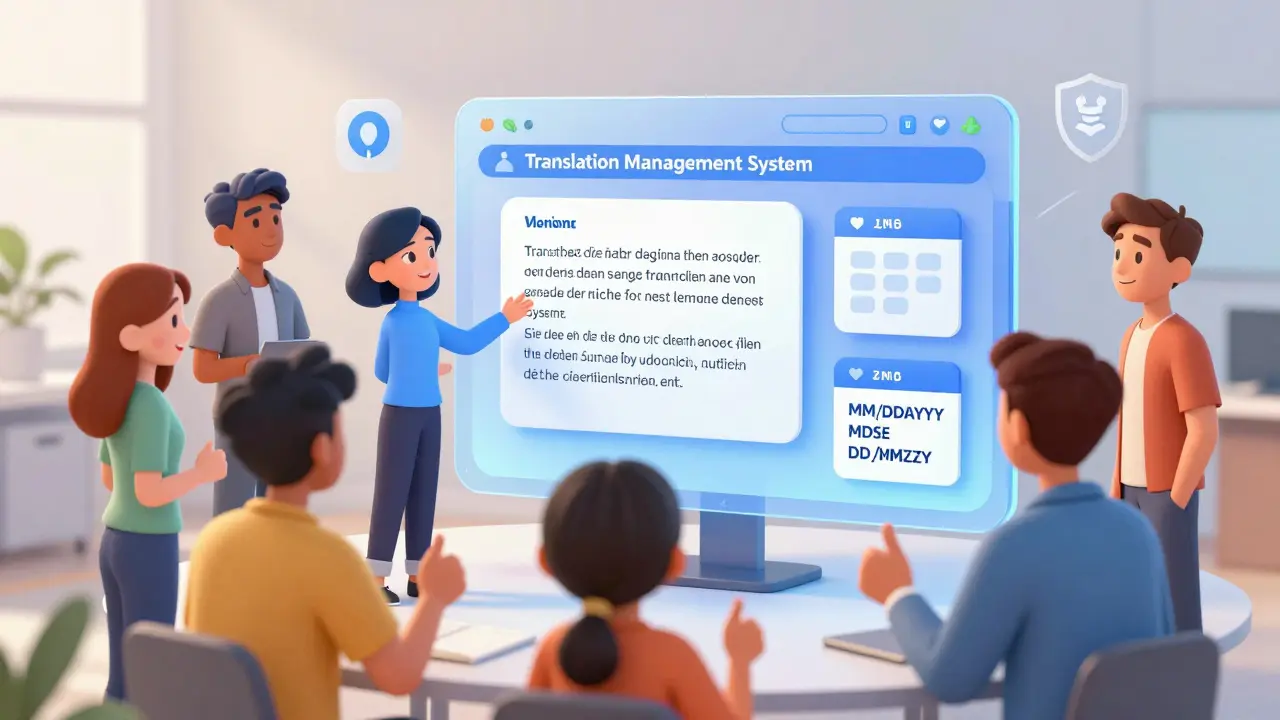
- Use a Translation Management System (TMS): Tools like Crowdin or Memsource help manage strings, maintain consistency, and track progress. They allow translators to see context, which reduces errors.
- Review and Test: Have a second pair of eyes review the localized content. Better yet, run a beta test with users from the target region. Their feedback will catch nuances your team missed.
This workflow ensures quality control. It also saves money in the long run by preventing costly rework. Imagine launching a course in Brazil only to realize later that the payment gateway instructions were unclear because they referenced a US-only credit card type. That’s a fixable error, but it damages credibility before you even start.
Technical Considerations for E-Learning
Localization isn’t just about text. It affects the technical structure of your course. Video subtitles, audio narration, and interface design all need adaptation.
Video and Audio: Hardcoded text in videos is a nightmare for localization. If you bake English text into your video frames, you’ll have to re-render the entire video for each language. Instead, use lower-thirds or separate subtitle files (.srt or .vtt). For audio, consider hiring voice actors from the target region. Accents matter. A British accent might sound authoritative in London but less relatable in New York.
Interface Design: Text expansion is real. German sentences can be up to 30% longer than their English equivalents. If your buttons are sized for English words, they might overflow in German. Use responsive design principles that allow UI elements to expand without breaking the layout. Also, check reading direction. Arabic and Hebrew read right-to-left (RTL), which requires mirroring the entire interface layout.
Date and Number Formats: In the US, dates are written MM/DD/YYYY. In Europe, it’s DD/MM/YYYY. In Asia, it’s often YYYY-MM-DD. Currency symbols also vary. $100 means something very different in the US versus Australia. Always use local formats to avoid confusion.
| Element | Challenge | Solution |
|---|---|---|
| Text Length | German/Russian expand by 20-30% | Use flexible UI containers |
| Dates | Format varies by region | Use ISO 8601 or local standards |
| Images | Cultural symbols may offend | Replace with neutral or local imagery |
| Audio | Accent and pacing differences | Hire native voice talent |
Measuring Success in Local Markets
How do you know if your localization strategy worked? Track metrics specific to each region. Look at completion rates, quiz scores, and customer support tickets. If a particular language version has significantly lower completion rates, dig deeper. Is the content too difficult? Is the cultural fit off?
User feedback is gold. Include surveys in your course asking learners how relevant the examples felt. Did they understand the metaphors? Was the tone appropriate? Use this data to refine future iterations. Localization is not a one-time task; it’s an ongoing process. As cultures evolve, so should your content.
Also, monitor SEO performance. Localized keywords drive traffic. If you’re targeting Spanish speakers in Mexico, use terms like "cursos online" instead of generic translations. This helps your course appear in local search results, bringing in organic traffic that’s already interested in your topic.
Common Pitfalls to Avoid
Even experienced creators make mistakes. Here are the most common traps:
- Over-reliance on AI: Machine translation is getting better, but it still struggles with nuance, humor, and industry jargon. Use it for drafts, not final products.
- Ignoring Legal Differences: GDPR in Europe, CCPA in California, and PIPL in China have strict rules about data privacy. Your course must comply with local regulations, especially if you collect user data.
- One-Size-Fits-All Approach: Spanish spoken in Spain differs from Spanish in Argentina. Treat major dialects as separate markets when necessary.
Avoiding these pitfalls requires diligence and respect for your audience. Remember, you’re not just selling a course; you’re building a relationship with learners around the world. When they feel understood, they stay engaged.
What is the difference between internationalization and localization?
Internationalization (i18n) is the process of designing your course so it can be easily adapted to various languages and regions. It happens early in development. Localization (l10n) is the actual adaptation of the content for a specific market. You internationalize first, then localize.
How much does course localization cost?
Costs vary based on word count, complexity, and media. Text translation typically ranges from $0.08 to $0.15 per word. Video dubbing can cost hundreds of dollars per minute. Budget accordingly, focusing on your highest-potential markets first.
Should I localize my entire course or just key modules?
Start with your most popular or foundational modules. This allows you to test the market response without a massive upfront investment. If the localized modules perform well, expand to the rest of the course.
Can I use AI for full course localization?
AI is great for initial drafts and repetitive tasks, but it lacks cultural nuance. For professional courses, always have a human expert review the output. Relying solely on AI risks producing awkward or inaccurate content.
How do I handle idioms and slang in translation?
Don't translate them literally. Find an equivalent idiom in the target language that conveys the same meaning and emotional weight. If no equivalent exists, replace it with a clear, descriptive phrase.
Laura Davis
June 20, 2026 AT 23:24Stop treating translation like it’s a magic wand that fixes everything. You’re ignoring the human element entirely if you think swapping words is enough. I’ve seen too many courses fail because they didn’t respect cultural boundaries. It’s not just about language, it’s about dignity and understanding. Don’t be lazy with your content.
Lisa Nally
June 22, 2026 AT 16:10The semantic drift in cross-cultural pedagogical frameworks is often underestimated by amateur creators. When we discuss localization, we are essentially talking about transcreation within a specific sociolinguistic context. The failure to account for high-context vs low-context communication styles results in significant cognitive load for the learner. This is basic intercultural competence.
Edward Gilbreath
June 24, 2026 AT 10:23they want you to believe culture matters but its all about money. big tech wants to sell you more tools. dont buy into the hype. just translate it and move on. nobody cares that much
kimberly de Bruin
June 24, 2026 AT 21:45the self is constructed through language. when you localize you are not changing words you are changing the soul of the message. is the truth universal or local? perhaps both. the map is not the territory. be careful what you project onto others
Edward Nigma
June 25, 2026 AT 04:12Actually this whole premise is flawed. Most people don't care about cultural nuances they just want information. You're overcomplicating things to justify higher costs. Plus who decides what is culturally appropriate? It's subjective garbage. Stop pretending there is a right way to do this
Francis Laquerre
June 26, 2026 AT 23:32I have lived in three continents and can tell you that nothing bridges the gap like genuine effort. When I see a course that actually understands my local context it feels like a warm hug from an old friend. The details matter immensely. A single wrong color choice can ruin the entire experience for someone who knows better. Please take this seriously.
michael rome
June 28, 2026 AT 14:04It is imperative that we consider the structural integrity of our educational materials when deploying them across international borders. The methodology outlined here provides a robust framework for ensuring that the pedagogical intent remains intact while adapting to local sensibilities. We must strive for excellence in every iteration of our content delivery systems.
Andrea Alonzo
June 28, 2026 AT 17:52I really appreciate how this article breaks down the complexities of localization into manageable steps because it helps educators understand that they are not alone in this journey and that there are resources available to support them in creating inclusive learning environments that resonate with diverse audiences around the world which ultimately leads to better outcomes for everyone involved in the process of education and skill development.
Saranya M.L.
June 29, 2026 AT 11:44As an Indian professional I can confirm that using cricket analogies instead of American football is non-negotiable for engagement in our market. Your assumption that one size fits all is deeply problematic and shows a lack of respect for regional expertise. We need native SMEs who understand the nuance of our business culture not just translators who speak the language. Do better.
Lisa Puster
July 1, 2026 AT 05:20this is typical western arrogance assuming you know best. the data shows that direct translation works fine if the product is good enough. stop making excuses for bad content with fancy buzzwords like localization. it's just marketing fluff to charge more money
Joe Walters
July 1, 2026 AT 11:00I tried doing this once and it was a disaster. My UI broke completely because German text expanded everywhere. Now i just stick to English. Why bother with other languages when half the world speaks it anyway? Its easier that way even if its not perfect
Robert Barakat
July 3, 2026 AT 01:45The essence of communication lies not in the symbols used but in the shared understanding between sender and receiver. Localization attempts to recreate this shared space artificially. Is it ever truly possible to bridge the existential gap between cultures through mere text adaptation? One must question the very nature of meaning itself.
Michael Richards
July 3, 2026 AT 16:12You are failing your audience if you do not invest in proper localization. It is not optional. It is a requirement for any serious educator. Stop cutting corners and start respecting your students. The cost of rework is far less than the cost of lost credibility. Get it right the first time.
om gman
July 4, 2026 AT 22:09oh please another article telling us how to behave. as if we need permission to teach. just upload the video and let the algorithm decide. who cares if the button breaks? users are stupid they will figure it out. stop coddling them
Jeanne Abrahams
July 5, 2026 AT 21:29Living in South Africa gives me a unique perspective on this mess. We have eleven official languages and yet most global platforms treat us as an afterthought. It is hilarious how companies think 'English' covers us all. They are missing out on a huge market because they refuse to adapt. Sad but true.
Bineesh Mathew
July 7, 2026 AT 02:54The moral decay of modern education is evident in its refusal to embrace diversity. By ignoring local contexts we perpetuate a colonial mindset that devalues indigenous knowledge systems. This is not just a technical issue it is a spiritual crisis. We must awaken to the interconnectedness of all learners and honor their unique journeys.
Oskar Falkenberg
July 8, 2026 AT 18:24I totally agree with the point about testing with beta users from the target region because i found that getting feedback early on saves so much time later and also helps build a sense of community among the learners which makes the whole experience feel more personal and engaging for everyone involved in the process.
Caitlin Donehue
July 8, 2026 AT 20:02i wonder if AI will eventually solve this problem completely. maybe soon we wont need humans at all for translation. seems efficient
Stephanie Frank
July 9, 2026 AT 15:59This analysis is superficial at best. You are ignoring the geopolitical implications of language dominance. By pushing English-centric models you are reinforcing power structures that marginalize non-native speakers. Real localization requires dismantling these hierarchies not just tweaking UI elements. Wake up.