Machine Learning Algorithms for Personalized Learning
 Dec, 31 2025
Imagine a student struggling with fractions in math. One day, they get a video tutorial. The next day, they’re given interactive puzzles. A week later, they’re solving real-world problems involving ratios. None of this was planned by a teacher. It was all picked by an algorithm that learned what works for them - and only them.
This isn’t science fiction. It’s happening right now in classrooms, apps, and online courses powered by machine learning algorithms designed for personalization. These systems don’t just serve the same content to everyone. They adapt in real time based on how you respond, how fast you learn, where you get stuck, and even how you feel about the material.
How Machine Learning Powers Personalized Learning
Traditional e-learning platforms show the same lessons to every learner. Machine learning changes that. It looks at patterns - not just answers, but how you got there. Did you guess? Did you take five tries? Did you skip ahead? Did you rewatch a video twice? These tiny signals tell the system what kind of learner you are.
At its core, personalized learning with machine learning means one thing: the system learns from you, then changes what you see next. It’s not about making things easier. It’s about making them more effective. A 2023 study from Stanford’s Center for Education Policy Analysis found that students using adaptive systems improved test scores by 22% on average compared to those using static content.
Key Algorithms Used in Adaptive Learning
Not all machine learning is the same. Different algorithms handle different parts of personalization. Here are the most common ones used today:
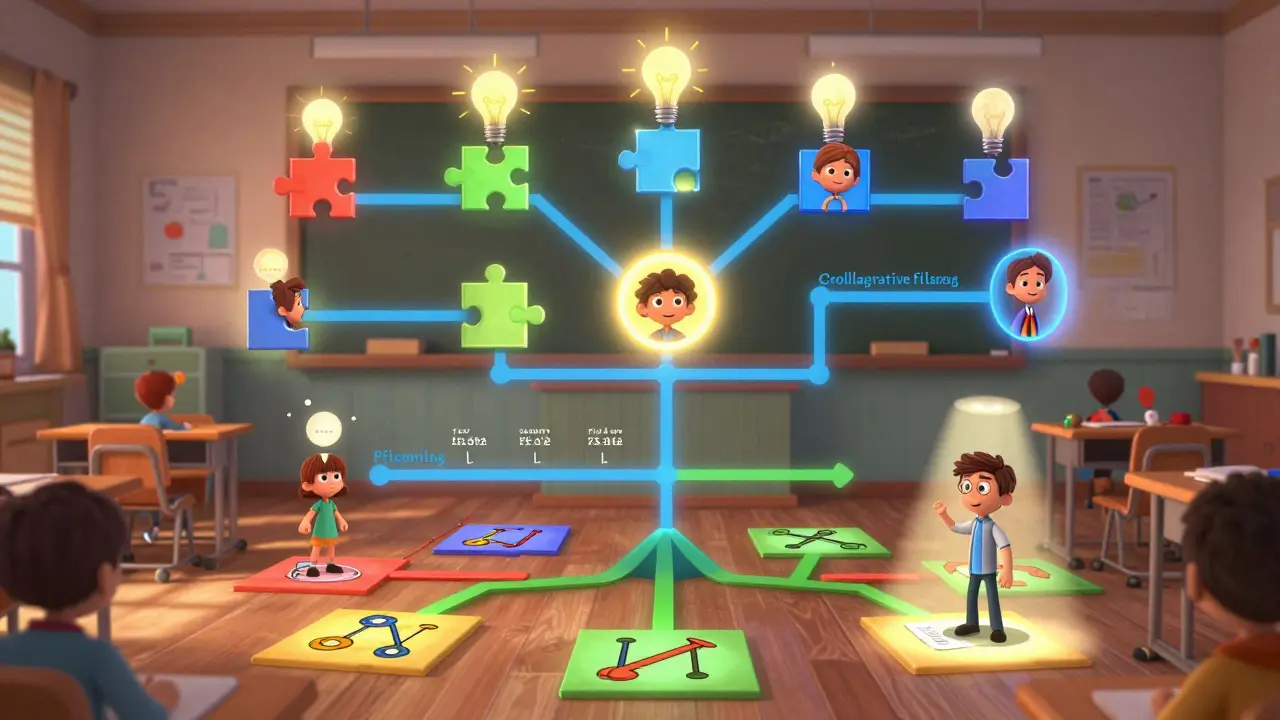
- Collaborative Filtering - This one works like a recommendation engine. If students similar to you liked a certain quiz or video, it suggests it to you. It doesn’t care what the content is - just what other learners like you did. Used heavily by platforms like Khan Academy and Duolingo.
- Decision Trees - These are rule-based systems that ask questions like: ‘Did the student get this question right?’ → ‘If yes, move to advanced topic. If no, show a refresher.’ They’re simple, fast, and easy to explain - perfect for K-12 and corporate training.
- Neural Networks - Deep learning models that can detect hidden patterns. They analyze hundreds of data points: time spent, clicks, mouse movements, even typing speed. Used by platforms like Coursera and edX to predict which learners are at risk of dropping out.
- Reinforcement Learning - This one learns by trial and error. It tries different teaching paths, sees what leads to better outcomes, and adjusts. Think of it like a coach who changes drills based on your performance. Used in advanced tutoring bots like Carnegie Learning’s MATHia.
- Clustering Algorithms (K-Means) - Groups learners into types: visual learners, slow processors, quick testers, etc. Then delivers content tailored to each group. Used in corporate LMS systems to segment employees by skill level.
Most real-world systems don’t use just one. They combine them. For example, a platform might use clustering to group students, then apply collaborative filtering within each group, and use reinforcement learning to fine-tune the next lesson.
What Data Do These Algorithms Use?
It’s not magic. It’s data. And it’s more than just quiz scores.
Here’s what’s tracked in modern adaptive systems:
- Response time - Did you answer in 3 seconds or 3 minutes?
- Number of attempts - Did you get it right on the first try?
- Clickstream - Did you jump around? Skip videos? Rewind?
- Engagement metrics - Did you pause? Take notes? Share a resource?
- Emotional signals - Some systems use facial recognition or keystroke analysis to detect frustration or boredom.
- Historical performance - How did you do on similar topics last month?
This data builds a profile. Not a label. Not a stereotype. A dynamic model that updates every time you interact. A student who aced algebra last week but struggles with geometry today gets different content - not because they’re ‘bad at math,’ but because their brain is in a different mode right now.
Real-World Examples in Action
Let’s look at three systems making this real:
Smart Sparrow - Used in universities like MIT and Arizona State. Their adaptive engine adjusts the difficulty of simulations based on student responses. In a physics course, if you keep missing a concept about torque, the system drops in a 3D animation showing how levers work. If you nail it, it skips ahead to rotational dynamics.
Khan Academy’s AI Tutor - Launched in 2024, it uses reinforcement learning to guide students through practice problems. It doesn’t just say ‘wrong.’ It asks: ‘What part confused you?’ Then offers a hint, a video, or a simpler problem - based on what worked for thousands of others with the same pattern.
Century Tech - Used in UK schools and corporate training. It maps each learner’s knowledge to a skill graph. If you’re weak in ‘interpreting graphs’ but strong in ‘calculating averages,’ it builds a path that strengthens the weak link without repeating what you already know.
Why This Matters for Learners and Teachers
For students, this means no more one-size-fits-all lessons. No more feeling left behind or bored. You get the right challenge at the right time. That keeps motivation high.
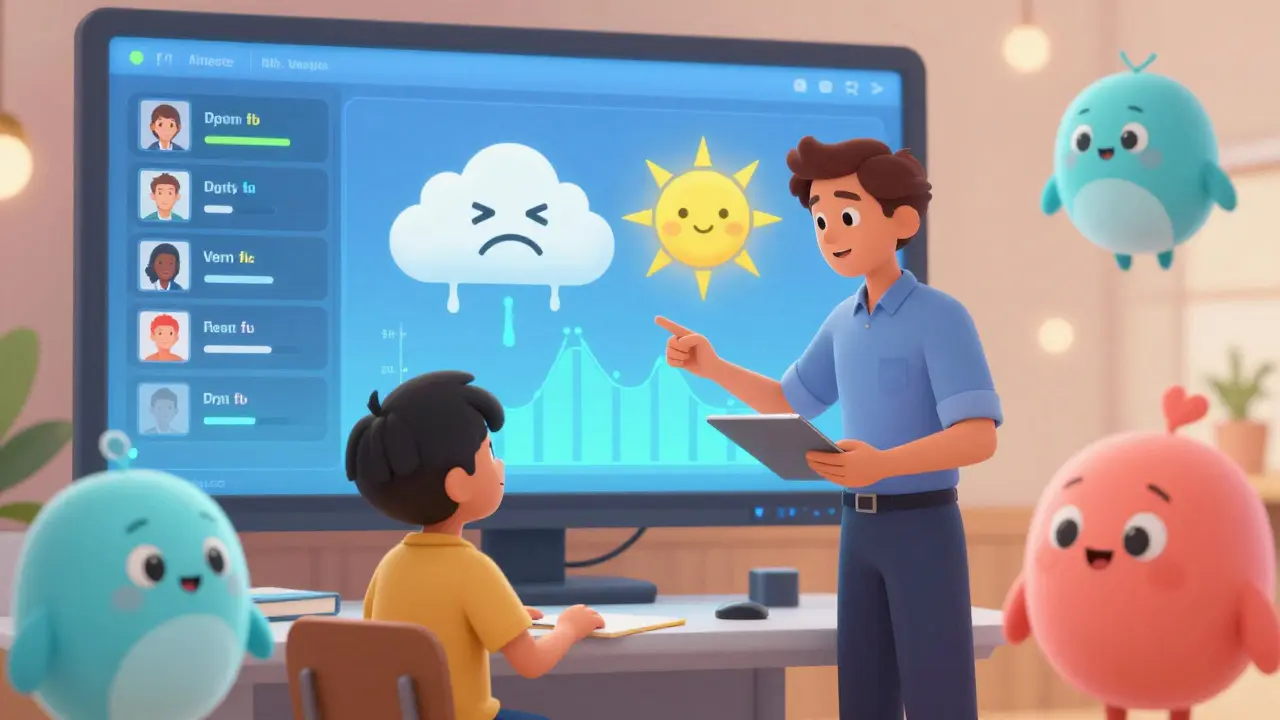
For teachers, it’s a superpower. Instead of guessing who needs help, they get alerts: ‘Maria hasn’t touched the probability module in 4 days - she’s stuck on conditional probability.’ The system flags it. The teacher steps in with targeted support - not more lectures, but conversation.
One high school math teacher in Tempe told me her class used an adaptive platform last year. Attendance didn’t change. But pass rates jumped from 68% to 89%. Why? Because the system found the gaps no one else saw.
Limitations and Ethical Concerns
It’s not perfect.
First, data bias. If the system was trained mostly on data from high-performing students, it might assume everyone learns like them. A student who thinks slowly but deeply might get labeled ‘low ability’ - and never get access to harder material.
Second, transparency. Most algorithms are black boxes. Teachers can’t explain why the system pushed a student to a certain topic. That makes trust hard.
Third, over-reliance. If a student only ever sees what the algorithm suggests, they never learn how to choose their own path. Autonomy matters. The best systems give you control: ‘You can try the advanced version - or stick with practice.’
And privacy. Tracking every click? That’s a lot of data. Schools using these tools need clear policies on what’s stored, who sees it, and how long it’s kept.
What’s Next for Adaptive Learning?
By 2026, we’ll see more systems that don’t just adapt to what you do - but to how you feel. Emotion-aware AI is starting to appear. If you’re stressed, the system might shorten the session. If you’re excited, it might unlock a bonus challenge.
Another trend: hybrid models. AI handles the routine stuff - practice, feedback, pacing. Humans handle the deep stuff - discussion, creativity, meaning-making. The teacher becomes a guide, not a lecturer.
And open standards. Right now, most platforms are locked-in ecosystems. Soon, we’ll see interoperable learning graphs - where your progress on one platform follows you to another. Imagine your math skills from Khan Academy automatically syncing with your physics course on Coursera.
Getting Started With Adaptive Learning Tools
If you’re an educator or course designer, here’s how to begin:
- Start small. Pick one module - say, vocabulary practice - and test an adaptive tool like Quizlet Learn or Edpuzzle.
- Look for transparency. Does the tool show you how it’s making decisions? Can you see the logic behind the recommendations?
- Check for student control. Can learners opt out? Can they see their own progress map?
- Measure outcomes. Track not just scores, but engagement, retention, and confidence levels.
- Train your team. Teachers need to understand how the system works to use it well.
Don’t try to replace yourself with AI. Use it to amplify your impact.
Final Thought
Machine learning isn’t here to replace teachers. It’s here to help us see learners more clearly. Every student has a unique rhythm. The best learning systems don’t force everyone to march in step. They listen. They adjust. They meet you where you are - and then gently pull you forward.
That’s the real power of personalized learning - not the algorithm. It’s the human moment it creates.
How do machine learning algorithms know what a learner needs?
They analyze patterns in how learners interact with content - things like response time, number of attempts, video rewinds, and quiz scores. Over time, the system builds a profile of what teaching methods work best for each person. For example, if a student keeps getting geometry problems wrong but improves after watching a 3D animation, the system will prioritize similar visuals in future lessons.
Are adaptive learning systems only for students?
No. They’re widely used in corporate training, professional certification, and even language learning apps. For example, sales teams use adaptive platforms to learn product features based on their role and past performance. Nurses use them to refresh protocols tailored to their specialty. The goal is the same: deliver the right content at the right time - no matter who you are.
Can machine learning make learning too personalized?
Yes, if it removes choice. Some systems trap learners in a loop of easy content because they keep getting it right - which can prevent growth. The best systems balance personalization with stretch goals. They say: ‘Here’s what you’re ready for next,’ not ‘Here’s what you’re comfortable with.’ Autonomy matters. Learners should be able to explore beyond the algorithm’s suggestions.
Do these systems work for learners with disabilities?
They can - if designed with accessibility in mind. For example, a system might detect that a student with dyslexia takes longer to read text and automatically switch to audio summaries. Or if someone uses a screen reader, the interface adapts to provide verbal feedback. But not all platforms do this well. Always check for WCAG compliance and user testing by people with disabilities before adopting a tool.
Is machine learning-based learning more expensive?
Upfront, yes. Building or licensing adaptive systems requires technical resources. But long-term, they often save money. Fewer retakes, lower dropout rates, and reduced need for one-on-one tutoring add up. Schools using platforms like Century Tech report 30% fewer tutoring hours needed after implementation. The cost shifts from labor to technology - and that’s often more scalable.
Victoria Kingsbury
January 1, 2026 AT 21:26This is actually kind of beautiful. I used to hate math until an app started giving me little visual puzzles when I got stuck - turned out I’m a visual learner who needs to see the why before the how. No more crying over fractions. Just weirdly satisfying animations and a little ‘you got this’ nudge.
It’s not magic, but it feels like it.
Also, can we talk about how no one ever talks about how this helps neurodivergent kids? My cousin with ADHD finally stopped hating school because the system didn’t punish him for needing to rewind. It just… adjusted. That’s revolutionary.
Tonya Trottman
January 2, 2026 AT 17:25Oh please. ‘Machine learning learns your rhythm’? Sounds like a TED Talk written by a startup founder who’s never taught a child to tie their shoes.
It’s just pattern matching wrapped in buzzword soup. And don’t get me started on ‘emotional signals’ - you’re tracking keystrokes and facial microexpressions now? Next they’ll be selling us AI therapists who judge your sighing pattern.
Also, ‘collaborative filtering’? That’s just ‘everyone else did this, so you should too’ - which is literally how peer pressure works. We called it ‘copying homework’ before. Now it’s ‘adaptive learning.’
Rocky Wyatt
January 4, 2026 AT 07:49I’ve seen this in action. My niece used one of these systems and started crying every night because she felt ‘behind.’ The algorithm kept pushing her to harder stuff because she ‘showed potential’ - but she wasn’t ready. She didn’t need more content. She needed someone to sit with her.
AI doesn’t know what silence means. It doesn’t know when someone’s scared. It just sees ‘low engagement’ and throws more at them.
And now we’re calling this ‘personalization’? It’s surveillance with a smiley face.
Santhosh Santhosh
January 5, 2026 AT 08:45As someone who grew up in a rural school with no access to tutors, I can say this: the first time I used an adaptive math platform, I felt seen for the first time. I used to get stuck on algebra because I needed to visualize equations as stories - like trains moving at different speeds - and no teacher ever took the time to explain it that way. But the system noticed I kept rewatching the same video on linear equations, and then it started giving me narrative-based problems. It wasn’t perfect, but it was the first time I felt like my brain wasn’t broken - just different.
Now I’m studying education tech in Bangalore. I want to build systems that don’t just adapt to performance, but to emotion, culture, even language quirks. Not every learner thinks in English. Not every learner has Wi-Fi. But if we design with humility, we can still reach them.
It’s not about replacing teachers. It’s about giving them better tools to listen.
Veera Mavalwala
January 7, 2026 AT 05:22Oh honey, let me tell you - I’ve been in corporate LMS hell. These systems don’t personalize. They ghettoize. They put you in a ‘slow learner’ bucket and then feed you the same baby content for six months while the high-flyers get advanced simulations and shiny badges. I once watched a nurse get stuck on ‘handwashing protocols’ because the algorithm tagged her as ‘low-performing’ after she took longer to answer - because she was bilingual and needed to mentally translate. The system didn’t care. It just kept repeating the same quiz.
And now they want us to trust this with our children’s minds? Please. It’s not AI. It’s algorithmic laziness with a fancy dashboard.
Ray Htoo
January 8, 2026 AT 21:31I love how this post breaks down the algorithms - honestly, most people just say ‘AI does magic’ and move on. But the real win here is the combo approach. Like, yeah, clustering groups people, but then collaborative filtering within clusters? That’s genius. It’s like having a tutor who knows your group’s vibe AND your personal quirks.
Also, the bit about autonomy? Huge. My kid’s platform lets him toggle ‘challenge mode’ - so he can opt into harder stuff even if the system says he’s not ready. That’s the difference between control and coercion.
And yes, the data creep is real. But if we demand transparency - like, show me why you recommended this - we can make this ethical. It’s not the tech. It’s the intent behind it.
Natasha Madison
January 10, 2026 AT 00:04They’re tracking my kid’s mouse movements now? What’s next - facial recognition in the classroom to see if he’s ‘paying attention’? This is the beginning of a dystopian education system where your learning profile is sold to advertisers, insurance companies, and the military.
My daughter got flagged as ‘low motivation’ because she took a break after a hard problem. The system assumed she was bored. She was just tired. She’s 10. She’s not a machine.
This isn’t personalization. It’s behavioral control dressed up as innovation. And someone’s making money off it. Always remember that.
Sheila Alston
January 10, 2026 AT 08:45How can we even call this education if the system is deciding what a child should learn next? Who gave them the right to decide? My son was pushed into advanced geometry because he answered three questions fast - but he doesn’t understand the underlying concepts. He’s memorizing. That’s not learning. That’s gaming the system.
And teachers? They’re becoming data clerks. They don’t teach anymore. They just react to alerts. Where’s the soul in that? Where’s the human connection? You can’t teach love of learning through a recommendation engine.
sampa Karjee
January 10, 2026 AT 10:33Let’s be honest - this is just corporate edtech’s latest money grab. Universities are buying these platforms because they’re cheaper than hiring real instructors. The data? It’s being sold to third-party analytics firms. The ‘22% improvement’? Probably cherry-picked from elite schools with high-income students. Try this on a slum school in Bihar. The algorithm will flag every kid as ‘low potential’ because their typing speed is slow and they don’t click fast enough.
It’s not about learning. It’s about scalability. And scalability means dehumanization.
Patrick Sieber
January 12, 2026 AT 07:11My brother’s a teacher in Dublin. He started using an adaptive platform last year. Said it saved him 10 hours a week. He used to spend nights grading quizzes and guessing who needed help. Now he gets a simple alert: ‘Maria needs help with fractions - she’s stuck on equivalent ratios.’ He walks over, sits down, and talks to her. No lecture. Just a conversation.
That’s the real win. Not the algorithm. The space it created for human connection.
Also - yes, the data is creepy. But we can regulate it. We have to. Not ban it. Fix it.
Kieran Danagher
January 12, 2026 AT 15:05Reinforcement learning as a tutor? That’s just a fancy way of saying ‘trial and error with a database.’
It’s like if your gym coach kept changing your workout based on how many reps you did last time - without ever asking if you were sore, tired, or just bored.
And the ‘emotional signals’? Please. I’ve seen systems misread a student’s tired blink as ‘frustration’ and drop them back two levels. Meanwhile, the kid was just sleepy because he stayed up coding.
AI doesn’t understand context. It understands patterns. Big difference.
OONAGH Ffrench
January 13, 2026 AT 20:54The core insight here is correct - learning is not linear. It’s not a straight path from A to Z. It’s a spiral. Some days you circle back. Some days you leap.
Traditional education treats learners like factory parts on a conveyor belt. This isn’t perfect, but it’s the first system that acknowledges rhythm, not just results.
The ethical concerns are valid. But the alternative - one-size-fits-all lectures - is worse.
We don’t need to abandon this. We need to demand transparency, student agency, and human oversight. Not as a feature. As a requirement.
poonam upadhyay
January 14, 2026 AT 09:10Oh my god, I just saw my nephew’s dashboard - it’s like a psychological profile with progress bars. He’s labeled ‘low engagement’ because he doesn’t click ‘like’ on videos. He’s 8. He doesn’t even know what ‘engagement metrics’ mean. The system thinks he’s disinterested. He’s just shy. He doesn’t like performing for algorithms.
And now they want to use this data to predict his ‘future academic potential’? What if he’s a late bloomer? What if he’s just processing things internally? This isn’t personalized learning - it’s predictive profiling with a side of trauma.
Shivam Mogha
January 14, 2026 AT 12:30Works for me. I used it to learn Python. Got stuck on loops. System gave me memes and a mini-game. I got it in 20 minutes. Teacher would’ve taken a week.
mani kandan
January 15, 2026 AT 11:56I’ve implemented adaptive systems in three corporate training programs in Mumbai. The real magic isn’t in the algorithm - it’s in the feedback loop. When learners can see their own skill map - where they’re strong, where they’re growing - they start taking ownership. One employee told me, ‘I didn’t know I was good at troubleshooting until the system showed me.’
It’s not about the tech. It’s about reflection.
And yes, we had to disable emotional tracking. Too many false positives. People just sigh when they’re thinking. Not frustrated.
Rahul Borole
January 15, 2026 AT 13:32It is imperative to recognize that the integration of machine learning into educational ecosystems represents a paradigmatic shift in pedagogical delivery. The empirical evidence, as cited from Stanford, demonstrates statistically significant gains in learning outcomes. Furthermore, the multimodal data ingestion - encompassing clickstream, temporal response, and behavioral sequencing - enables a granular, learner-centric model that transcends conventional instructional design.
It is not a question of whether such systems should be adopted, but rather how rigorously they must be governed to ensure equity, transparency, and cognitive autonomy. Institutions must institute ethics review boards for algorithmic learning systems. The stakes are too high to proceed without due diligence.
Sheetal Srivastava
January 16, 2026 AT 18:27Ugh. Another ‘AI will save education’ fairy tale. My cousin’s daughter was labeled ‘at risk’ because she took 40 seconds to answer a question. She’s autistic. She needed time to process. The system assumed she was ‘low ability’ and pushed her into remedial content for six months. She stopped trying. She’s 12. Her confidence is gone.
And now you want to track her facial expressions? You’re not helping. You’re pathologizing difference. This isn’t personalization. It’s digital eugenics with a dashboard.
Bhavishya Kumar
January 18, 2026 AT 18:22Algorithmic personalization is a double-edged sword. While it enhances efficiency and reduces cognitive load for learners, it also introduces systemic bias through data training sets that are predominantly sourced from Western, educated, industrialized, rich, and democratic populations. This creates a homogenized learning trajectory that marginalizes non-Western epistemologies.
For instance, a student from rural India who solves problems visually may be misclassified as ‘low-performing’ due to slower typing speed - a metric irrelevant to his cognitive process.
Therefore, we must prioritize culturally adaptive algorithms and reject the false neutrality of data. Learning is not universal. Neither should be its measurement.