Microlearning and Nano-Credentials: The Future of Upskilling in 2026
 May, 24 2026
Remember when getting a degree meant four years of lectures, textbooks, and student loans? That model is crumbling. In 2026, the job market moves too fast for traditional education to keep pace. Companies need skills now, not next semester. This shift has given rise to two powerful forces: microlearning and nano-credentials. They are changing how we learn, prove our worth, and advance our careers.
You might be wondering if these bite-sized courses actually count. Do employers care about a certificate from a three-hour module? The answer is yes, but only if you understand how the ecosystem works. This guide breaks down what microlearning is, why nano-credentials are becoming the new resume standard, and how you can use them to stay competitive in a rapidly evolving workforce.
What Is Microlearning?
Microlearning is an educational approach that delivers content in small, specific bursts, typically lasting between three and ten minutes. It’s not just a shorter lecture; it’s a design philosophy focused on cognitive load. Your brain isn’t built to absorb hours of dense information at once. Microlearning respects that limit.
Think about scrolling through social media. You consume snippets of video, text, and images quickly. Microlearning applies that same engagement pattern to professional development. Instead of a six-week course on Python programming, you take five-minute modules on specific functions like list comprehensions or error handling.
| Feature | Traditional Course | Microlearning |
|---|---|---|
| Duration | Hours to months | 3-10 minutes per unit |
| Focus | Broad theory and context | Specific skill or task |
| Delivery | Lecture halls, long videos | Mobile apps, interactive quizzes |
| Retention Rate | ~10% after one week | ~50% with spaced repetition |
| Flexibility | Scheduled sessions | On-demand, anytime access |
The magic happens when you combine this format with active recall. A micro-module doesn’t just tell you something; it asks you to do something. You watch a short clip on negotiation tactics, then immediately role-play a scenario in an app. This immediate application cements the knowledge faster than passive listening ever could.
Understanding Nano-Credentials
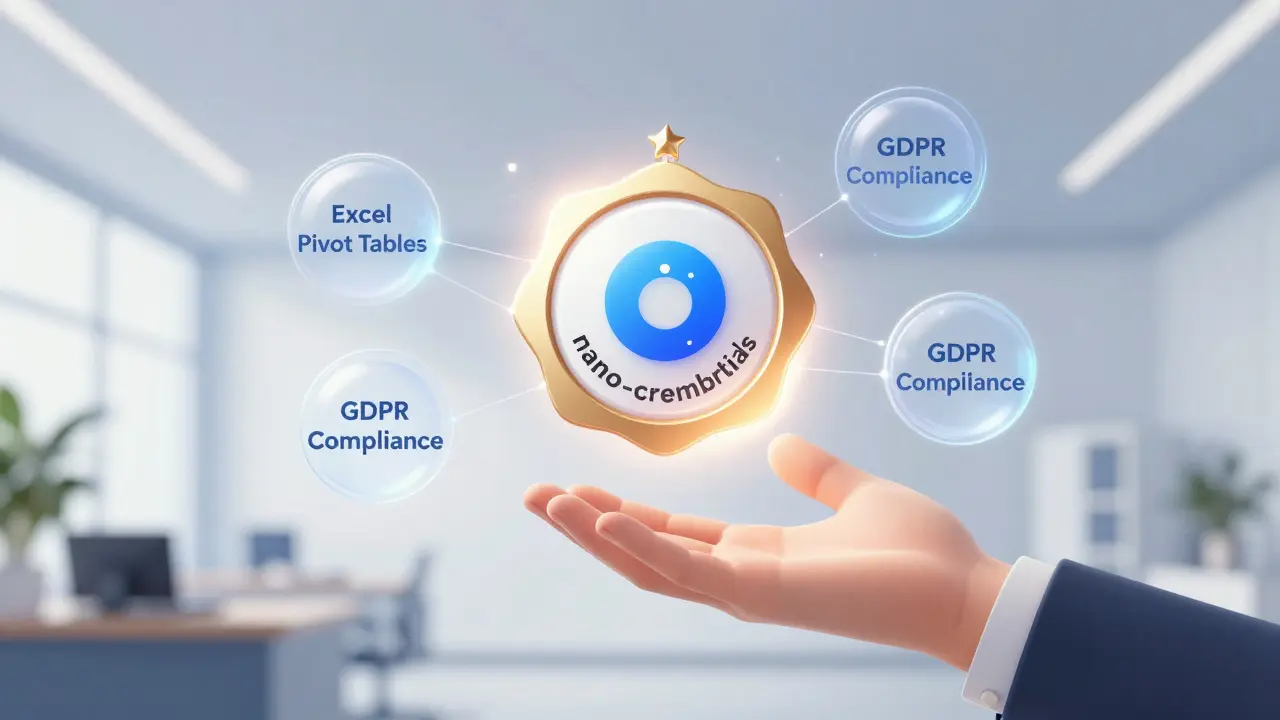
If microlearning is the method, nano-credentials are the proof. Nano-credentials are small, verified digital certifications that attest to mastery of a specific skill or competency. Unlike a full degree or even a professional certification like PMP or CPA, these are granular. They might certify that you know how to use Excel pivot tables, understand GDPR compliance basics, or can write effective SEO meta descriptions.
In 2026, the landscape of credentials has shifted dramatically. Employers are tired of filtering resumes based on university prestige. They want evidence of actual capability. A nano-credential provides that evidence in a verifiable, shareable format. Often issued as Digital Badges, these credentials contain metadata. When a recruiter clicks on your badge, they see exactly what skills were tested, who issued the credential, and how long it took you to earn it.
This transparency solves a major problem in hiring: trust. With traditional degrees, it’s hard to know what a candidate actually learned. Did they just show up to class? With nano-credentials, the assessment is usually embedded in the earning process. You don’t get the badge unless you demonstrate the skill.
Why This Combination Works for Upskilling
The synergy between microlearning and nano-credentials addresses the biggest pain point in modern upskilling: time. Most working professionals cannot dedicate evenings and weekends to a full-time study schedule. They have jobs, families, and lives. Microlearning fits into the cracks of their day-during a commute, on a lunch break, or before bed.
Consider Sarah, a marketing manager in Chicago. She needs to learn data analytics to better interpret campaign results. A traditional bootcamp would require three months of part-time study. Instead, she takes micro-modules on SQL queries over six weeks. After completing each module, she earns a nano-credential. By the end, she has a portfolio of verified skills rather than one vague certificate saying "Data Analytics Fundamentals."
This modular approach also allows for rapid iteration. Technology changes fast. A tool popular today might be obsolete in two years. If you spend two years getting a degree in a specific software, you risk graduating with outdated knowledge. With microlearning, you can update your skills continuously. Earn a badge in AI prompt engineering this month, and maybe swap it for a generative video editing badge next year.
The Role of Employers and Platforms
For this system to work, employers need to value these credentials. Fortunately, the trend is moving in that direction. Major companies like Google, Microsoft, and IBM have embraced nano-credentials for internal upskilling and external hiring. They recognize that a stack of relevant badges often indicates more current expertise than a degree earned a decade ago.
Learning platforms have adapted quickly. Sites like Coursera, LinkedIn Learning, and specialized platforms like Pluralsight offer thousands of micro-courses tied to digital badges. These platforms use algorithms to recommend the next logical step in your learning journey. If you earn a badge in basic project management, the platform suggests advanced agile methodologies. This creates a personalized pathway that feels less like school and more like a game progression.
However, not all nano-credentials are created equal. Some are issued by reputable universities and industry leaders, while others come from unknown entities with little oversight. As a learner, you need to be discerning. Look for credentials that are:
- Issued by recognized industry bodies or top-tier institutions
- Backed by rigorous assessments, not just multiple-choice quizzes
- Compatible with open standards like Open Badges 3.0
- Linked to specific job roles or skill frameworks (e.g., O*NET)

Building Your Personal Credential Stack
How do you start? Don’t try to boil the ocean. Pick a skill gap that’s holding you back right now. Maybe you’re struggling with public speaking, or you need to learn a new coding language. Break that goal down into micro-steps.
- Identify the specific skill: Instead of "learn marketing," choose "learn email segmentation strategies."
- Find a reputable micro-course: Look for providers that issue verified nano-credentials upon completion.
- Complete the module: Dedicate 15-20 minutes a day. Consistency beats intensity.
- Earn and share the badge: Add it to your LinkedIn profile, digital portfolio, or internal company directory.
- Repeat: Stack these credentials to build a comprehensive skill set.
This strategy turns your career development into a continuous, visible process. Recruiters can see your trajectory. They can see that you’re actively learning and adapting. In a world where half of today’s core skills will be obsolete in five years, showing a habit of lifelong learning is perhaps the most valuable credential of all.
Pitfalls to Avoid
While microlearning and nano-credentials are powerful, they aren’t a silver bullet. One common mistake is collecting badges without applying the skills. It’s easy to click through a series of quizzes and rack up ten digital badges. But if you never use those skills in your work, they’re worthless. Always pair learning with immediate application.
Another pitfall is ignoring foundational knowledge. Microlearning is great for specific tasks, but it can leave gaps in broader theoretical understanding. If you’re learning to code, micro-modules on syntax are helpful, but you still need to understand computer science fundamentals. Use microlearning to supplement, not replace, deeper study when necessary.
Finally, beware of "badge fatigue." Don’t clutter your profile with every minor achievement. Curate your credentials. Highlight the ones that are most relevant to your target role. Quality matters more than quantity. A single badge from a respected institution in a high-demand skill is worth more than fifty badges from obscure sources.
Are nano-credentials accepted by all employers?
Not yet universally, but adoption is growing rapidly. Tech companies, startups, and forward-thinking corporations increasingly value them. Traditional industries may still prefer degrees, but many are beginning to accept nano-credentials as supplementary proof of skills. Check job postings for mentions of "digital badges" or "verified certifications" to gauge interest.
How long does it take to earn a nano-credential?
Most nano-credentials can be earned in anywhere from 1 to 10 hours of total effort, depending on complexity. Because they focus on specific skills, they are designed to be completed quickly. Many learners finish several in a single week by dedicating short daily sessions.
Is microlearning effective for complex subjects?
Yes, if structured correctly. Complex subjects should be broken down into smaller, manageable components. For example, learning machine learning involves many concepts. Microlearning can teach individual algorithms, data preprocessing steps, or evaluation metrics. However, learners must connect these dots themselves or follow a curated path to ensure holistic understanding.
Do nano-credentials expire?
Some do, especially in fast-changing fields like cybersecurity or cloud computing. Issuers may require periodic renewal to ensure skills remain current. Others are permanent records of achievement. Always check the validity period listed in the badge metadata.
Where can I display my nano-credentials?
The best places are LinkedIn (in the Licenses & Certifications section), personal portfolios, and internal company HR systems. Many digital badge platforms allow you to embed badges directly into websites or email signatures, making them highly visible to peers and recruiters.