Neurodivergent-Friendly Course Design: Inclusive Strategies for Accessible Learning
 May, 21 2026
Why Standard Courses Fail Neurodivergent Learners
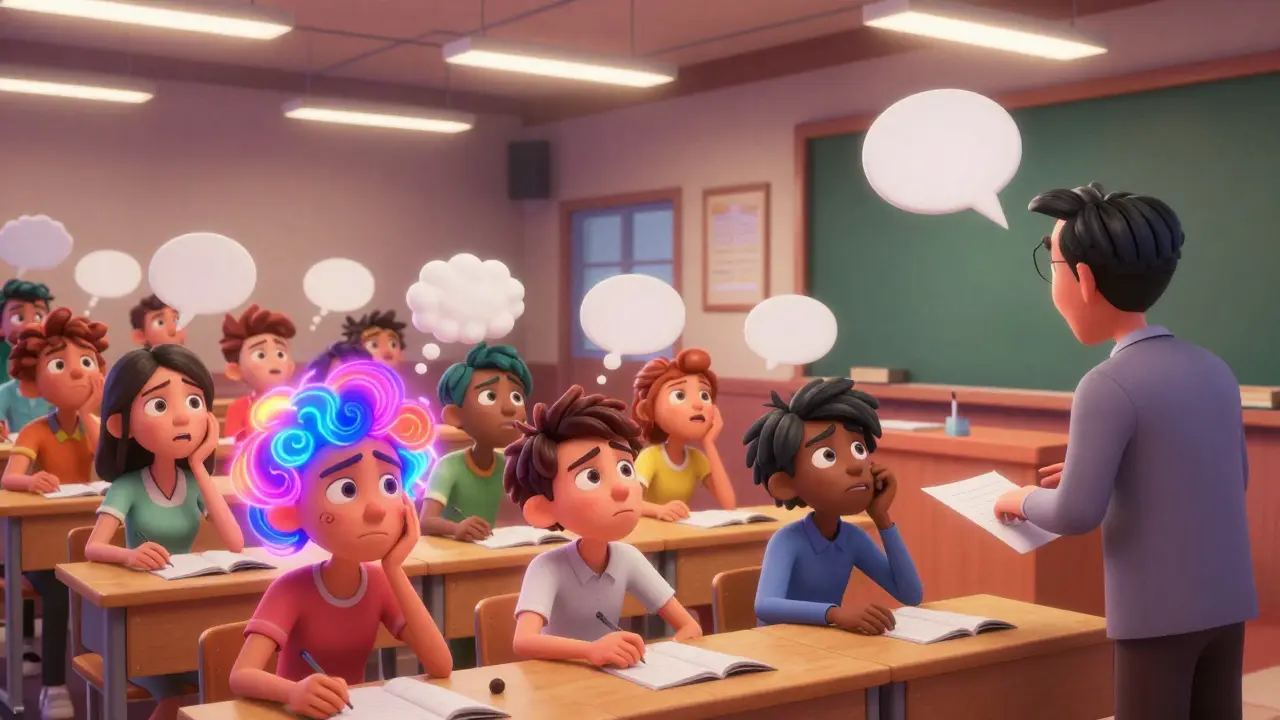
Imagine sitting in a lecture hall where the lights are buzzing, the professor speaks at a rapid pace without pausing, and the deadline for your major project was announced verbally three weeks ago. For many neurotypical students, this is just Tuesday. For neurodivergent learners, including those with ADHD, autism, dyslexia, or sensory processing differences, this environment is not just uncomfortable-it is an active barrier to learning.
The traditional model of higher education and corporate training often assumes a single, linear path to understanding information. It relies heavily on auditory processing, rigid time management, and social cues that are not universal. When we ignore these variations, we don't just create friction; we exclude talent and potential. The shift toward neurodivergent-friendly course design isn't about lowering standards. It’s about removing arbitrary obstacles so that cognitive diversity can thrive.
Core Principles of Universal Design for Learning (UDL)
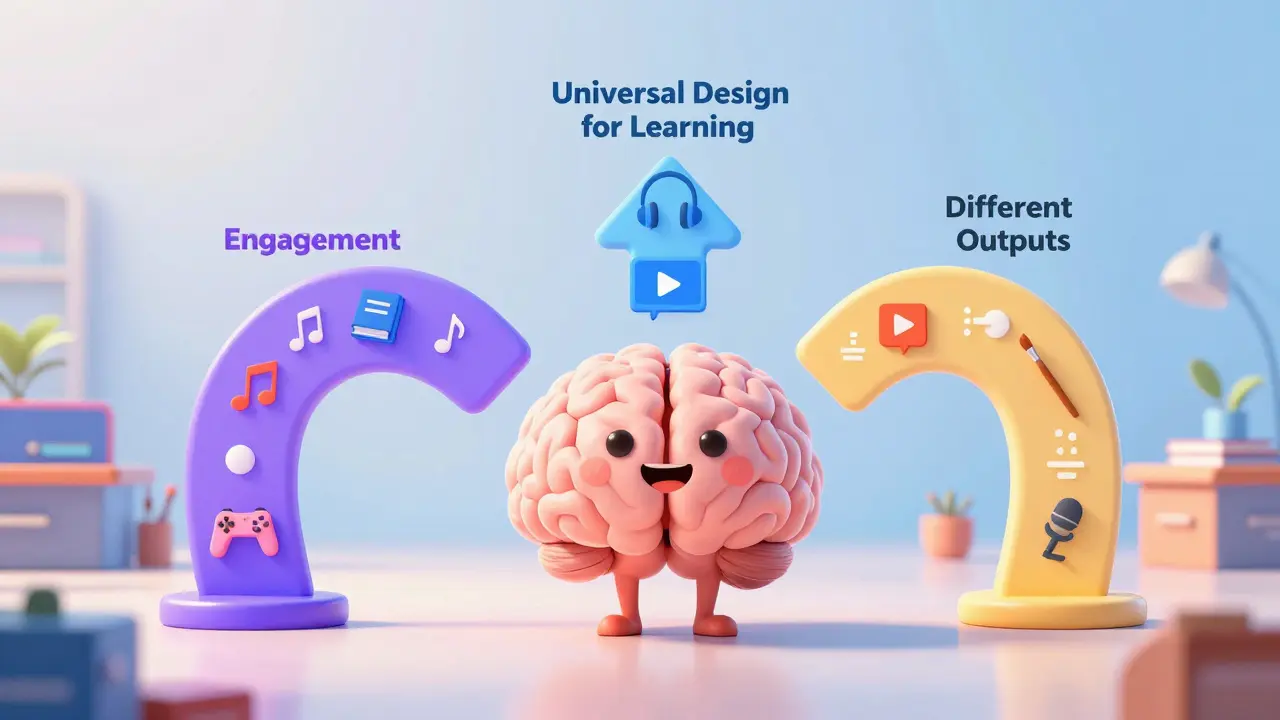
To build courses that work for everyone, you need a framework that anticipates difference rather than reacting to it. The gold standard here is Universal Design for Learning (UDL), an educational framework based on scientific insights into how humans learn. UDL rests on three pillars that directly benefit neurodivergent minds:
- Multiple Means of Engagement: Offer choices in how students interact with the material. This helps regulate motivation and attention, which is crucial for learners with executive function challenges.
- Multiple Means of Representation: Present information in various formats-text, audio, video, and interactive diagrams. This ensures that barriers related to reading speed, auditory processing, or visual perception are minimized.
- Multiple Means of Action and Expression: Allow students to demonstrate their knowledge in different ways, such as through writing, speaking, coding, or creating visual projects.
When you apply UDL, you aren't designing for a "average" student who doesn't exist. You are designing for the human brain in all its variety. This approach reduces the cognitive load required to simply access the content, leaving more mental energy for actual learning.
Reducing Cognitive Load and Sensory Overload
One of the most significant hurdles for neurodivergent learners is cognitive overload. When a webpage is cluttered, a video has distracting background music, or instructions are buried in long paragraphs, the brain struggles to filter signal from noise. For someone with ADHD or autism, this filtering process consumes immense amounts of energy.
Sensory sensitivity is also a critical factor. Many neurodivergent individuals experience heightened sensitivity to sound, light, or texture. In digital learning environments, this translates to interface design. Bright, flashing animations, auto-playing videos with sound, and complex navigation menus can trigger anxiety or shutdowns.
Here are specific strategies to reduce load:
- Clean Visual Design: Use ample white space, high-contrast text, and sans-serif fonts like Arial or Verdana. Avoid decorative elements that serve no functional purpose.
- Predictable Navigation: Keep menus consistent across all pages. If the "Submit Assignment" button is in the top right corner on one page, it should be there on every page.
- Controlled Audio/Video: Never auto-play media. Provide transcripts and captions for all video and audio content. This helps not only those with hearing impairments but also those who process written language better than spoken word.
Executive Function Support: Beyond Time Management
Executive function refers to the mental skills that help us get things done. This includes working memory, flexible thinking, and self-control. Many neurodivergent people struggle with these skills, not because they lack intelligence or effort, but because their brains are wired differently.
Traditional courses often assume that students will naturally remember deadlines, break down large tasks, and prioritize assignments. This assumption fails many capable learners. Instead, course design must scaffold these processes.
| Challenge | Inclusive Strategy | Implementation Example |
|---|---|---|
| Task Initiation | Break down large projects | Provide a checklist with micro-steps for each phase of a final paper or project. |
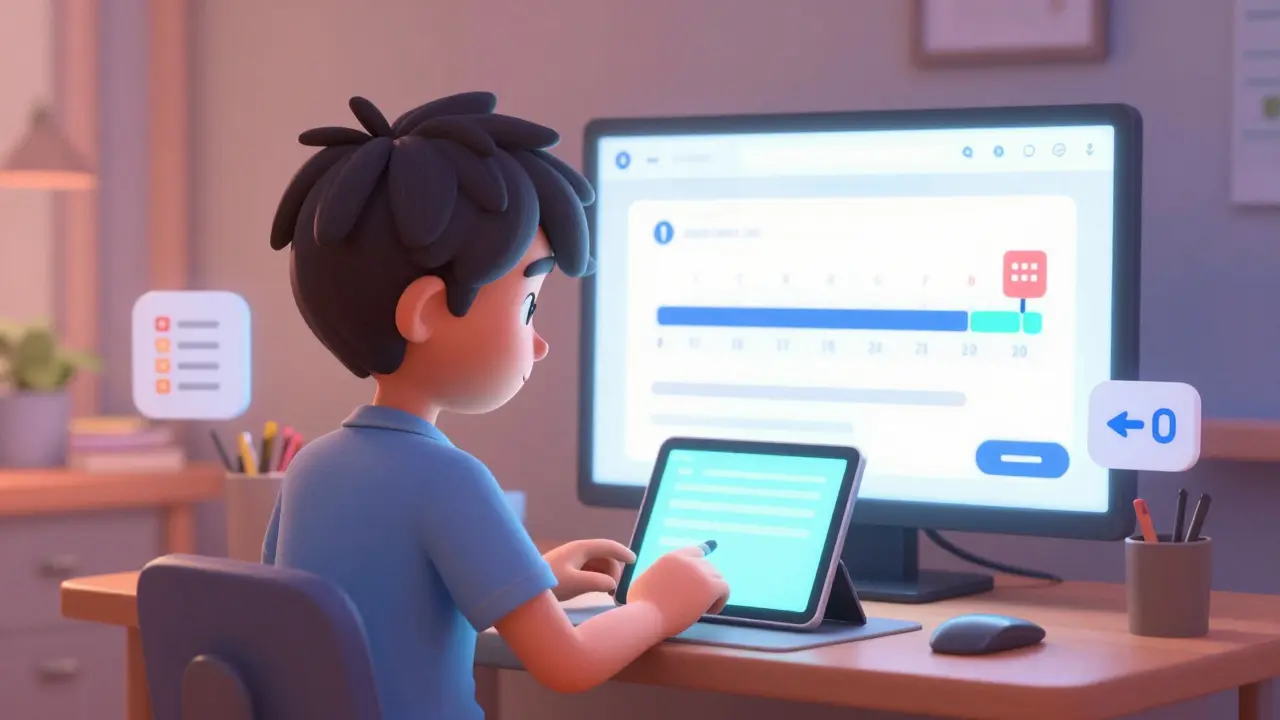
| Time Blindness | Visual timelines and reminders | Use Gantt charts or visual calendars that show progress, not just dates. Send automated, non-punitive reminders. |
| Working Memory | Externalize instructions | Keep assignment rubrics and instructions visible on the submission page, rather than requiring students to navigate back to a syllabus. |
| Prioritization | Clear hierarchy of tasks | Label tasks as "Critical," "Important," and "Optional." Avoid having everything marked as urgent. |
Communication Clarity and Explicit Instructions
Ambiguity is the enemy of inclusion. Phrases like "do your best," "be creative," or "submit soon" are open to interpretation. For neurodivergent learners, particularly those on the autism spectrum, implicit social rules and vague language can cause significant anxiety and confusion.
Explicit communication is key. State exactly what is expected, when it is due, and how it will be graded. If there is flexibility, define the boundaries of that flexibility clearly. For example, instead of saying "late submissions may be accepted," say "late submissions will receive a 10% penalty per day up to 3 days late. After that, they will not be accepted unless prior approval is given."
Also, consider the medium of communication. Some learners prefer written communication because it allows them to process information at their own pace and formulate thoughtful responses. Others may benefit from synchronous check-ins. Offering both options respects different communication styles.
Flexible Assessment Methods
Standardized testing and timed essays are notorious for failing to capture the true ability of neurodivergent students. A student might know the material perfectly but freeze under time pressure or struggle with the physical act of writing quickly. This creates a mismatch between assessment and learning objectives.
Consider alternative assessment methods that focus on mastery rather than speed or format:
- Project-Based Assessments: Allow students to choose topics and formats that align with their interests and strengths. This increases engagement and allows for deeper exploration.
- Oral Exams or Video Presentations: Give students the option to explain their answers verbally if writing is a barrier.
- Open-Book/Open-Resource Tests: Shift the focus from memorization to application and analysis. This reduces anxiety and reflects real-world problem-solving scenarios.
- Ungraded Practice Opportunities: Provide low-stakes quizzes or drafts where feedback is given without penalty. This helps students calibrate their understanding before the high-stakes assessment.
Creating Psychological Safety and Community
Learning is a social activity, but social interactions can be draining or confusing for some neurodivergent individuals. Group work, for instance, is often mandated in courses but can lead to exclusion if roles are not clearly defined. Some students may withdraw due to fear of judgment or difficulty navigating group dynamics.
To foster psychological safety:
- Set Clear Group Norms: Establish guidelines for communication, decision-making, and conflict resolution at the start of any group project.
- Offer Individual Options: Whenever possible, allow students to opt out of group work in favor of individual projects, perhaps with a slightly modified prompt.
- Normalize Neurodiversity: Include content about neurodiversity in the course itself. This validates the experiences of neurodivergent students and educates their peers, reducing stigma.
- Anonymous Feedback Channels: Provide ways for students to ask questions or raise concerns anonymously. This lowers the barrier to seeking help.
Technology as an Enabler, Not a Barrier
Assistive technology has come a long way, but it is often treated as an afterthought. Screen readers, speech-to-text software, and text-to-speech tools are essential for many learners. However, if the course platform is not compatible with these tools, they become useless.
Ensure that all digital materials are accessible. This means using proper heading structures in documents, adding alt-text to images, and ensuring that PDFs are searchable and readable by screen readers. Test your course materials with accessibility checkers regularly. Remember, accessibility is not a feature; it is a fundamental requirement for inclusive education.
What is the difference between accommodations and neurodivergent-friendly design?
Accommodations are individual adjustments made after a student identifies a need, often requiring documentation. Neurodivergent-friendly design, rooted in Universal Design for Learning, builds flexibility into the course structure from the start, benefiting all students without singling anyone out.
How can I support students with ADHD in online courses?
Support students with ADHD by breaking content into short, digestible chunks, providing clear and explicit deadlines, offering multiple ways to engage with material (video, text, interactive), and minimizing distractions in the learning interface. Regular check-ins and immediate feedback can also help maintain momentum.
Is it necessary to provide transcripts for all videos?
Yes. Transcripts and captions are essential for deaf and hard-of-hearing learners, but they also benefit neurodivergent students who may process written information better than audio, or who need to review content at their own pace. They improve comprehension for everyone.
How do I handle group work inclusively?
Define clear roles and expectations for group members. Provide structured templates for collaboration. Allow for asynchronous communication options for those who find real-time interaction overwhelming. Where possible, offer an individual alternative to group projects.
What resources are available for learning more about UDL?
The CAST website (cast.org) is the primary resource for Universal Design for Learning guidelines and research. Additionally, many universities have disability services offices that publish best practices for inclusive teaching.