Onboarding Apprentices and Trainees with Online Learning
 Dec, 3 2025
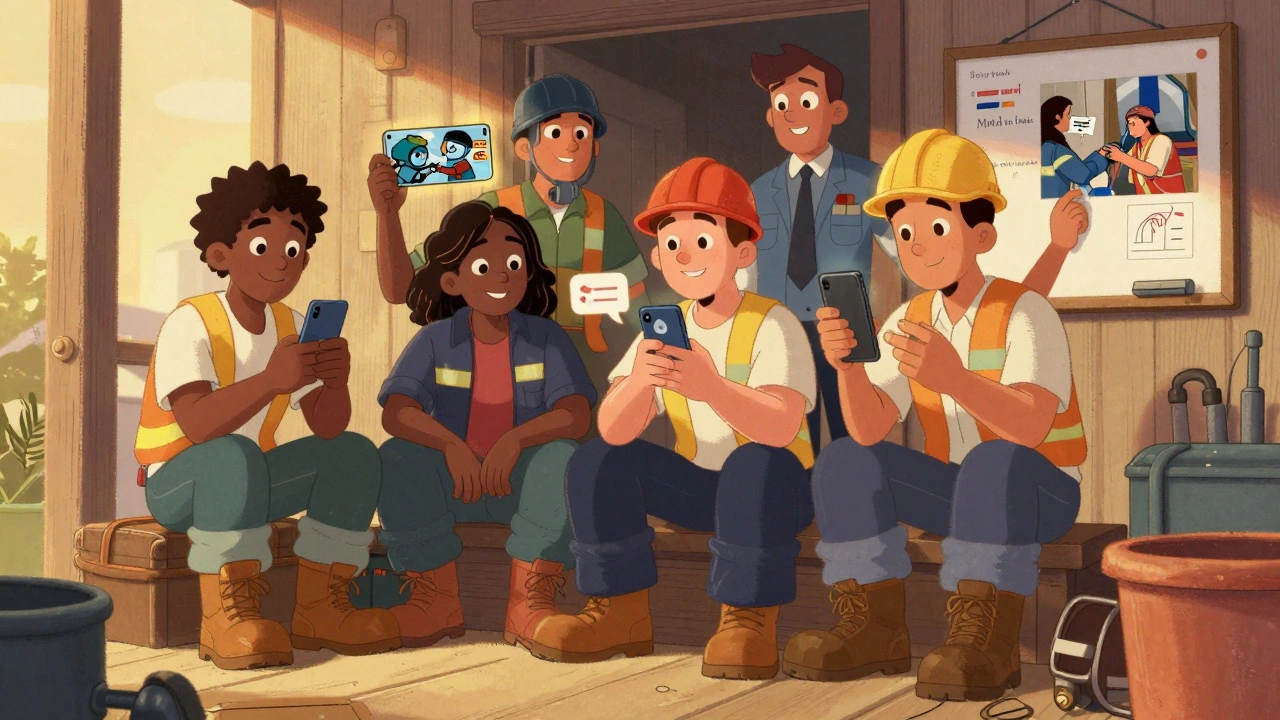
When you bring on a new apprentice or trainee, the first week can make or break their entire experience. Too much information at once? They’ll feel overwhelmed. Too little structure? They’ll get lost. And if they’re learning remotely, the challenges multiply. Online learning isn’t just a backup plan anymore-it’s the default for onboarding apprentices and trainees in trades, healthcare, manufacturing, and tech. But most companies treat it like a copy-paste version of in-person training. That’s why so many apprentices drop out before their first month.
Why Online Onboarding Fails for Apprentices
Most online onboarding systems are built for office workers, not people learning to weld, wire a panel, or assist in a surgical unit. They assume the learner has a quiet space, a reliable laptop, and the self-discipline of a college student. But apprentices often work part-time jobs, share devices with family, or have limited internet access. A 45-minute video on OSHA safety? They’ll skip it. A 20-page PDF on workplace protocols? They’ll never open it.
Research from the U.S. Department of Labor in 2024 showed that 37% of apprentices who started with digital-only onboarding dropped out within 60 days. The top reason? They didn’t feel connected. Not because the content was bad-but because they had no one to ask when they got stuck.
What Works: The Four-Pillar Model
Successful online onboarding for apprentices isn’t about more videos or fancier platforms. It’s about structure, support, and simplicity. Four pillars keep apprentices engaged and learning:
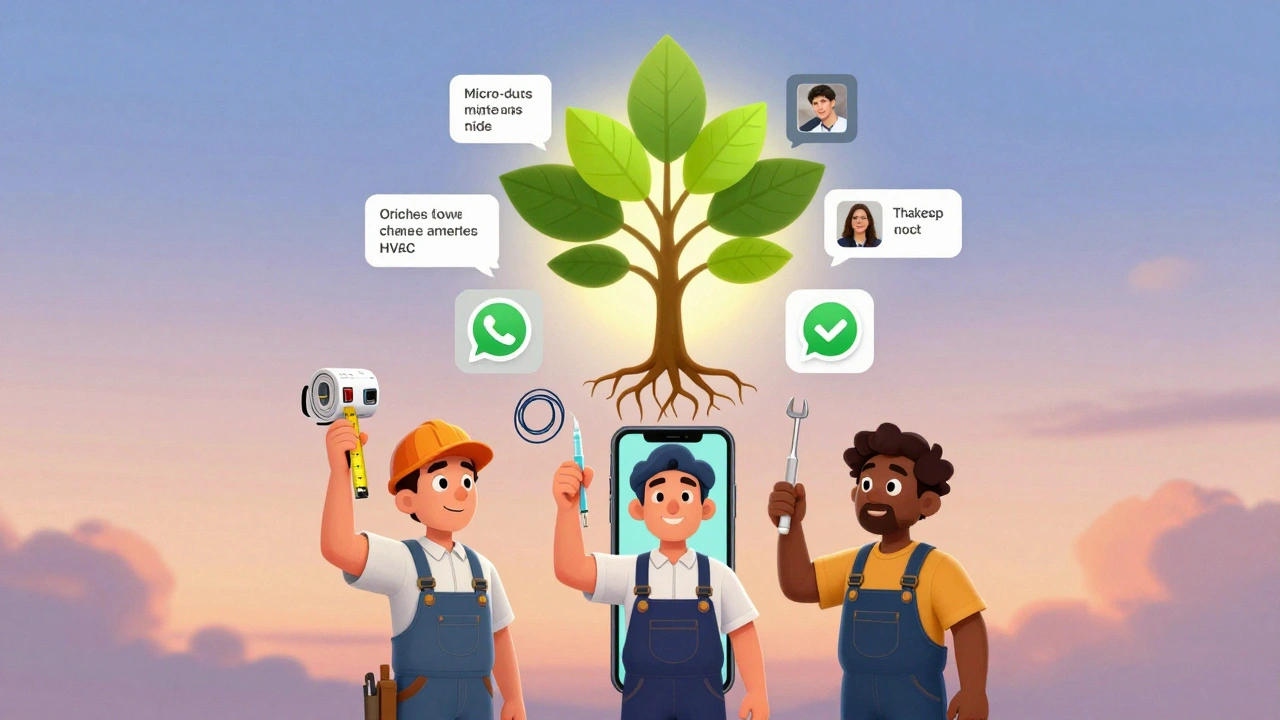
- Microlearning chunks-No lesson longer than 7 minutes. Break down tasks into single actions: ‘How to read a tape measure,’ ‘How to lock out a circuit breaker,’ ‘How to greet a patient in a clinic.’ Each lesson ends with a quick check: ‘Did you do this?’
- Real-world video demos-Not stock footage. Film your own team doing the job. Show the messy reality: the tool that jams, the shortcut that saves time, the mistake that costs money. Apprentices trust people, not PowerPoint slides.
- One-on-one check-ins-Not Zoom calls. Text or voice messages. A supervisor sends a 30-second audio clip every other day: ‘Hey, saw you posted your first wiring photo. Good job on the color code. Next, double-check the grounding.’
- Peer groups-Create small groups of 3-5 new apprentices. Give them a shared Slack channel or WhatsApp group. Assign one simple weekly task: ‘Post a photo of your workspace and say one thing you learned.’
These aren’t fancy tools. They’re low-tech, human-centered fixes. A company in Ohio that trains HVAC apprentices saw retention jump from 58% to 89% in one year after switching to this model.
Designing Content That Sticks
Content for apprentices needs to be built differently than for corporate learners. Here’s how:
- Use their language-Don’t say ‘preventive maintenance.’ Say ‘fix it before it breaks.’
- Focus on outcomes, not theory-Instead of explaining Ohm’s Law, show how to test if a wire is live. Theory comes later.
- Make it mobile-first-73% of apprentices access training on phones. Videos must load fast. Text must be readable on small screens.
- Include failure examples-Show what happens when you skip a step. A blown fuse. A burned-out motor. A patient who got the wrong medication. Real consequences stick.
One welding program in Texas replaced their 90-minute safety lecture with a 12-minute video series showing real accidents-filmed with dashcams and helmet cams. Completion rates jumped from 61% to 94%. Why? Because apprentices saw the risk, not the rulebook.

Tools That Actually Help
You don’t need an LMS with 50 features. You need tools that fit real life:
| Tool | Best For | Why It Works |
|---|---|---|
| WhatsApp or Telegram | Quick check-ins, reminders, photo sharing | Everyone uses it. No login needed. Works on old phones. |
| YouTube (private videos) | Video demos, step-by-step guides | Free, loads fast, easy to replay. No ads if set to private. |
| Google Forms | Quick quizzes, feedback, attendance | One tap to answer. No app install. Works offline. |
| Padlet | Peer sharing, photo boards, Q&A | Visual, simple, no writing required. Just upload and tap. |
| Flip (formerly Flipgrid) | Video responses, reflections | Apprentices record 1-minute videos saying what they learned. No pressure. |
None of these cost money. None require IT support. All of them work on a $200 Android phone.
Training the Trainers
Most supervisors aren’t teachers. They’re skilled workers who got promoted because they knew their job. Now they’re expected to coach remotely. That’s a huge shift.
Give them a one-page cheat sheet:
- Send one voice note per apprentice every other day.
- Answer questions within 4 hours-even if it’s just ‘I’ll get back to you in an hour.’
- Never say ‘Read the manual.’ Say ‘Let me show you.’
- Celebrate small wins. ‘You got the socket size right on the first try-that’s huge.’
Supervisors who follow this simple routine report higher engagement, fewer mistakes, and more loyalty from apprentices. One mechanic in Michigan said, ‘I used to think I was just fixing cars. Now I realize I’m teaching the next generation how to do it right.’
Measuring Success
Don’t track login hours. Track real behavior:
- How many apprentices completed their first task without help?
- How many posted something in their peer group?
- How many asked a question in the first week?
- How many came back on day 30?
These numbers tell you if your onboarding works. Not how many videos they watched.
A manufacturing plant in Wisconsin cut onboarding time from 14 days to 5 days-without losing quality-by focusing on task completion, not time spent online.
What to Avoid
- Don’t force video calls. Many apprentices hate being on camera.
- Don’t use corporate LMS platforms like Cornerstone or Workday. They’re built for managers, not learners.
- Don’t assume they have a quiet place to study. Design for noise, distractions, and shared spaces.
- Don’t wait for them to ask for help. Reach out first.
Start Small, Scale Fast
You don’t need to overhaul everything tomorrow. Pick one apprentice. Build a 5-day onboarding plan using WhatsApp, YouTube, and Google Forms. Test it. Ask them what worked. Fix what didn’t. Then do it for the next one.
Apprentices aren’t failing because they’re lazy. They’re failing because the system doesn’t meet them where they are. Online learning isn’t about technology. It’s about respect. Show up. Keep it simple. Listen. And they’ll stick around.
Can online learning really replace in-person training for apprentices?
Not replace-complement. Online learning works best as a foundation. Apprentices watch short videos on safety, tools, or procedures before stepping onto the job site. Then, in-person time is used for hands-on practice, feedback, and problem-solving. The best programs use online learning to prep, not replace, real-world experience.
What if my apprentices don’t have smartphones or internet?
Many do. Even low-income households often have smartphones with basic data plans. If not, use SMS-based systems. Send text prompts with links to voice messages or simple questions. Some programs use USB drives with preloaded videos for apprentices without reliable internet. Others partner with libraries or community centers to provide access. The goal isn’t perfect tech-it’s accessible learning.
How do I keep apprentices from feeling isolated?
Isolation kills engagement. Build in peer interaction from day one. Small groups with shared tasks work best. Assign a ‘buddy’-an older apprentice or recent graduate-who checks in weekly. Use tools like Padlet or Flip where they can post photos or short videos. Even a simple WhatsApp group where they share one win per day reduces loneliness. Human connection matters more than the platform.
How long should each online lesson be?
Seven minutes or less. Apprentices learn by doing, not watching. A lesson should teach one action: how to tighten a bolt to the right torque, how to read a blueprint’s scale, how to shut down a machine safely. After the video, they should immediately try it. Short lessons mean higher completion rates and better retention.
Should I require quizzes or tests?
Not at first. Quizzes feel like school-and many apprentices have had bad experiences with school. Instead, use check-ins: ‘Did you try this?’ ‘Show me your work.’ Use photos, voice notes, or quick yes/no answers. If you need compliance tracking, use simple Google Forms with one or two questions. Focus on behavior, not scores.
What if my company doesn’t have the budget for training tools?
You don’t need money-you need creativity. Use free tools: WhatsApp, YouTube, Google Forms, Padlet, Flip. Film your own team doing tasks with a phone. Record voice notes. Create a shared folder with photos of tools and parts. The most effective onboarding programs spend zero dollars on software. They spend time-on people.
Next Steps
Start with one apprentice. Build a 5-day plan using just three tools: WhatsApp for check-ins, YouTube for short videos, and Google Forms for quick feedback. Ask them what they need. Watch what they do. Adjust. Repeat. The goal isn’t to create a perfect system-it’s to show up, stay consistent, and let them know they’re not alone.
Amanda Harkins
December 3, 2025 AT 15:28it’s wild how we keep treating apprentices like they’re just mini-office workers. you don’t need a fancy LMS to teach someone how to weld-you need someone who’s been there to say, ‘hey, that’s not how we do it here.’
Jeanie Watson
December 5, 2025 AT 08:12meh. sounds like a lot of work for something that should just be handed to them on a silver platter.
Tom Mikota
December 5, 2025 AT 22:18wait-so you’re telling me we should stop using corporate jargon and actually talk to people like humans? whoa. mind blown. also, ‘fix it before it breaks’? genius. i’m filing that under ‘obvious things we ignored for 20 years’.
Mark Tipton
December 6, 2025 AT 19:04let’s be real-this whole model is just a band-aid on a systemic failure. the real issue is that we’ve abandoned vocational education as a national priority. the U.S. Department of Labor’s 37% dropout rate? that’s not a training problem-that’s a cultural one. we glorify college degrees and treat skilled trades like second-class careers. until we fix that, no amount of WhatsApp check-ins or Padlet boards will fix the root cause: societal devaluation of manual labor. also, ‘microlearning’ is just corporate speak for ‘short attention span training.’
and don’t get me started on ‘Flip’-that’s just TikTok with a diploma. apprentices don’t need to ‘reflect’ on their day-they need to be held accountable. if they’re skipping videos, maybe they shouldn’t be in the program at all.
also, the fact that you’re recommending free tools is telling. if your company can’t afford a proper LMS, maybe they shouldn’t be running an apprenticeship at all. this isn’t a DIY project-it’s a professional pipeline.
and why no mention of union involvement? unions have been doing this right for decades. you’re ignoring the elephant in the room: collective bargaining structures that actually protect and train apprentices. this feels like Silicon Valley pretending they invented the wheel.
also, ‘show them the failure’? that’s fear-based training. not motivation. real professionals don’t learn from horror stories-they learn from mastery. show them the master welder, not the blown fuse.
and one more thing: ‘no quizzes’? really? you want to let someone wire a panel without knowing if they understood the safety protocols? that’s not trust-that’s negligence. compliance isn’t optional. it’s life or death.
you’re romanticizing simplicity. it’s not ‘respect’ if you lower standards. it’s laziness.
Adithya M
December 8, 2025 AT 17:08bro this is spot on. in India, we’ve been doing this for years-WhatsApp groups, voice notes from seniors, short videos shot on phones. no one cares about the LMS. they care if someone actually checks in. one guy in our shop sent me a voice note every morning for two weeks just saying ‘you good?’-that kept me going. no app, no login, just a human voice.
also, the ‘one task per week’ thing? that’s gold. we did it with a group of 5 new electricians-every Friday, post a pic of your work with one thing you learned. some posted blurry photos of broken wires. others posted their first correct splice. we celebrated both. turned into a real community.
you don’t need money. you need heart.
Salomi Cummingham
December 8, 2025 AT 21:21oh my god, I’m crying. I’ve spent 17 years trying to convince my company that apprentices aren’t interns with tool belts. They’re not just learning how to use a wrench-they’re learning how to be trusted, respected, and seen. And you know what? Most of them come from places where no one ever believed they could do anything big. So when their supervisor sends a 30-second voice note saying ‘good job on the grounding’-that’s not just feedback. That’s identity reinforcement. That’s the difference between someone walking away and someone staying for 30 years. I’ve seen it. I’ve lived it. And I’ve cried in the breakroom because someone finally wrote this down. Thank you. From the bottom of my heart.
Also-Padlet? I used it last year with a group of 8 new HVAC techs. One girl posted a photo of her grandma’s kitchen, saying ‘this is where I learned to fix things.’ I still have that image saved. That’s not training. That’s legacy.
And the ‘don’t say read the manual’? YES. I used to say that. I was terrible. Now I say ‘come with me’ and we go fix it together. And you know what? They never forget it.
Why do we make this so complicated? It’s not about tech. It’s about showing up. And you just gave me the words I needed to tell my boss.
Johnathan Rhyne
December 9, 2025 AT 04:00so let me get this straight-you want to replace corporate LMS with WhatsApp? That’s not innovation, that’s surrender. And ‘microlearning’? That’s just giving people ADHD training wheels. Real trades require depth. You can’t learn to wire a panel in 7 minutes. You need repetition. You need failure. You need to sweat over a mistake until it burns into your bones.
Also, ‘show them the failure’? That’s not education-that’s trauma porn. You think showing a blown motor is gonna motivate someone? Nah. It’s gonna scare them into quitting. What they need is a mentor who’s been there, not a horror reel.
And ‘no quizzes’? You’re literally asking for someone to wire a house wrong because ‘they didn’t feel like taking a test.’ That’s not respect. That’s negligence wrapped in feel-good buzzwords.
Also, why is everyone suddenly obsessed with ‘voice notes’? Is this a podcast or a trade school? If you can’t write a clear instruction, you shouldn’t be teaching.
And don’t even get me started on ‘Flip.’ That’s not learning-that’s performance art. Apprentices don’t want to be TikTok stars. They want to be skilled. And you’re turning their training into a social media contest.
Stop romanticizing poverty. Just because someone uses an old phone doesn’t mean you lower standards. Raise the bar. Give them structure. Give them discipline. That’s respect.
Jawaharlal Thota
December 9, 2025 AT 15:01in my experience, the biggest issue isn’t the tools-it’s the mindset of the supervisors. I’ve seen so many skilled workers who are amazing with their hands but completely lost when it comes to guiding someone else. They think ‘just watch me’ is enough. But apprentices need structure, even if it’s simple. The four-pillar model? It’s not rocket science. It’s basic human psychology. People need to feel seen, heard, and safe to make mistakes. That’s what WhatsApp check-ins and peer groups do-they create psychological safety. And that’s what keeps people from quitting.
I run a small plumbing apprenticeship in Delhi. We don’t have fancy tech. We have a shared Google Drive with photos of tools, a WhatsApp group where the seniors reply within 2 hours, and every Friday, we all sit on the floor and share one thing we messed up and one thing we nailed. It’s not glamorous. But after two years, our retention is 92%. Because we didn’t try to fix the system-we fixed how we treated people.
Also, the part about ‘celebrating small wins’? That’s everything. One kid fixed his first leak after three tries. I sent him a voice note: ‘That was a tough one. You didn’t give up. That’s what makes a plumber.’ He cried. And he’s still here.
You don’t need money. You need to care.
Lauren Saunders
December 10, 2025 AT 14:50How quaint. A ‘four-pillar model’ for apprenticeships? How 2018. This reads like a LinkedIn post written by a consultant who’s never held a wrench. The real issue? We’ve outsourced vocational training to underpaid, overworked supervisors who are expected to be teachers, therapists, and tech support-all while working 60-hour weeks. This isn’t a training problem. It’s a labor policy failure. And no, sending voice notes isn’t a solution-it’s a band-aid on a hemorrhage.
Also, ‘use their language’? So we’re dumbing down technical education now? ‘Fix it before it breaks’? That’s not a lesson-it’s a slogan. What happens when they’re on a job site and need to communicate with a licensed electrician who uses proper terminology? They’re lost. You’re not preparing them for the trade-you’re preparing them for a TikTok demo.
And ‘no quizzes’? You’re literally advocating for certification without accountability. That’s not innovation. That’s deregulation dressed up as empathy.
And why are we ignoring the fact that many apprentices are here because they were failed by the K-12 system? You don’t fix systemic educational failure by replacing PDFs with WhatsApp. You fix it by investing in public vocational schools, paid internships, and proper credentialing. This is performative compassion.
Also, ‘$200 Android phone’? That’s still a luxury in rural America. And you think a Padlet board is going to replace the physical mentorship of a master tradesperson? Please.
This isn’t a revolution. It’s a retreat.
sonny dirgantara
December 10, 2025 AT 21:43lol i just used this with my cousin who’s learning to be a mechanic. we used whatsapp for check-ins and youtube videos of my old boss fixing stuff. he passed his first test last week. no lms. no app. just me saying ‘you got this’ every other day. turns out people just wanna know someone’s watching.
Tom Mikota
December 12, 2025 AT 03:14sonny dirgantara said it best. no fancy tech. just a human saying ‘you got this.’