Online Vocational and Technical Training: Mastering Hands-On Skills Remotely
 Apr, 4 2026
Quick Takeaways
- Virtual reality and simulators are replacing the need for physical workshops in early training stages.
- Hybrid models combine digital theory with local "micro-labs" for physical practice.
- Online technical paths are now a lifeline for special populations, including neurodivergent learners and those with physical disabilities.
- Certification is moving toward competency-based badges rather than just "seat time."
The Shift to Virtual Technical Mastery
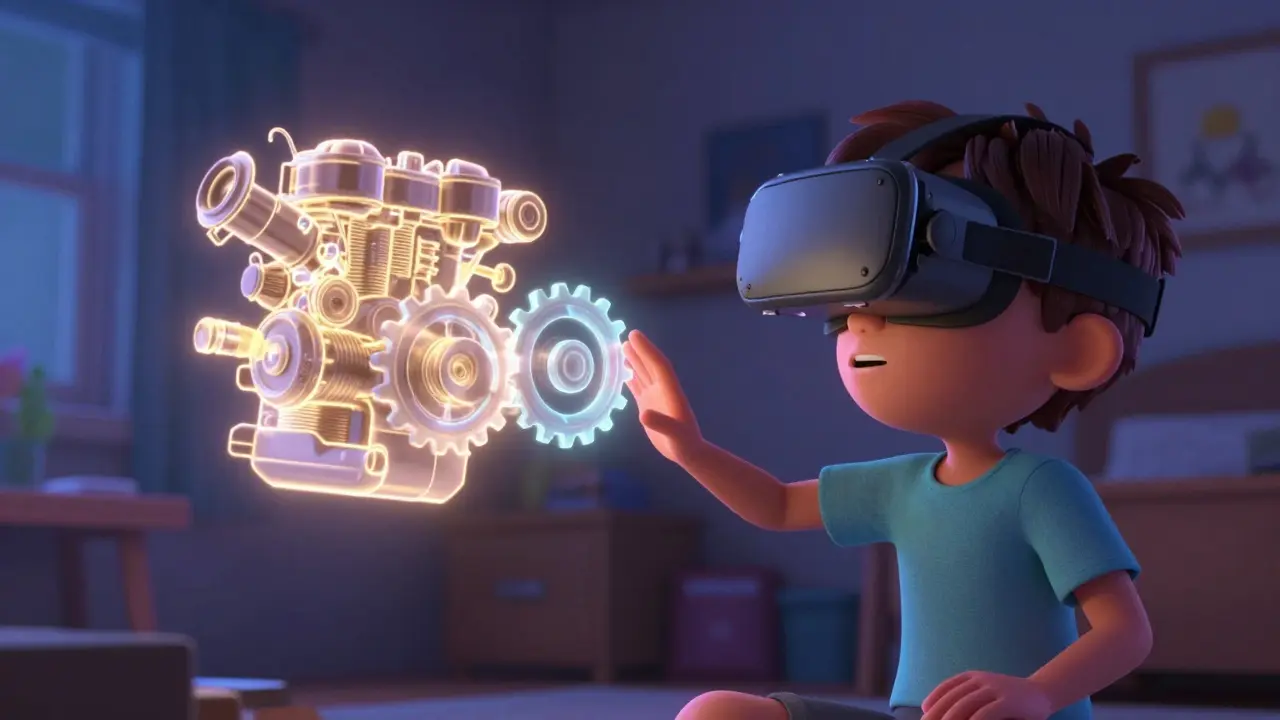
The biggest hurdle in technical education is the "tactile gap." You can read a manual on HVAC (Heating, Ventilation, and Air Conditioning) for ten hours, but you aren't a technician until you've touched the equipment. To solve this, educators are using Virtual Reality (VR), which provides an immersive environment where a student can fail safely. If a student accidentally crosses wires in a VR simulation, they get a visual warning-or a simulated spark-without any real-world danger or equipment cost.
This isn't just about fancy goggles. We're seeing the rise of Augmented Reality (AR), where a student wears glasses that overlay digital instructions onto a real physical object. Imagine a student in a rural area working on a real car engine while a remote instructor circles a specific bolt in their field of vision in real-time. This bridges the gap between a screen and a toolset, making the learning process feel intuitive rather than academic.
Supporting Special Populations in Technical Learning
Traditional trade schools are often loud, rigid, and physically demanding, which can be a nightmare for special populations. For instance, students with Autism Spectrum Disorder (ASD) might find the sensory overload of a busy machine shop paralyzing. Online technical training allows these learners to control their environment. They can pause a complex demonstration, rewind a step five times, and practice a simulation in a quiet space until they feel confident.
For learners with physical disabilities, digital tools offer a level of accessibility previously unheard of. Voice-to-text software and adaptive controllers allow someone with limited mobility to master CAD Software (Computer-Aided Design) or PLC (Programmable Logic Controller) programming. Instead of being shut out of the "hard trades," they can enter the workforce as designers, programmers, or remote diagnostic technicians. This shifts the focus from what the body can do to what the mind can execute.
The Hybrid "Micro-Lab" Strategy
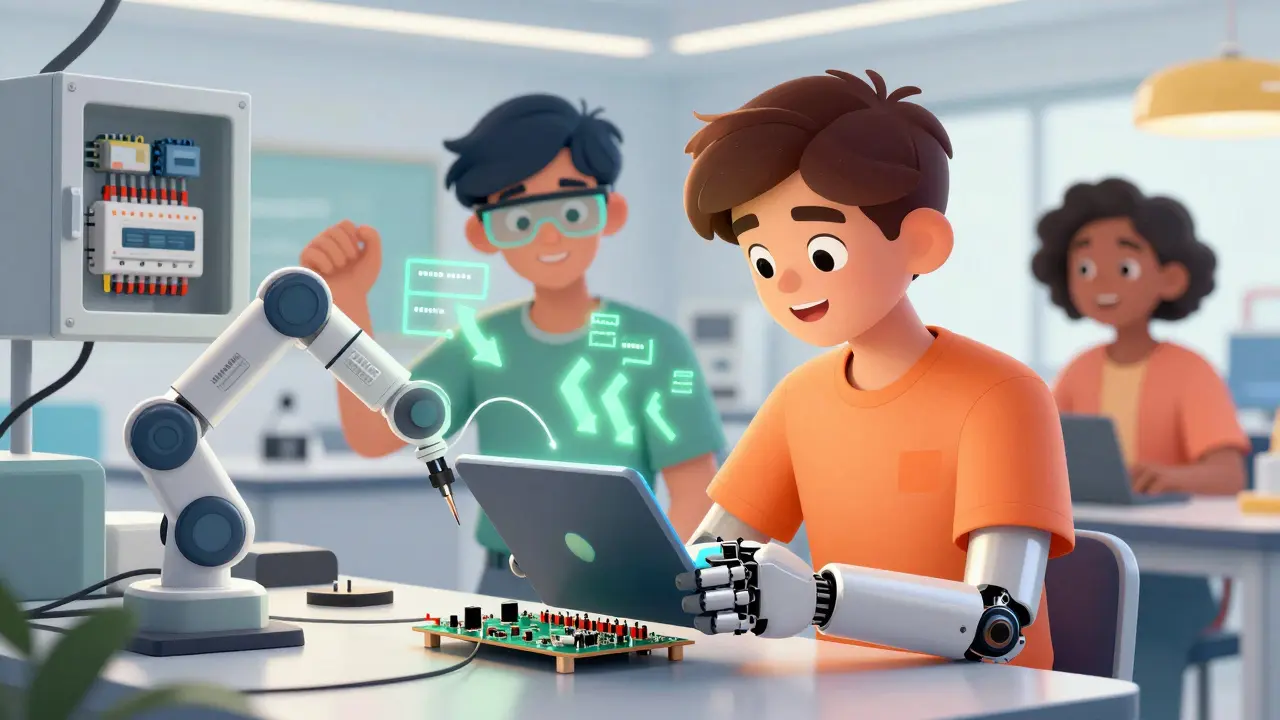
Purely online training is great for theory, but eventually, you need a real tool. The most successful programs now use a "hub and spoke" model. The "hub" is the online platform where students learn the physics, safety protocols, and theory. The "spokes" are local micro-labs-small, community-partnered workshops or approved local businesses where students spend a few hours a week applying what they learned online.
Take a student learning Electrical Engineering. They might spend Monday through Thursday on a platform like Coursera or a dedicated vocational LMS, completing modules on circuitry. Then, on Friday, they head to a local community center for a four-hour supervised lab session. This reduces the cost of commuting and allows students who work full-time or have caregiving responsibilities to stay in the program.
| Method | Primary Tool | Best For | Main Limitation |
|---|---|---|---|
| Pure Online | LMS / Video | Theory & Compliance | No tactile feedback |
| VR Simulation | Headsets/Haptics | Risk-free practice | High initial hardware cost |
| Hybrid (Micro-lab) | Digital + Physical | Certification & Mastery | Requires local partnerships |
| AR Guidance | Smart Glasses | Real-time troubleshooting | Requires high-speed data |
Competency-Based Assessment vs. Seat Time
The old way of doing things was simple: sit in a classroom for 500 hours, and you get a certificate. But in the technical world, time doesn't equal skill. Some people pick up welding in ten hours; others need a hundred. Online vocational training is pushing us toward Competency-Based Education (CBE). In this model, the student doesn't move forward until they can prove they've mastered a specific task.
How do you prove mastery online? Through digital portfolios and "skill badges." For example, a student in a Cybersecurity track might have to successfully breach a sandbox server to earn their "Penetration Testing" badge. For a physical trade, this might involve recording a video of themselves performing a specific weld and submitting it for a remote expert to critique via frame-by-frame analysis. This removes the fluff and ensures that when a person enters the job market, they actually know the work.
Overcoming the "Digital Divide" for Special Populations
We can't talk about online training without talking about the gear. If a student doesn't have high-speed internet or a modern laptop, all this VR and AR tech is useless. This is where the "digital divide" becomes a barrier to entry for the very people who need these skills most. Many vocational programs are now partnering with local libraries or governments to provide "tech kits"-loaner laptops and LTE hotspots-specifically for students in technical tracks.
Furthermore, the design of these platforms must be inclusive. Using Universal Design for Learning (UDL) means providing content in multiple formats. A technical manual shouldn't just be a PDF; it should be an interactive guide with audio descriptions for visually impaired students and simplified, high-contrast visuals for those with cognitive processing challenges. When the interface is invisible, the learning becomes the focus.
The Future of the Digital Trade School
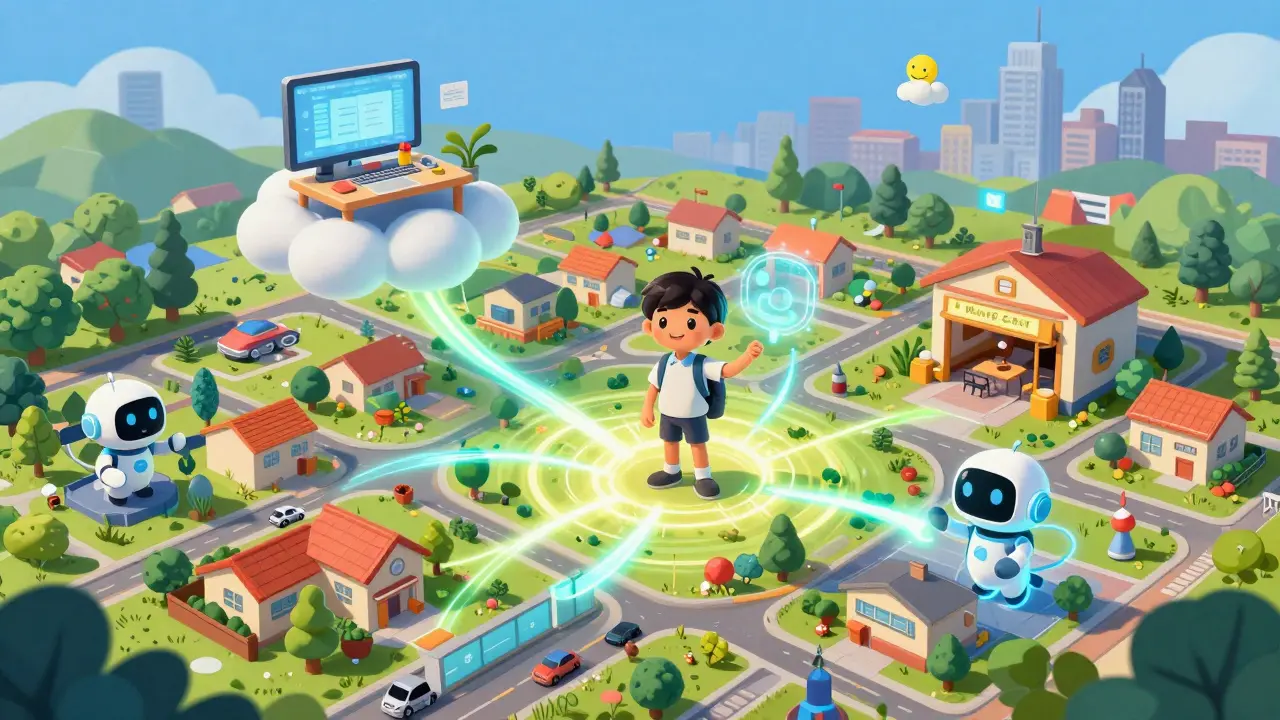
We are heading toward a world where the "school" is no longer a building, but a network. You might learn the theory from a professor in Germany, practice your simulations on a cloud-based server in Texas, and do your physical check-offs at a local shop in your own hometown. This democratization of skill-building means that someone's zip code no longer determines their career potential.
As we integrate more AI-driven tutoring, students will have 24/7 support. An AI can notice that a student is consistently struggling with the same circuit diagram and automatically suggest a different way of visualizing the problem. This level of personalized attention was impossible in a crowded 30-person workshop but is standard in the new digital vocational model.
Can you actually get certified in a trade through an online program?
Yes, but usually through a hybrid model. While the theory and simulated practice happen online, most state licensing boards require a certain number of supervised physical hours. The best programs combine online modules with local "practicum" hours to ensure you meet legal certification standards.
How does online technical training help students with disabilities?
It removes physical and sensory barriers. Students can use screen readers, adjust audio levels to avoid sensory overload, and utilize adaptive hardware to control design software. It also allows them to learn at their own pace without the pressure of a fast-moving physical classroom.
What is a "micro-lab" and why is it used?
A micro-lab is a small, localized physical space-like a partner garage or a community center-where online students go to perform hands-on tasks. It prevents the need for a massive, expensive campus while still providing the tactile experience necessary for technical mastery.
Is VR training as effective as real-world practice?
For early-stage learning, VR is often more effective because it allows students to make mistakes without danger. However, it cannot fully replace the physical "feel" of materials. It is best used as a bridge to get students to a level of confidence before they touch real equipment.
What are skill badges and how do they work?
Skill badges are digital credentials that prove a student has mastered a specific competency (e.g., "Advanced Pipe Fitting") rather than just completing a course. They are often backed by a digital portfolio of evidence, making them highly valuable to employers.
Next Steps for Learners and Educators
If you're a student looking to start, don't just look for "online courses." Look for programs that offer simulations, VR components, or local lab partnerships. A program that only offers PDFs and videos isn't vocational training; it's just reading.
For educators, start by auditing your curriculum for accessibility. Use a UDL checklist to see if your materials are usable for students with different cognitive or physical needs. Moving a course online isn't about uploading your slides; it's about redesigning the experience to be inclusive and tactile, even from a distance.
Nicholas Carpenter
April 4, 2026 AT 04:03The focus on accessibility for neurodivergent students is really heartening. It's high time we recognized that a loud shop floor isn't the only way to learn a trade.
Chris Atkins
April 5, 2026 AT 03:10this is the way forward for sure. my cousin tried a hybrid thing and it actually worked for him without the long drive to campus
Jen Becker
April 6, 2026 AT 14:21Waste of time. VR is just a game.
Ryan Toporowski
April 6, 2026 AT 16:46Love seeing these innovations! 🚀 The micro-lab idea is a total game changer for people with kids or full-time jobs. Keep pushing the boundaries! 💪✨
Samuel Bennett
April 7, 2026 AT 06:11Funny how they mention "tech kits" but ignore who's actually paying for the hardware and why. It's just another way for the government to track where every single single student is located through those LTE hotspots. Also, you used "vocational training" as a noun phrase and then defined it mid-sentence in a way that's grammatically clunky as hell. Typical corporate writing designed to push a narrative about "democratization" while the big tech firms just get richer off the software licenses.
Rob D
April 9, 2026 AT 02:39Absolute rubbish if you think a pair of plastic goggles replaces a real apprenticeship. I've spent twenty years in the dirt and you can't simulate the grit of a real job site. These digital badges are just fancy stickers for people who are too scared to actually get their hands greasy. It's an insult to the actual craftsmen of this country to suggest a "micro-lab" is a substitute for a proper four-year grind. Get real or get out of the way because the real world doesn't have a pause button or a rewind key when a pipe bursts in your face.
Franklin Hooper
April 9, 2026 AT 17:44the phrasing in the second paragraph is barely tolerable
Jess Ciro
April 10, 2026 AT 02:14everyone is ignoring the obvious truth that these headsets are just for data mining our brainwaves
saravana kumar
April 11, 2026 AT 01:00It is quite evident that the author possesses a superficial understanding of the industrial sector. The implementation of such a system requires a level of logistical precision that most community centers simply cannot provide. One must consider the overhead costs of maintaining these "micro-labs" which are conveniently omitted from this idealistic prose. It is an inefficient approach to a complex problem.
Tamil selvan
April 11, 2026 AT 09:09I must agree that the emphasis on Universal Design for Learning is a commendable addition to the curriculum!!! It ensures that no one is left behind in our pursuit of technical excellence,,, and that is truly wonderful.
Mark Brantner
April 13, 2026 AT 06:09Omg imagine actually thinking a VR spark is as scary as a real one lol!! But srsly this is so cool for ppl in the middle of nowhere who just want a chance to learn stuff without moving to a big city. Totaly awesome vibe for the future of larning!!
Kate Tran
April 14, 2026 AT 22:34Sounds like a right treat for those who cant travel far. I reckon the badges are a bit odd but if they get the job done then who cares really?