Plumbing and Construction Trade Courses: Syllabus, Labs, and Career Pathways
 Aug, 14 2026
You don’t need a four-year university degree to build a stable, high-paying career. In fact, the housing market in 2026 is screaming for skilled hands. While tech layoffs make headlines, plumbers, electricians, and carpenters are seeing wages rise because there simply aren't enough people doing the work. But how do you actually get started? You can't just wing it. You need formal training that balances book smarts with calloused palms.
Trade schools and community colleges offer specialized plumbing and construction trade courses that serve as your bridge from zero experience to job-ready apprentice. These programs are not just about memorizing pipe sizes; they are rigorous curricula designed to teach safety, code compliance, and practical application through intensive lab work. This guide breaks down exactly what these syllabi look like, what happens in the labs, and why this path might be the smartest financial move you make this year.
The Core Structure of Trade Education
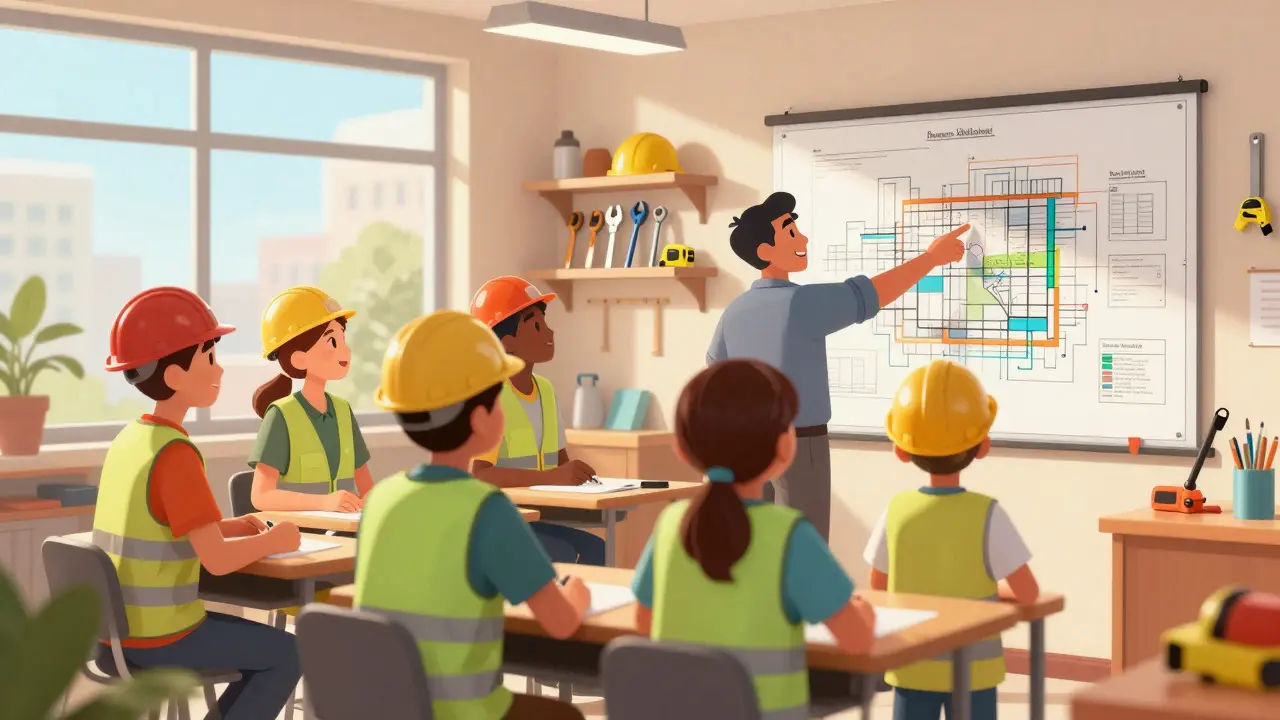
Before you pick up a wrench, you need to understand the architecture of trade education. Unlike traditional college majors that focus heavily on theory, trade programs are built on a dual-track system: classroom instruction and hands-on laboratory practice. Most accredited programs follow guidelines set by organizations like the National Center for Construction Education and Research (NCCER) or state-specific licensing boards.
A typical program lasts between six months and two years, depending on whether you are pursuing a certificate, an associate degree, or entering a registered apprenticeship. The syllabus is usually divided into foundational modules and advanced specialties. Foundational modules cover general construction safety, blueprint reading, and basic tool usage. Advanced specialties dive deep into specific trades like gas fitting, commercial HVAC, or structural framing.
The goal isn't just to pass a test; it's to meet the competency standards required by local building codes. For example, in Arizona, where I live, the heat means understanding solar water heating systems and efficient piping materials is non-negotiable. Your course must reflect the regional demands of where you plan to work.
Decoding the Plumbing Syllabus
When you enroll in a plumbing course, you might expect to spend all day sweating over copper pipes. The reality is more structured. The first few weeks are almost entirely dedicated to safety and regulations. You will study OSHA standards extensively. Why? Because a mistake in a construction site doesn't just mean a bad grade; it means injury or death.
After safety, the syllabus moves into material science. You need to know the difference between PEX, CPVC, PVC, and Copper Type L vs. Type M. Each material has specific pressure ratings, temperature tolerances, and connection methods. A good syllabus will include:
- Fluid Dynamics Basics: Understanding water pressure, flow rates, and venting requirements so drains don't gurgle and sewage doesn't back up.
- Code Compliance: Deep dives into the International Plumbing Code (IPC) or Uniform Plumbing Code (UPC). You'll learn setback distances, trap arm lengths, and fixture unit counts.
- Blueprint Reading: Learning to interpret architectural drawings to locate rough-in points for sinks, toilets, and showers before the drywall goes up.
- Gas Fitting: Specialized training on installing natural gas lines for stoves, dryers, and furnaces, including leak detection protocols.
This theoretical knowledge is useless if you can't execute it. That’s where the labs come in.
Inside the Plumbing Lab: Hands-On Skills
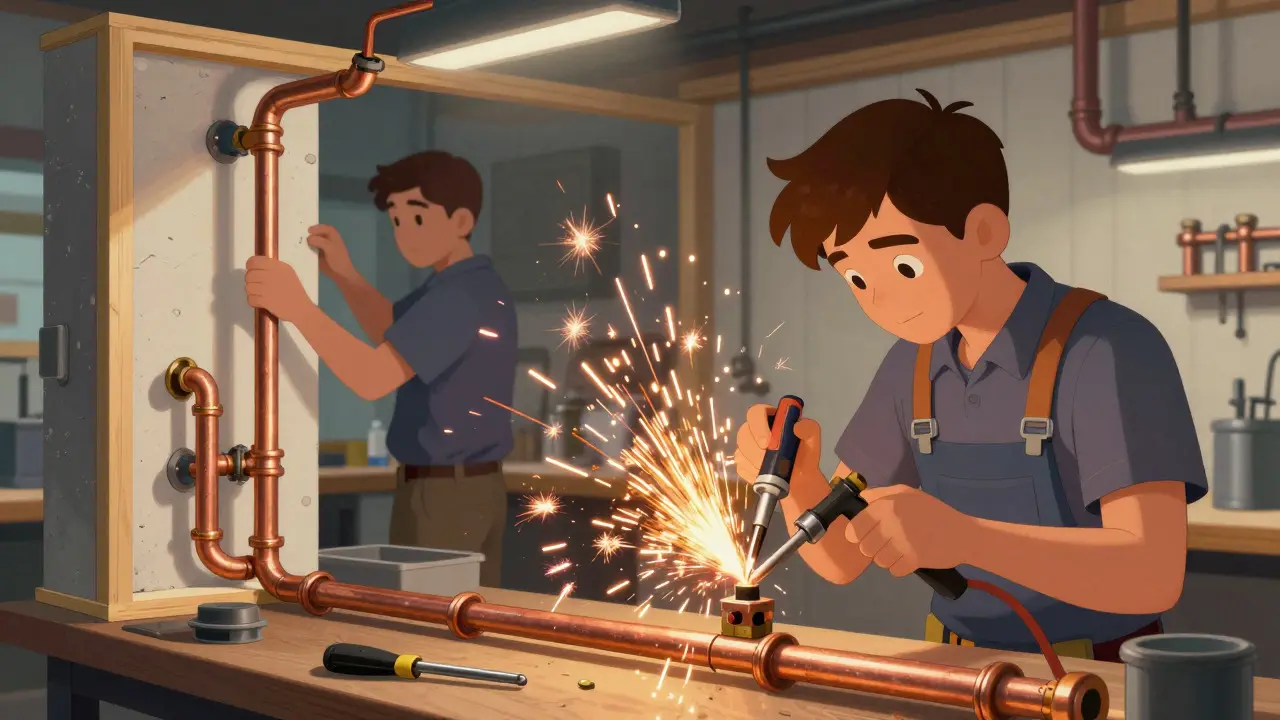
The lab is where the magic happens. In a well-equipped trade school, the plumbing lab looks like a cross-section of a house. You’ll have mock walls, floors, and ceilings where you install full systems. Here is what you can expect to do:
- Pipe Joining Techniques: You will solder copper until your fingers are blistered. Then you’ll move to crimping PEX using expansion tools. Finally, you’ll solvent-weld PVC. Each method requires muscle memory that only comes from repetition.
- Rough-In Installation: You’ll run supply lines and drain-waste-vent (DWV) pipes through framed walls. You’ll learn how to navigate around electrical wires and structural beams without compromising the integrity of the structure.
- Fixture Setting: Installing toilets, faucets, and shower valves. It sounds easy, but getting a toilet to seal perfectly without leaking requires precision and the right tools.
- Pressure Testing: After installation, you’ll pressurize the system with air or water to check for leaks. If it fails, you tear it down and start over. This mimics real-world inspections.
Instructors watch closely. They aren't just looking for a working system; they’re looking for neatness, proper support spacing, and adherence to code. A messy job is often a sign of sloppy thinking, which leads to callbacks and lost money in the professional world.
Construction Trades: Beyond Plumbing
While plumbing is a distinct trade, many students opt for broader construction courses that cover multiple disciplines. These programs prepare you for general contractor roles or help you specialize later. The syllabus here is wider but shallower than a dedicated plumbing track.
Key components of a general construction syllabus include:
- Framing: Studying load-bearing walls, joist spans, and roof trusses. You’ll learn to read engineering stamps on plans.
- Masonry: Basic bricklaying, block setting, and concrete forming. This includes mixing ratios and curing times.
- Electrical Basics: Even if you aren't an electrician, every plumber needs to know how to wire a GFCI outlet for a sink or a timer for a water heater. Safety dictates this overlap.
- Heavy Equipment Operation: Some advanced courses include certification for operating skid steers, excavators, or forklifts, which are highly valuable on large sites.
The labs for these courses involve actual building projects. You might spend a semester framing a small shed, pouring a foundation, or finishing a basement room. This project-based learning ensures you understand how different trades interact. For instance, knowing when the electrician needs access helps you schedule your plumbing rough-in correctly.
Essential Tools and Technology in Modern Labs
Gone are the days when a hammer and tape measure were all you needed. Modern trade labs incorporate technology that reflects current industry standards. Schools invest in expensive equipment to ensure graduates are immediately useful to employers.
| Tool/Equipment | Primary Use | Skill Developed |
|---|---|---|
| PEX Expansion Tool | Connecting PEX piping | Precision handling, speed |
| Propane Torch Kit | Soldering copper joints | Heat control, safety awareness |
| Drain Camera System | Inspecting sewer lines | Diagnostics, troubleshooting |
| Laser Level | Ensuring straight installations | Accuracy, measurement |
| Power Drill/Driver Set | General assembly and fastening | Tool maintenance, efficiency |
Learning to maintain these tools is part of the curriculum. A dull blade or a worn-out chuck can ruin a project. Students learn to clean, lubricate, and store their equipment properly, a habit that saves thousands of dollars in tool replacement costs over a career.

Certifications and Licensing Requirements
Finishing a course is step one. Getting licensed is step two. In most states, you cannot legally perform plumbing work without a license. The process typically involves completing a certain number of classroom hours followed by on-the-job training (apprenticeship).
Your trade course should prepare you for key certifications:
- OSHA 10-Hour or 30-Hour Card: Mandatory for most construction sites. Many schools include this in the tuition.
- Backflow Prevention Certification: Required for installing devices that prevent contaminated water from entering the public supply.
- Lead-Safe Work Practices: Essential for renovating older homes, especially those built before 1978.
- State Journeyman Exam Prep: Good schools offer review classes for the written and practical exams required to become a licensed journeyman plumber.
Check with your local state board before enrolling. Ensure the program’s curriculum aligns with the exam content. For example, California’s CSLB exams differ significantly from Texas TDLR requirements. A mismatched syllabus could leave you unprepared for the licensing hurdle.
Choosing the Right Program
Not all trade schools are created equal. Some are predatory, charging high tuition for outdated equipment and poor instruction. To avoid wasting time and money, evaluate programs based on three criteria:
1. Job Placement Rate: Ask for recent data. A good program has partnerships with local unions and contractors who hire graduates directly. Look for schools with active advisory boards made up of industry professionals.
2. Student-to-Instructor Ratio: In a lab setting, you need eyes on you. Ratios higher than 15:1 often mean students go unnoticed while making critical errors. Aim for smaller cohorts where instructors can provide individual feedback.
3. Facility Age and Condition: Visit the campus. Are the tools modern? Is the plumbing lab updated with current materials like PEX-A? Old equipment teaches obsolete skills. If the school is still teaching lead soldering exclusively, walk away.
Consider community colleges as well. They often offer cheaper alternatives to private trade schools with equally rigorous curricula. In Tempe, for instance, local community colleges partner with regional construction firms to provide internships, giving students real-world experience before graduation.
Financial Aid and Cost Considerations
One myth about trade schools is that they are prohibitively expensive. While tuition varies, it is generally a fraction of a four-year degree. Federal Pell Grants and FAFSA loans often apply to accredited trade programs. Additionally, many unions offer paid apprenticeships where you earn while you learn, eliminating tuition debt entirely.
Calculate the return on investment. A journeyman plumber in the US averages $60,000 to $90,000 annually, with master plumbers earning significantly more. Compared to the student loan debt accumulated by many college graduates, the payback period for trade education is often measured in months, not years.
How long does it take to complete a plumbing trade course?
Most certificate programs take between 6 to 12 months of full-time study. Associate degrees may take up to two years. Apprenticeships combine classroom learning with on-the-job training and typically last 4 to 5 years.
Do I need math skills for plumbing courses?
Yes, basic algebra and geometry are essential. You will calculate volumes, pressures, angles, and material quantities. However, you do not need advanced calculus. Most programs include a math refresher module to bring students up to speed.
Can I get a job immediately after finishing a trade school course?
You can work as an apprentice or helper immediately. However, to pull permits and work independently, you usually need additional on-the-job hours and a state license. Trade school prepares you for entry-level positions and accelerates your path to licensure.
What is the difference between IPC and UPC codes?
The International Plumbing Code (IPC) is used by most western and central states, while the Uniform Plumbing Code (UPC) is common in coastal states like California and Washington. Your course should specify which code is taught, as licensing exams are code-specific.
Are online trade courses effective for learning plumbing?
Online courses are useful for theoretical knowledge like code study and blueprint reading. However, they cannot replace hands-on lab work. Look for hybrid programs that combine online lectures with mandatory in-person lab sessions for skill development.