Preventing and Addressing Academic Dishonesty Online: A Practical Guide for Instructors
 Sep, 2 2026
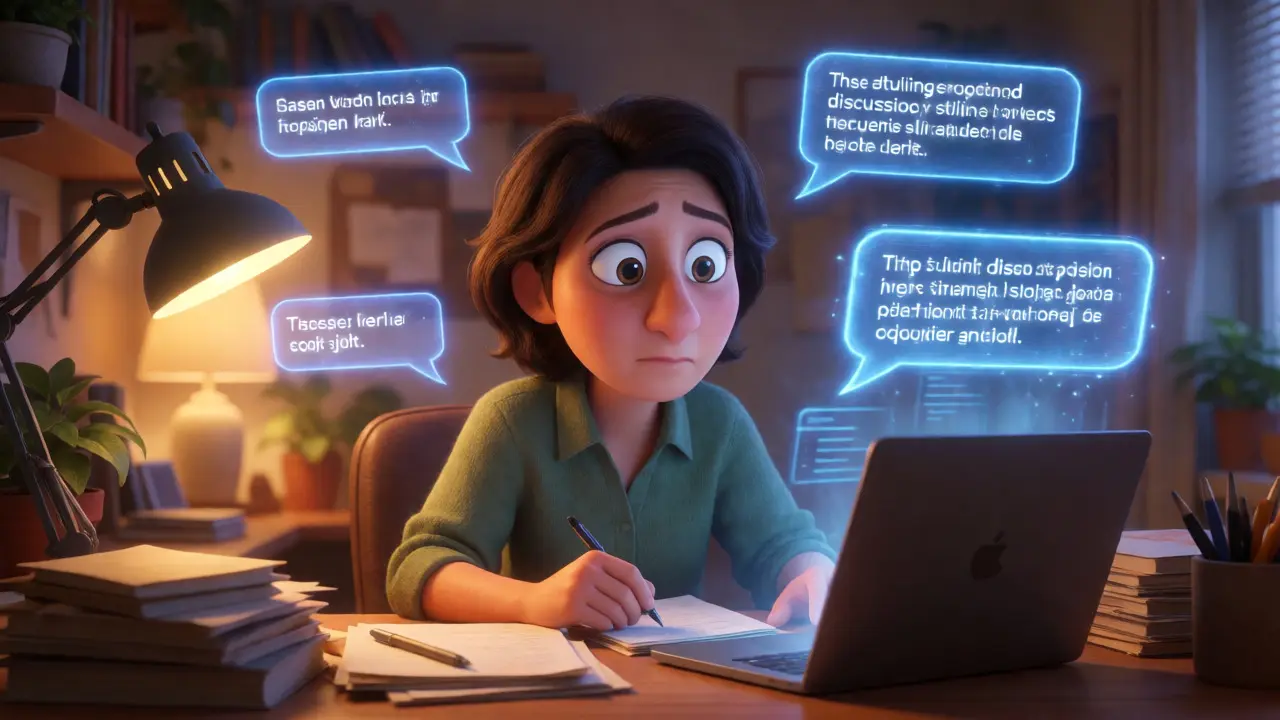
You’ve just graded a stack of discussion board posts. They’re all brilliant. Too brilliant. The vocabulary shifts from casual student-speak to PhD-level jargon in the same sentence. You suspect copy-pasting, but you can’t prove it without ruining the vibe or spending hours cross-referencing sources. This is the modern instructor’s dilemma: how do you keep standards high when the classroom is digital, anonymous, and riddled with shortcuts?
Academic dishonesty isn’t just about cheating; it’s about the erosion of trust between you and your students. When learners feel watched by algorithms rather than guided by humans, they often disengage or game the system. The goal here isn’t to turn your Learning Management System (LMS) into a surveillance state. It’s to design assessments so robust that cheating becomes harder than doing the work.
Rethinking Assessment Design
Assessment Design is the first line of defense against academic dishonesty in online environments. If your test questions are static and searchable, students will find them on Chegg or Quizlet before you even hit "publish." To stop this, you need to shift from memory-based testing to application-based evaluation.
Think about your current quizzes. Are they multiple-choice? Those are easy to share. Try replacing them with short-answer prompts that require local context. For example, instead of asking "What is the definition of inflation?" ask "How would recent gas price hikes in Tempe affect small business owners here?" Students can’t copy an answer if the variable is their own lived experience. This approach forces synthesis, not retrieval.
- Scaffolded Assignments: Break big papers into milestones. Require a topic proposal, then an outline, then a draft, then the final paper. If a student submits a perfect final paper but a messy, late outline, you have evidence of inconsistency.
- Randomized Question Banks: Use your LMS to pull random questions from a pool of 50+ for each student. No two tests look alike.
- Open-Book, Open-Mind: Allow resources but limit time. If a question takes 3 minutes to research and 1 minute to write, but you give only 2 minutes per question, they can’t look up everything.
Leveraging Technology Without Losing Trust
Tech tools get a bad rap for feeling invasive, but they’re essential for scale. The key is transparency. Tell students exactly what data you’re collecting and why. Most Plagiarism Detection Software, like Turnitin or Grammarly, works well for text, but it misses the bigger picture: contract cheating. That’s when a student pays someone else to write the essay. Detectors can’t spot that because the writing style is consistent and original.
This is where Proctoring Tools come in. Platforms like Honorlock or ProctorU use AI to flag eye movements or background noise. But don’t rely solely on the red flags. Use them as conversation starters. If a student’s webcam shows them looking off-screen repeatedly, ask them about it privately. Often, it’s just a dog barking or a roommate walking by. Frame tech as a safety net, not a trap.
| Method | Effectiveness Against Copy-Paste | Effectiveness Against Contract Cheating | Student Anxiety Level |
|---|---|---|---|
| Traditional Multiple Choice | Low | Low | Medium |
| Video Oral Exams | High | High | High |
| AI Proctoring | Medium | Medium | High |
| Scaffolded Writing | High | High | Low |
The Human Element: Communication and Culture
Students rarely cheat because they’re malicious. They cheat because they’re stressed, confused, or lack time management skills. If your course feels like a black box, anxiety spikes. Clear communication reduces that fear. Post a simple "Integrity Pledge" at the start of the semester. Have students sign it digitally. It sounds ceremonial, but studies show that signing a pledge immediately before an exam significantly lowers cheating rates compared to signing it weeks prior.
Also, normalize failure. If a student knows they can fail one low-stakes quiz without tanking their grade, they’re less likely to panic and pull a fast one. Create a culture where asking for help is seen as strength, not weakness. Offer optional "check-in" meetings where students can discuss their progress. If you know their voice and their thought process, it’s much harder for them to submit work that doesn’t sound like them.

Handling Suspected Dishonesty
So, you caught them. Or think you did. What now? Don’t jump straight to punishment. Start with curiosity. Send a private message: "I noticed some discrepancies between your draft and your final submission. Can we chat about your process?" This gives them a chance to explain. Maybe they used a translator tool poorly. Maybe they misunderstood citation rules.
If the evidence is clear-like identical wrong answers across five students who never spoke-you need a protocol. Document everything. Save screenshots, timestamps, and metadata. Follow your institution’s academic integrity policy strictly. Consistency matters more than severity. If you let one person slide because you liked their attitude, you undermine the entire system. Treat every case as a learning opportunity. Sometimes, a warning and a rewrite are enough. Other times, you need formal sanctions. Just make sure the consequence fits the action.
Beyond Policing: Building Integrity Habits
Ultimately, we want students to internalize integrity. This means teaching them how to cite properly, yes, but also how to value their own intellectual labor. Show them examples of good scholarship. Share your own mistakes in writing. When instructors admit they struggled with a concept, it humanizes the learning process.
Consider integrating peer review. When students evaluate each other’s work using a rubric, they learn to spot quality issues. They also realize that sloppy citations or vague arguments are visible to everyone, not just the teacher. Peer accountability is powerful. Plus, it saves you grading time.
Frequently Asked Questions
Is AI proctoring software reliable enough to catch all cheaters?
No software is perfect. AI proctoring tools like Honorlock or Examity are great at detecting anomalies like gaze deviation or multiple faces, but they produce false positives. Environmental factors, such as poor lighting or background noise, can trigger alerts incorrectly. Furthermore, sophisticated cheaters can bypass basic checks using virtual cameras or split screens. These tools should be used as a preliminary filter to identify cases for human review, not as a definitive judge.
How do I distinguish between plagiarism and poor paraphrasing?
This is a common gray area. Plagiarism involves using someone else's ideas or words without credit, while poor paraphrasing often stems from a lack of skill rather than intent to deceive. Look at the structure: if the student kept the original sentence structure but swapped synonyms, it’s likely weak paraphrasing. If they copied whole blocks of text or failed to cite the source entirely, it’s closer to plagiarism. Provide feedback that teaches proper citation methods before assuming malice, especially for first-year students.
What is the most effective way to prevent contract cheating?
Contract cheating, where students hire ghostwriters, is hard to detect via text analysis alone because the writing is original. The best prevention method is oral verification. Ask students to record a short video explaining their reasoning behind specific parts of their assignment. Alternatively, use scaffolded assignments where drafts must show evolution over time. Sudden jumps in quality or consistency between early drafts and the final product are strong indicators of outsourcing.
Should I penalize students for using ChatGPT or other generative AI?
It depends on your learning objectives. If the goal is to assess critical thinking, unrestricted AI use might undermine the assessment. However, banning it outright is difficult. A better approach is to specify allowed uses. For instance, permit AI for brainstorming or editing but require students to disclose its use and provide prompts. This turns AI literacy into part of the grade rather than a hidden violation.
How can I reduce student anxiety around online assessments?
Anxiety drives many integrity violations. Reduce it by offering low-stakes practice quizzes that don’t count toward the final grade. Clearly communicate expectations and provide sample questions beforehand. Also, allow flexible submission windows rather than rigid real-time exams when possible. Knowing they have a buffer helps students manage technical glitches or personal emergencies without resorting to desperate measures.
Next Steps for Instructors
Start small. Pick one upcoming assignment and redesign it to include a personal reflection component. Add a step where students must upload a rough draft with comments. Talk to your students about why you’re making changes. Transparency builds buy-in. If you notice patterns of dishonesty, investigate the root cause-is the workload too heavy? Are instructions unclear? Fixing the system often solves the behavior faster than punishing the individual.