Professional Learning Portfolios: How to Prove Your Competence
 Apr, 11 2026
Quick Takeaways for Your Portfolio
- Shift from claims to evidence: Don't just list skills; attach a project, a report, or a testimonial that proves it.
- Focus on reflection: The value isn't in the artifact itself, but in your explanation of why it matters and what you learned.
- Curate, don't hoard: A high-impact portfolio has five stellar examples, not fifty mediocre ones.
- Iterate constantly: Your portfolio should evolve as you acquire new competencies.
The Architecture of Evidence-Based Competence
To understand why this works, we need to look at competence. In a professional setting, competence isn't just knowing a fact; it's the ability to apply knowledge to a real-world scenario to get a specific result. When you build a portfolio, you aren't just saving files; you are creating a map of your professional identity.
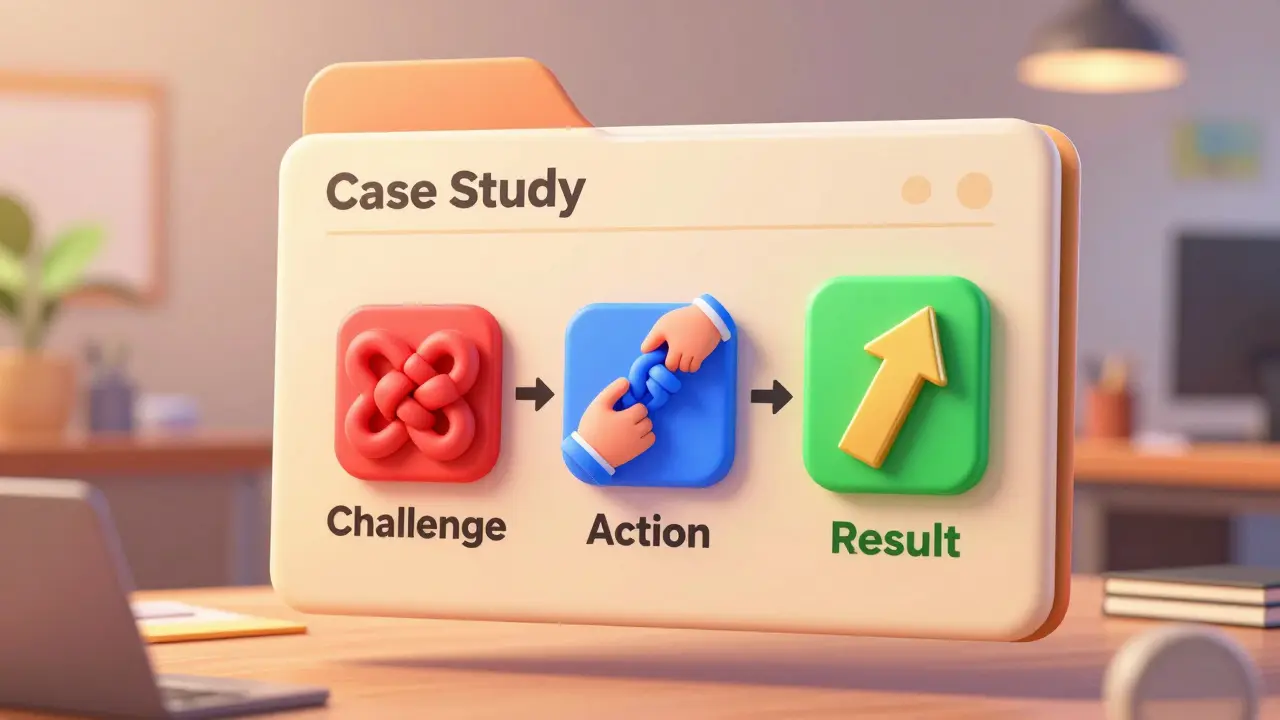
Think about a Case Study. If you claim to be an expert in Agile Methodology, a list of certifications is a start. But a case study showing how you navigated a failing sprint, reorganized the backlog, and increased team velocity by 20% is a proof of competence. You are providing the 'how' and the 'why,' which is what senior leaders actually care about during a review or interview.
The structure of a strong evidence piece usually follows a simple logic: the Challenge, the Action, and the Result. By framing your work this way, you turn a random PDF or a screenshot into a narrative of professional growth. You're essentially auditing your own performance in real-time.
Choosing Your Artifacts: What Actually Counts?
Not everything belongs in your portfolio. A common mistake is treating a digital portfolio like a cloud storage folder. You want artifacts that serve as proxy evidence for specific skills. For example, if you are a marketing manager, a successful campaign report is a great artifact, but the raw data sheet is just noise.
Consider these relatable examples of high-value artifacts:
- Strategic Plans: A redacted version of a three-year roadmap you developed for a department.
- Code Repositories: A link to a GitHub project where you solved a complex bug or optimized a database query.
- Client Testimonials: Not just a "great job" email, but a specific note from a client explaining how your intervention saved them money or time.
- Certifications with Context: Instead of just the badge, a short paragraph explaining the hardest part of the exam and how you apply that specific knowledge to your current job.
- Presentations: A slide deck from a keynote or a company-wide training session you led.
| Feature | Traditional Resume | Learning Portfolio |
|---|---|---|
| Format | Linear, static list | Dynamic, curated gallery |
| Verification | Based on trust/references | Based on direct evidence |
| Focus | Past roles and titles | Current skills and growth |
| Narrative | What you did | How you did it and what you learned |
The Power of Metacognitive Reflection
Here is the secret sauce: the artifact is only half the battle. The other half is reflection. In the world of Professional Development, the ability to look back at your work and analyze it is called metacognition. This is what separates a junior professional from a senior leader.
When you add a piece of evidence to your portfolio, ask yourself these three questions:
- What was I trying to achieve here? (Goal)
- What went wrong, and how did I pivot? (Problem-solving)
- If I did this again today, what would I change? (Growth)
By answering these, you prove that you don't just stumble into success-you have a repeatable process for achieving it. This is the highest form of evidence because it shows you can learn from your own experience. It transforms a "lucky win" into a "proven competency."
Digital Tools for Hosting Your Evidence
You don't need to be a web developer to have a professional presence. The tool you choose should depend on the type of evidence you're presenting. If your work is visual, a site like Behance or a simple Squarespace site works best. If your work is more text-heavy or conceptual, a curated Notion page is an incredible way to organize a knowledge base that others can browse.
For those in technical roles, a combination of LinkedIn for networking and a personal blog or technical documentation site allows you to deep-dive into the logic of your work. The key is accessibility. If a recruiter has to download five different zip files to see your work, they won't do it. Use cloud-based, shareable links that require zero friction to open.

Integrating the Portfolio into Your Career Cycle
A portfolio shouldn't be a project you finish once and forget. It needs to be integrated into your weekly or monthly workflow. I recommend a "Capture, Curate, Reflect" system. Every time you finish a significant task or receive a piece of praise, capture the evidence immediately (a screenshot, a link, a PDF). At the end of the month, curate the best one and write your reflection.
This habit does two things. First, it makes your annual performance review a breeze because you have a list of dated wins ready to go. Second, it prevents the "forgetting curve." You'll be surprised how quickly you forget the specifics of a project you did six months ago. Documenting it now ensures you can articulate your value later.
When you're applying for a new role, don't just attach your resume. In your cover letter, say, "I've detailed the specific outcomes of my project management approach in my learning portfolio here [link]." This immediately differentiates you from 99% of other candidates who are just making claims without proof.
How do I include confidential company work in my portfolio?
Never share proprietary data or trade secrets. Instead, use "anonymized" versions of your work. Change company names to "Client X," replace real revenue numbers with percentages (e.g., "increased revenue by 25%" instead of "made $1M"), and blur out sensitive information in screenshots. Focus on the process and the logic rather than the private data.
What if I don't have "big" projects to show?
Competence isn't always about giant projects. Small, consistent wins count. A well-organized SOP (Standard Operating Procedure) you wrote for your team, a complex spreadsheet that automated a manual task, or a series of positive feedback emails from colleagues are all valid artifacts of competence.
How often should I update my learning portfolio?
The best approach is a rolling update. Capture evidence in real-time and spend 30 minutes once a month reflecting and adding the best pieces to your public-facing portfolio. This prevents a mad rush of updating everything right before a job hunt.
Is a LinkedIn profile a learning portfolio?
Not quite. LinkedIn is a professional social network and a resume. A portfolio is a deeper dive. While you can link your portfolio in your LinkedIn bio, the portfolio itself provides the actual evidence-the documents, the code, the case studies-that a LinkedIn profile simply cannot host effectively.
Who should be reviewing my portfolio?
Ideally, a mentor or a peer who understands your field. They can tell you if your reflections are too vague or if your artifacts actually prove the skills you're claiming. External validation helps you refine the narrative before a hiring manager sees it.
Next Steps for Getting Started
If you're feeling overwhelmed, don't try to build the whole thing today. Start with one "competency cluster." Pick the one skill you are most proud of-the one that gets you the most praise at work. Find three pieces of evidence that prove you have that skill, write a short reflection for each, and put them on a simple page. Once you see how much more confident you feel presenting that one skill, the rest of the portfolio will naturally follow.
John Fox
April 12, 2026 AT 15:40not a bad idea but most recruiters just glance at the resume for 6 seconds anyway
Christina Morgan
April 12, 2026 AT 18:48I actually started doing this a year ago and it has been a game changer for my confidence during interviews. It allows you to steer the conversation toward your strengths instead of just reacting to the interviewer's questions.
Jim Sonntag
April 12, 2026 AT 20:21oh yeah because spending hours curating a digital gallery is exactly how i want to spend my weekends lol
Samar Omar
April 14, 2026 AT 05:40The sheer audacity of suggesting that a mere collection of artifacts could encapsulate the nuanced evolution of a professional's intellectual journey is almost laughable, yet I find myself contemplating how the juxtaposition of these curated evidence pieces might actually serve to elevate one's perceived status above the pedestrian drones who rely on the archaic and dreadfully linear format of a traditional curriculum vitae, which, let's be honest, is a relic of a bygone industrial era that fails to acknowledge the multidimensionality of modern expertise in a globalized economy.
chioma okwara
April 16, 2026 AT 04:43most people dont even know how to use notion properly so theyll just make a messy page and call it a portfolio lol. also its "evidence-based" not just "evidence based" but whatever
Deepak Sungra
April 16, 2026 AT 08:23This sounds like way too much work honestly. Like, who has the energy to reflect on their growth every single month? I can barely remember what I did last Tuesday, let alone write a deep philosophical analysis about a spreadsheet I made in February.
Anuj Kumar
April 16, 2026 AT 15:59This is just a way for companies to track you better. They want a map of your brain so they can replace you with an AI that does the exact same patterns of work. Don't give them the data.
Nathan Pena
April 18, 2026 AT 00:36The concept is fundamentally sound, although the execution described here leans toward the amateur. A truly high-tier professional wouldn't need a 'gallery'; their reputation and the pedigree of their previous firms would serve as the only necessary evidence. However, for those lacking an elite network, this is a desperate but necessary survival tactic to simulate a level of competence they haven't naturally acquired.
Jack Gifford
April 19, 2026 AT 09:25I think Nathan is being a bit too harsh. For a lot of us, having a tangible way to show our work is the only way to break through the noise, especially in a crowded job market.
Tasha Hernandez
April 20, 2026 AT 10:23Imagine thinking a 'curated gallery' of your mid-tier corporate wins actually makes you look like a visionary. It's giving 'please notice me' energy and it's honestly exhausting to even think about the desperation involved in documenting your own 'metacognition' for a recruiter who probably hasn't slept in three days and just wants to see if you know Excel.
Kathy Yip
April 21, 2026 AT 05:23I'm wondering if this approach might laed to a sort of performative professionalism where we spend more time documenting the work than actually doing the work itself. It feels like a strange paradox of the modern workplace.
Sarah Meadows
April 22, 2026 AT 23:26The ROI on these portfolios is negligible if you aren't leveraging high-impact KPIs and synergistic deliverables. We need to maximize our human capital throughput if we want to maintain a competitive edge in the domestic market against foreign outsourcing. Get your metrics right or get out of the way.
Mike Marciniak
April 24, 2026 AT 22:26The shift toward digital portfolios is just another step toward a social credit system. Once they have your 'evidence' of competence, they can decide you're 'incompetent' based on a political disagreement and wipe your professional existence with one click.