Remote Bootcamps vs In-Person Immersive Programs: Which Learning Path Fits Your Career Goals?
 May, 12 2026
Choosing between a remote bootcamp is a flexible, online-based intensive training program designed to teach technical skills like coding or data science without requiring physical attendance and an in-person immersive program is a full-time, on-site educational experience where students learn alongside peers and instructors in a dedicated classroom environment is one of the biggest decisions you’ll make when pivoting your career. The stakes are high. You’re investing thousands of dollars and months of your life into a credential that promises to land you a new job. But which format actually delivers on that promise?
The answer isn’t as simple as picking the cheaper option or the one with the fancier campus. It comes down to how you learn, what kind of support system you have at home, and the specific type of role you want to land. Let’s break down the real-world differences between these two paths so you can make a choice based on evidence, not hype.
Key Takeaways
- In-person programs offer superior networking opportunities and immediate accountability, making them ideal for self-motivation struggles and local hiring markets.
- Remote bootcamps provide greater flexibility and lower overhead costs, often resulting in lower tuition fees, but require strict self-discipline.
- Career outcomes depend less on the format and more on the school’s industry reputation, capstone project quality, and career services strength.
- Hybrid models are emerging as a middle ground, combining live instruction with asynchronous labs to balance cost and engagement.
The Learning Experience: Structure vs. Freedom
The most immediate difference you’ll feel is the structure of your day. In an in-person immersive program, your schedule is rigid. You wake up, commute to the classroom, and sit through lectures, pair programming sessions, and whiteboard exercises from 9 AM to 5 PM, Monday through Friday. There is no negotiating with the clock. This rigidity is a feature, not a bug, for many students. It forces you to disconnect from the distractions of home-laundry, social media, and household chores-and immerse yourself fully in the material.
Remote bootcamps, by contrast, offer a blend of synchronous (live) and asynchronous (self-paced) learning. You might have three hours of live Zoom lectures each week, with the rest of the curriculum delivered through pre-recorded videos, reading materials, and coding challenges that you complete on your own time. This flexibility allows you to fit study around a part-time job, childcare, or other obligations. However, it also places the burden of time management squarely on your shoulders. Without the physical presence of peers and instructors, it is easy to fall behind or procrastinate.
| Feature | In-Person Immersive | Remote Bootcamp |
|---|---|---|
| Schedule Rigidity | High (Fixed daily hours) | Low (Flexible deadlines) |
| Interaction Mode | Face-to-face, spontaneous | Via chat, video calls, forums |
| Self-Discipline Required | Low (Environment enforces focus) | High (You manage your time) |
| Access to Resources | Physical lab, shared computers | Your own device, cloud tools |
Consider this: if you struggle with motivation, the physical separation from your comfort zone in an in-person program can be a lifesaver. If you are already disciplined and prefer to learn at your own pace, remote might save you from burnout caused by excessive intensity.
Networking and Community: The Hidden Curriculum
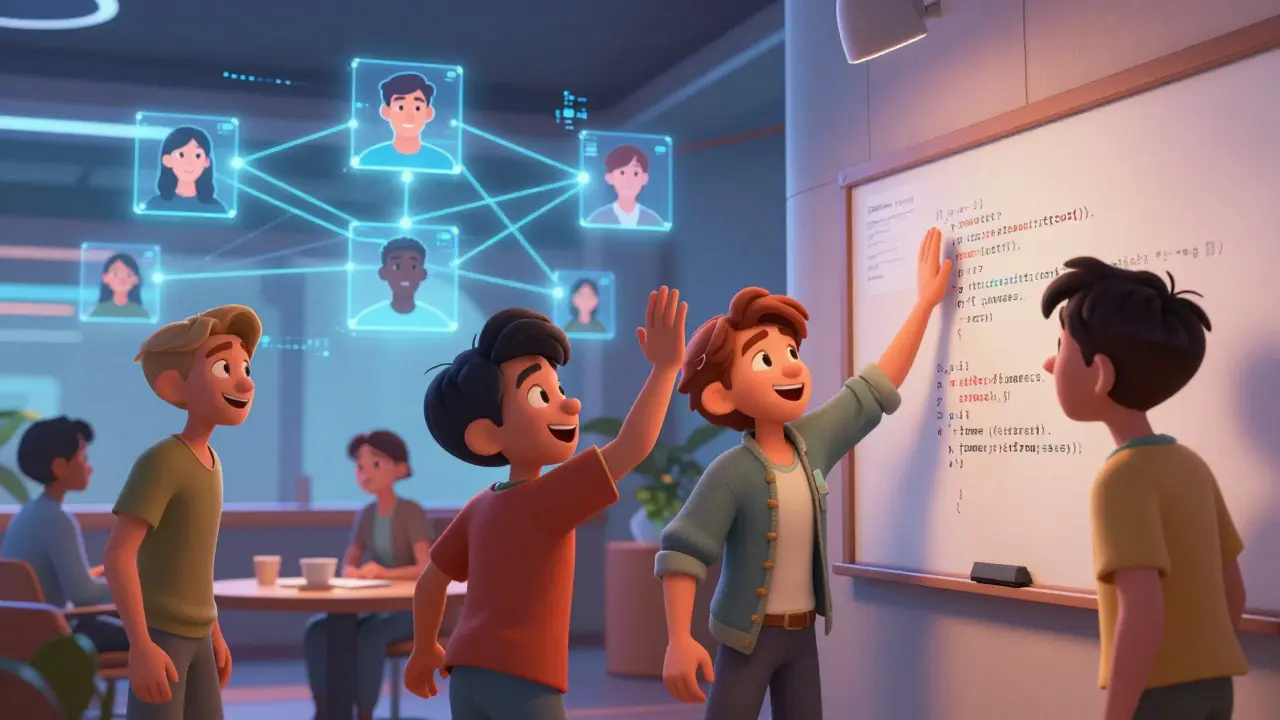
One of the strongest arguments for in-person programs is the power of organic networking. When you share a classroom for twelve weeks, you build deep bonds with your cohort mates. These relationships often lead to job referrals, co-founder partnerships, and lifelong professional connections. Studies from organizations like the National Association of Colleges and Employers consistently show that a significant percentage of jobs are filled through personal networks rather than public job boards.
In a remote setting, building these connections requires intentional effort. You won’t run into your classmates in the coffee shop or stay late together to debug code. Instead, you rely on Slack channels, Discord servers, and virtual meetups. While these platforms can foster strong communities, they lack the spontaneity of face-to-face interaction. You have to actively choose to engage, which means quieter students might miss out on valuable collaborations.
However, remote bootcamps often have larger cohorts and more diverse geographic representation. This can expose you to a wider range of perspectives and industries, potentially expanding your network beyond your local area. For example, a student in Austin might connect with a peer in Seattle who later hires them for a remote-friendly role. The key is whether the program facilitates structured networking events, such as hackathons, guest speaker panels, and alumni mixers.
Cost and Financial Considerations
Tuition is rarely the only cost factor. In-person programs typically charge higher tuition fees due to the overhead of maintaining physical campuses, including rent, utilities, and on-site staff. Average tuition for in-person coding bootcamps ranges from $12,000 to $20,000. Additionally, you must account for commuting costs, potential relocation expenses, and lost income if you cannot work during the program.
Remote bootcamps often have lower tuition fees, ranging from $8,000 to $15,000, because they operate with leaner infrastructure. They also eliminate commuting and relocation costs. However, you still need to invest in a reliable computer, high-speed internet, and a quiet workspace. Some remote programs offer income share agreements (ISAs) or deferred tuition plans, which allow you to pay after you land a job. These financial models are more common in remote programs, reflecting their focus on accessibility.
When evaluating cost, look beyond the sticker price. Calculate the total return on investment (ROI) by considering the average starting salary of graduates, the job placement rate, and the time it takes to secure employment. A cheaper program with poor career support may end up costing you more in the long run.
Career Services and Job Placement
The ultimate goal of any bootcamp is to land a job. Both remote and in-person programs offer career services, but the approach differs. In-person schools often have local partnerships with employers in their city, facilitating interviews and internships within the region. Their career coaches may conduct mock interviews in person, review resumes over coffee, and host on-campus recruitment events.
Remote bootcamps, lacking a geographic anchor, tend to focus on national or global job markets. Their career services are heavily digitized, offering virtual resume workshops, LinkedIn profile optimization, and automated interview scheduling platforms. They may partner with remote-first companies or tech hubs in multiple cities. The effectiveness of these services depends on the school’s reputation and the strength of its alumni network. Top-tier remote programs, like those offered by General Assembly or Flatiron School, have robust career teams that rival their in-person counterparts.
To assess career support, ask prospective schools for detailed outcomes reports. Look for metrics like “job placement rate within six months,” “average starting salary,” and “student satisfaction with career services.” Be wary of vague claims like “high placement rates” without specific numbers.

Who Should Choose Which Path?
Your personal circumstances should guide your decision. Here’s a quick heuristic:
- Choose In-Person if: You thrive in structured environments, value face-to-face networking, live near a reputable tech hub, and can afford the higher upfront cost. It’s also ideal if you struggle with self-motivation or need external accountability.
- Choose Remote if: You need flexibility due to work or family commitments, prefer self-paced learning, are comfortable with digital communication, and want to minimize living expenses. It’s also a good fit if you’re targeting remote jobs or roles in cities far from your current location.
- Consider Hybrid if: You want some in-person interaction but need occasional flexibility. Hybrid programs combine weekly on-site sessions with remote coursework, offering a balanced approach.
Remember, there is no universally “better” option. The best program is the one that aligns with your learning style, financial situation, and career goals.
Common Pitfalls to Avoid
Regardless of the format, watch out for these red flags:
- Lack of Transparency: Schools that hide their job placement rates or refuse to share graduate testimonials.
- Outdated Curriculum: Programs teaching obsolete technologies instead of current industry standards like React, Node.js, or Python.
- Poor Student Reviews: Check independent review sites like SwitchUp or Course Report for unfiltered feedback.
- Overpromising: Guarantees of a job or specific salary are often misleading and legally problematic.
Do your due diligence. Talk to alumni, attend info sessions, and audit free trial courses if available. Your research now will save you time and money later.
Are remote bootcamps respected by employers?
Yes, especially if the program is accredited or has a strong industry reputation. Most tech employers care more about your skills, portfolio projects, and problem-solving ability than the format of your education. Top remote bootcamps produce graduates who compete successfully for roles at major tech companies.
Which format leads to better job placement rates?
Placement rates vary by school, not format. High-quality in-person and remote programs both achieve strong placement rates. However, in-person programs may have an edge in local hiring markets, while remote programs excel in connecting students with distributed teams.
Can I work while attending a remote bootcamp?
Many students do, but it depends on the program’s intensity. Part-time remote bootcamps are designed for working professionals, allowing you to study evenings and weekends. Full-time remote programs require significant daily commitment, making concurrent employment challenging.
How do I ensure I stay motivated in a remote bootcamp?
Create a dedicated study space, set clear daily goals, and join study groups. Leverage the program’s community features, like Slack channels or peer accountability partners. Treat your study time like a job, with fixed hours and breaks.
Is an in-person bootcamp worth the extra cost?
If you value networking, hands-on mentorship, and structured immersion, yes. The higher tuition reflects the cost of facilities and personalized attention. However, if you are self-disciplined and budget-conscious, a reputable remote program can deliver similar outcomes at a lower price.