Surviving the Grind: Practical Strategies to Manage Burnout in Coding Bootcamps
 May, 8 2026
Imagine sitting down at your desk for the eighteenth hour of a fourteen-day sprint. Your eyes are dry, your brain feels like static, and the JavaScript code on your screen looks like alien hieroglyphics. You’re not alone. In the high-stakes world of coding bootcamps, which are intensive, short-term educational programs designed to teach practical skills in software development, this moment is a rite of passage. But it doesn’t have to be a disaster.
The promise of these programs is seductive: land a six-figure job in three months. The reality, however, often involves cognitive overload, sleep deprivation, and the crushing pressure of imposter syndrome. With graduation rates hovering around 70-80% across major providers like General Assembly and App Academy, the dropouts aren't usually failing because they lack intelligence. They’re quitting because they burned out. Managing that energy isn't just about willpower; it’s about strategy.
Redefining What 'Hard Work' Looks Like
We’ve been conditioned to believe that suffering equals success. In traditional university settings, you might pull an all-nighter before finals and coast for two weeks. In a bootcamp, every day is finals week. This continuous high-intensity output triggers what psychologists call allostatic load, which is the cumulative wear and tear on the body and brain from chronic stress. When this load exceeds your recovery capacity, performance plummets.
The first step in managing burnout is shifting your mindset from "grinding" to "sustaining." You are not a machine; you are a biological system with finite processing power. If you treat your brain like a muscle, you know it grows during rest, not during exercise. Cramming for twelve hours straight yields diminishing returns after the sixth hour. The goal isn't to work harder; it's to work smarter by protecting your cognitive resources.
- Quality over Quantity: Four hours of focused, distraction-free study beats eight hours of distracted, half-hearted effort.
- Accept Plateaus: There will be days where you don't learn anything new. That’s normal. It’s part of the consolidation process.
- Drop the Perfectionism: Your code doesn’t need to be elegant yet; it just needs to run. Done is better than perfect.
The Science of Spaced Repetition vs. Cramming
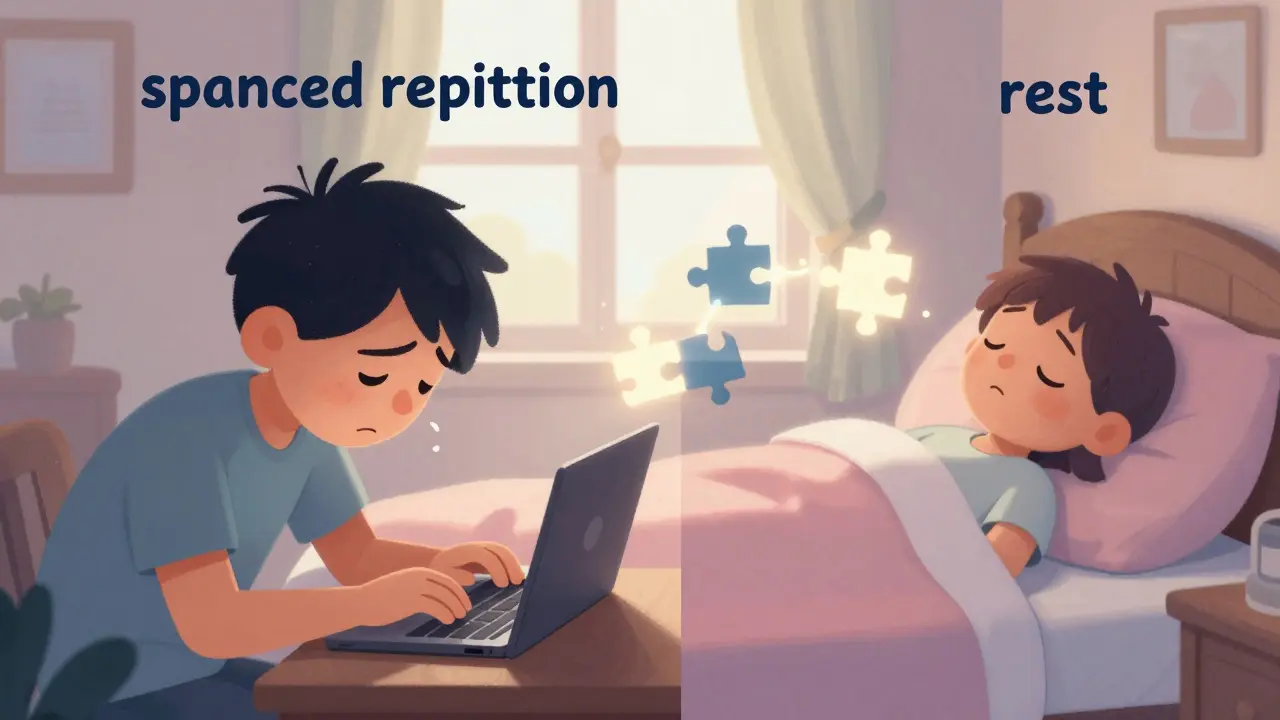
Most bootcamps operate on a model of massed practice-learning everything at once. This is inefficient for long-term retention and highly stressful for the nervous system. Instead, lean into spaced repetition, which is a learning technique that involves reviewing information at increasing intervals over time. Tools like Anki can help automate this, but the principle applies to coding too.
When you learn a new concept, like how React Hooks manage state, don’t try to master it in one afternoon. Learn the basics, build a small component, then revisit it three days later when building something more complex. This forces your brain to retrieve the information, strengthening the neural pathways without overwhelming them. It reduces the anxiety of "forgetting" because you’ve built a safety net of repeated exposure.
Cramming creates fragile knowledge that evaporates under pressure. Spaced repetition builds durable skills. By spacing out your intense study sessions, you lower the daily stress spike, making the overall experience more manageable.
Physical Recovery as a Productivity Tool
You cannot code your way out of physical exhaustion. Sleep is not a luxury; it’s a physiological requirement for memory consolidation. During deep sleep, your brain clears out metabolic waste products, including beta-amyloid plaques associated with cognitive decline. If you’re sleeping less than six hours, you’re essentially trying to drive a car with no brakes.
Here’s a concrete plan for physical recovery:
- Sleep Hygiene: Aim for 7-8 hours. No screens one hour before bed. Use blue-light blocking glasses if you must work late.
- Movement Breaks: Every 50 minutes, stand up. Walk for five minutes. Get sunlight. This resets your circadian rhythm and boosts alertness.
- Nutrition: Avoid sugar crashes. Eat protein-rich meals that provide steady energy. Dehydration causes brain fog faster than lack of sleep.
Treat your body like the hardware that runs your software. If the server overheats, the application crashes. Simple as that.
Setting Boundaries in a Collaborative Environment
Bootcamps are social environments. You’ll have pair programming sessions, group projects, and late-night Slack chats. While collaboration is vital, it can also lead to boundary erosion. You might feel pressured to stay online until midnight because everyone else is there. This is known as social contagion of stress, where the anxiety or behaviors of peers influence an individual's own emotional state.
You need to set hard boundaries. Communicate your schedule clearly to your cohort. "I’m offline from 9 PM to 7 AM" is not rude; it’s professional. If you don’t protect your downtime, someone else will fill it with their expectations. Remember, the people who succeed in tech aren’t the ones who answer emails at 2 AM; they’re the ones who deliver consistent, high-quality work over time.
If you’re feeling overwhelmed by group dynamics, find a mentor outside the bootcamp. A senior developer who understands the industry can provide perspective that your stressed peers cannot.
Managing Imposter Syndrome and Comparison
In any cohort, there will be someone who seems to grasp concepts instantly. Maybe they had prior experience. Maybe they’re just better at hiding their confusion. Comparing your behind-the-scenes struggle with their highlight reel is a recipe for despair. This is imposter syndrome, which is a psychological pattern where individuals doubt their accomplishments and have a persistent internalized fear of being exposed as a fraud.
Combat this by focusing on your own trajectory. Keep a "win journal." Every day, write down three things you learned or solved, no matter how small. Did you finally understand why your CSS grid was breaking? Write it down. Did you debug a tricky API error? Log it. Over time, this record becomes tangible proof of your progress, countering the negative self-talk that fuels burnout.
Also, remember that bootcamps are designed to be difficult. The struggle isn’t a sign that you’re failing; it’s a sign that you’re learning. Growth happens outside your comfort zone, but it shouldn’t happen in your panic zone.
| Sign | Normal Stress (Manageable) | Burnout (Critical) |
|---|---|---|
| Fatigue | Tired after a long day, refreshed after sleep | Exhausted even after sleeping, constant heaviness |
| Anxiety | Worried about upcoming deadlines | Persistent dread, panic attacks, inability to focus |
| Motivation | Driven by goals, occasional dips in energy | Apathy, cynicism towards coding, wanting to quit entirely |
| Performance | Fluctuates based on difficulty of task | Consistent decline despite effort, frequent errors |

When to Seek Professional Help
Sometimes, self-care isn’t enough. If you’re experiencing symptoms of clinical depression or anxiety, seek professional support. Many bootcamps now offer partnerships with mental health platforms like BetterHelp or Calm. Don’t wait until you’re breaking down. Early intervention prevents deeper crises.
Also, consider talking to your instructors. Good educators want you to succeed. If you’re struggling, they can adjust expectations, provide extra resources, or connect you with alumni who went through similar struggles. Vulnerability is a strength, not a weakness.
Building a Sustainable Post-Bootcamp Life
The end of the bootcamp isn’t the finish line; it’s the starting gun for your career. If you arrive at graduation completely depleted, you’ll struggle to interview effectively. Job hunting requires energy, networking, and coding challenges. You need to enter this phase with fuel in the tank.
Start practicing sustainable habits now. Build a routine that includes hobbies unrelated to coding. Read fiction. Cook. Exercise. These activities aren’t distractions; they’re essential maintenance for your creative mind. The best developers are well-rounded humans who can step away from the screen and return with fresh perspectives.
Remember, the tech industry is a marathon, not a sprint. Those who burn out early rarely make it to the senior level. Those who pace themselves, prioritize their well-being, and build resilient habits become the leaders of tomorrow.
How do I know if I'm burning out versus just being tired?
Tiredness is physical and resolves with rest. Burnout is emotional and physical, characterized by cynicism, detachment, and a sense of inefficacy. If you feel angry about coding or indifferent to your progress, it’s likely burnout. Use the table above to compare specific symptoms.
Can I take a break from my bootcamp if I'm overwhelmed?
Yes. Most reputable bootcamps allow for medical leaves or deferred start dates. Taking a few days to reset can save your entire program. Communicate with your advisor immediately rather than waiting until you crash.
What is the Pomodoro Technique and does it help with burnout?
The Pomodoro Technique involves working for 25 minutes followed by a 5-minute break. After four cycles, take a longer break. This method prevents cognitive overload by forcing regular rest periods, helping maintain focus and reducing mental fatigue.
How important is sleep during a coding bootcamp?
Critical. Sleep is when your brain consolidates memory and processes what you’ve learned. Sacrificing sleep reduces your ability to learn new concepts and increases emotional reactivity, making you more prone to stress and mistakes.
Should I join study groups if I'm already stressed?
Join selective study groups. Large, unstructured groups can increase anxiety due to comparison. Small, focused groups with clear goals are beneficial. Ensure the group respects boundaries and doesn’t encourage all-nighters.