Third-Party Cookie and Tracking Compliance in eLearning: What You Need to Know in 2025
 Dec, 28 2025
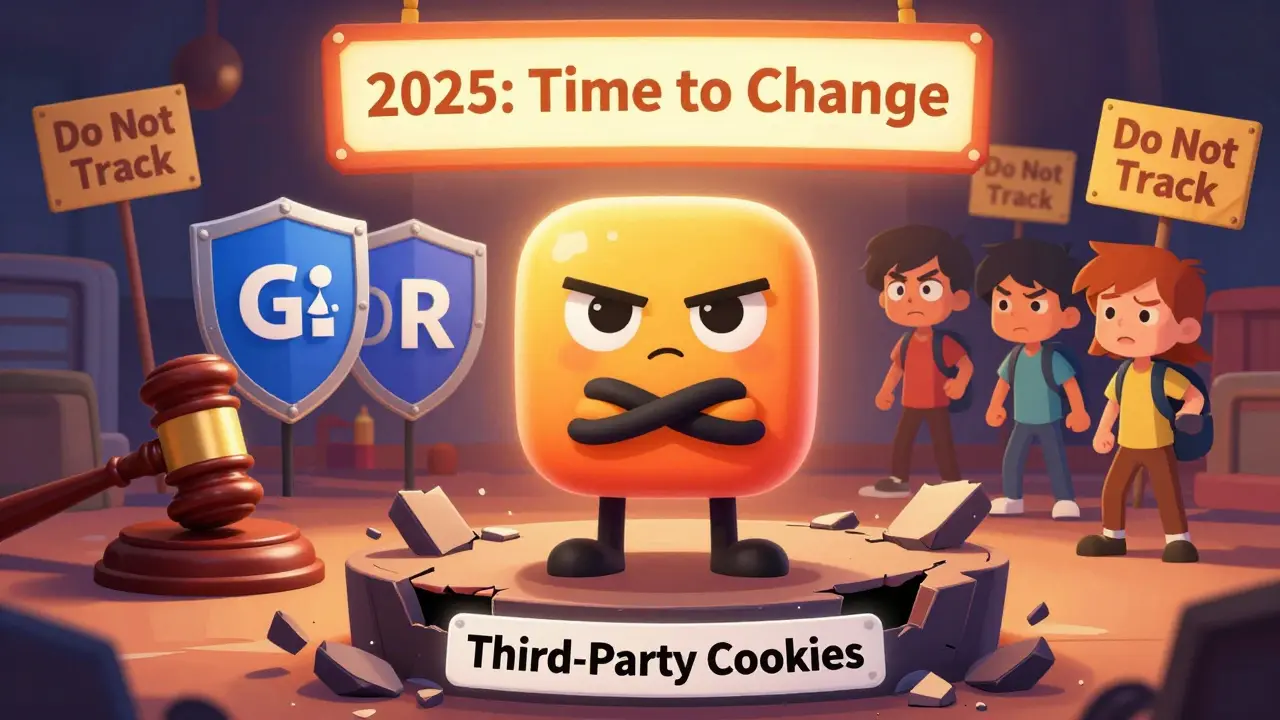
By 2025, over 80% of eLearning platforms have stopped relying on third-party cookies. If your course platform still uses them, you’re not just outdated-you’re at risk of legal action, lost learner trust, and platform bans. It’s not a future problem. It’s happening right now.
Why Third-Party Cookies Are a Problem in eLearning
Third-party cookies are small files placed by domains other than the one you’re visiting. In eLearning, they’re often used by analytics tools, ad networks, and external widgets to track learners across different sites. You might think this helps personalize courses or improve engagement. But here’s the truth: learners don’t expect to be followed from your course to a shopping site, a news portal, or a job board. And laws like GDPR, CCPA, and the new EU Digital Services Act now treat this as a violation.
Imagine a student takes a compliance training course on your platform. Later, they see ads for gym memberships because your platform shared their browsing behavior with a third-party tracker. That’s not just creepy-it’s illegal in the EU and California. And it’s not just about fines. Learners who feel watched stop enrolling. Completion rates drop. Reviews go negative. Your brand reputation takes a hit.
What Laws Actually Require
You don’t need a legal team to understand the basics. Here’s what compliance means in plain terms:
- GDPR (Europe): You must get clear, informed consent before any tracking. Pre-ticked boxes? Not allowed. Silent tracking? Illegal.
- CCPA/CPRA (California): Learners have the right to know what data is collected and to say no. You must honor "Do Not Sell or Share My Personal Information" requests.
- EU Digital Services Act (DSA): Platforms using behavioral tracking must disclose it clearly and offer opt-out options. Non-compliant platforms can be blocked in the EU.
- New York Privacy Act (2024): Requires explicit opt-in for any profiling, even for internal analytics.
These aren’t suggestions. They’re enforceable laws. In 2024, the Irish Data Protection Commission fined a major LMS provider €2.3 million for tracking learners without consent across external sites. That company used third-party cookies to build learner profiles for marketing purposes. They didn’t even tell users.
How eLearning Platforms Still Break the Rules
Many platforms think they’re compliant because they have a cookie banner. But that’s not enough. Here are the most common mistakes:
- Using Google Analytics 4 without consent: GA4 still uses cookies to track across domains. Even if you anonymize IPs, you’re still processing personal data without permission.
- Embedding YouTube videos without consent: When you embed a YouTube video, it drops cookies even if the learner never plays it. That’s tracking.
- Third-party chat widgets (like Intercom or Zendesk): These often track users across sites. If they’re not configured for zero-tracking mode, you’re violating privacy laws.
- Using ad retargeting pixels: If you’re showing ads to past learners on Facebook or LinkedIn, you’re using third-party cookies. That requires explicit opt-in.
One university in Texas was hit with a complaint in early 2025 after a student discovered their learning activity was being sent to Meta’s tracking system through a course quiz tool. The tool had a hidden pixel. No disclosure. No consent. The university had to shut down the tool and issue refunds to 12,000 students.
What to Use Instead of Third-Party Cookies
You don’t need third-party cookies to understand how learners behave. Here are compliant alternatives:
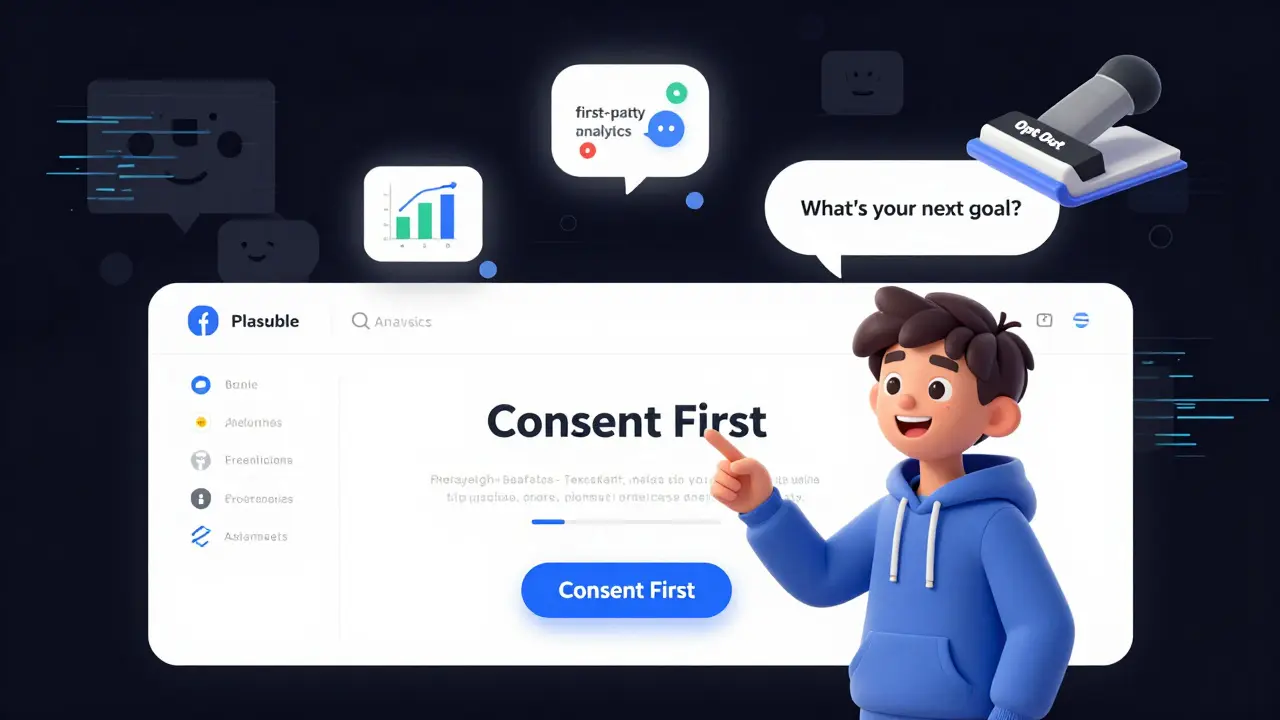
- First-party data collection: Track everything on your own domain. Use your LMS’s built-in analytics. Tools like Moodle, Canvas, and TalentLMS collect learner progress, quiz scores, and time spent-all without leaving your site.
- Server-side tracking: Send data directly from your server to your analytics tool. No cookies. No browser tracking. Tools like PostHog and Matomo offer server-side options.
- Consent-first analytics: Use tools like Fathom or Plausible. They don’t use cookies at all. They measure page views and engagement without identifying individuals.
- Zero-party data: Ask learners directly. "What topics do you want to see next?" "How helpful was this module?" People are happy to share if you’re transparent and respectful.
Arizona State University switched from Google Analytics to Plausible in 2024. Their learner engagement metrics stayed the same. Their bounce rate dropped. And their compliance audit passed with zero findings.
How to Audit Your eLearning Platform
Here’s a simple 5-step checklist to make sure you’re compliant:
- Scan your site: Use a free tool like Cookiebot or Osano to find all third-party trackers. Look for domains like google.com, facebook.net, youtube.com, hotjar.com.
- Map each tracker: Write down what each one does. Is it for analytics? Ads? Chat? Personalization?
- Check consent flow: Does your cookie banner let users block all non-essential trackers? Or does it only offer "Accept All" and "Reject All"? The latter is not compliant.
- Review third-party vendors: Email your LMS provider, video host, and analytics vendor. Ask: "Do you use third-party cookies? Can you provide a data processing agreement?" If they can’t answer, find a new vendor.
- Update your privacy policy: List every tracker, what data it collects, why you use it, and how users can opt out. Make it easy to read. No legalese.
Do this every quarter. New trackers pop up all the time-especially when you add new features or integrations.
What Happens If You Don’t Comply?
The penalties are real. In 2024, the EU fined a language learning app €1.8 million for tracking 3 million users without consent. In the U.S., the FTC sued a corporate training platform for secretly sharing learner data with advertisers. The platform was forced to delete all collected data and pay $4.5 million in restitution.
But fines aren’t the worst part. Learners are leaving. A 2025 survey of 12,000 adult learners showed that 68% would stop using a platform if they found out it was tracking them across the web. That’s not a small number. That’s a mass exodus.
And platforms like Apple Safari, Firefox, and Brave now block third-party cookies by default. If your course doesn’t work without them, your learners can’t access it. You’re not just non-compliant-you’re inaccessible.
How to Build Trust, Not Trackers
Compliance isn’t a burden. It’s an opportunity. When you stop tracking learners without permission, you show respect. And respect builds loyalty.
Instead of asking, "How can we track them?" ask: "How can we serve them better?"
Use data you collect with consent. Send personalized recommendations based on what learners chose themselves. Offer downloadable resources based on their quiz results. Create follow-up courses based on their self-reported goals. These strategies work better than creepy ads ever could.
One corporate training provider in Chicago replaced all third-party trackers with a simple survey after each course: "What’s your next goal?" They used the answers to build custom learning paths. Completion rates jumped 41%. Learner satisfaction scores hit 9.4 out of 10.
Privacy isn’t the enemy. Indifference is.
Are third-party cookies completely banned in eLearning?
No, they’re not banned outright-but using them without explicit, informed consent is illegal in most major markets. Many browsers now block them by default, and regulators are actively targeting platforms that rely on them for tracking. The safest path is to eliminate them entirely.
Can I still use Google Analytics in my LMS?
You can, but only if you configure it to use server-side tracking and disable all cross-site data sharing. Even then, you must get consent. Most LMS providers now offer privacy-compliant analytics alternatives. Switching to tools like Plausible or Fathom is easier and safer.
Do I need a data protection officer for my eLearning platform?
If you’re based in the EU or serve over 10,000 EU learners, yes. In the U.S., it’s not legally required unless you’re under specific state laws like the NYPA. But every platform should have someone assigned to manage privacy compliance-whether it’s your IT lead, legal team, or a dedicated role.
What if my LMS vendor says they’re "GDPR compliant"?
Ask for proof. "GDPR compliant" is a marketing term. Demand their Data Processing Agreement (DPA), a list of all third parties they share data with, and details on how they handle cookie consent. If they can’t provide it, find a vendor who can.
How do I handle learners outside the EU and California?
Apply the strictest rules to everyone. If you follow GDPR and CCPA standards globally, you avoid legal risk and build universal trust. Most learners appreciate privacy-even if their country doesn’t require it.
Next Steps: Start Today
Don’t wait for a fine or a complaint. Start your compliance audit this week.
- Run a cookie scan using Cookiebot or Osano.
- Identify every third-party tracker on your site.
- Replace non-essential ones with first-party or cookieless tools.
- Update your privacy policy with clear, plain-language disclosures.
- Train your team: No more embedding YouTube videos or chat widgets without consent.
By June 2026, every major browser will fully block third-party cookies. If you haven’t moved by then, your platform won’t work for millions of learners. The time to act isn’t tomorrow. It’s now.
Anuj Kumar
December 29, 2025 AT 08:31They say third-party cookies are bad but who really controls the internet? Big Tech built this whole system to spy on you. Now they’re pretending to be heroes by blocking cookies. Classic move. They just want you to use their first-party trackers instead. Same data, different name. You think Apple or Google cares about your privacy? Please. They’re just shifting the game so they own it all.
Christina Morgan
December 30, 2025 AT 09:32I love how this post breaks it down so clearly. As someone who teaches online courses in California, I’ve had to overhaul our entire platform. Switching to Plausible was a game-changer - no more anxiety about legal notices, and learners actually thanked us for respecting their privacy. Turns out, people appreciate honesty more than creepy ads. We’re seeing higher completion rates and way fewer complaints. Simple wins.
Kathy Yip
December 30, 2025 AT 22:26i was just thinking about this yesterday... like, why do we even need to track people across sites? isn't the point of learning to focus on the content, not what they buy on amazon after? i feel like we've confused personalization with surveillance. also, i keep forgetting to capitalize 'i' sorry lol
Bridget Kutsche
January 1, 2026 AT 18:11Just wanted to add - if you're using YouTube embeds, check the URL. Add ?privacy-enhanced=1 to disable tracking. It's a tiny fix that makes a huge difference. Also, if your LMS vendor says they're GDPR compliant, ask for their DPA in writing. If they send you a link to their website, run. Real compliance means documentation, not marketing buzzwords. You got this - small steps add up.
Jack Gifford
January 3, 2026 AT 05:30Grammar check: 'You’re not just outdated-you’re at risk' - that em dash is perfect. Anyway, this post nails it. I work in corporate training and we got hit with a complaint last year because our quiz tool had a hidden Facebook pixel. We thought it was just for analytics. Turns out, it was building user profiles. We had to delete 80,000 data points and retrain the whole team. Worth it. Trust matters more than metrics.
Sarah Meadows
January 4, 2026 AT 11:41Let’s be real - this is just another left-wing regulatory overreach disguised as privacy. The EU doesn’t care about learners, they care about controlling digital infrastructure. Meanwhile, American companies are getting crushed by compliance costs while China and India run rings around us. If you want innovation, stop treating every tracker like a crime scene. This isn’t a moral issue - it’s a competitive one.
Nathan Pena
January 4, 2026 AT 12:44Let’s dissect the fallacy here: the author conflates ‘third-party cookies’ with ‘data collection.’ They are not synonymous. Server-side tracking, fingerprinting, device hashing - these are the new vectors. The article pretends eliminating cookies solves the problem, when in reality, it just shifts the burden onto more opaque, harder-to-detect methods. You haven’t stopped surveillance - you’ve upgraded it. And you’re celebrating it like a victory. Pathetic.
Mike Marciniak
January 5, 2026 AT 03:26They’re not banning cookies. They’re banning transparency. You think the government doesn’t have access to all this data anyway? Every time you use a cookieless tracker, you’re feeding your data to a single corporation that doesn’t have to disclose anything. This whole movement is a distraction. The real enemy is centralized control. Don’t fall for it.
VIRENDER KAUL
January 5, 2026 AT 14:36It is imperative to recognize that the regulatory landscape is not merely evolving - it is fundamentally transforming the architecture of digital education. The reliance upon third-party tracking mechanisms constitutes an egregious violation of the principle of learner autonomy. One must not confuse convenience with compliance. The penalties are not hypothetical - they are quantifiable, enforceable, and increasingly severe. The time for equivocation has expired. Action is not optional. It is existential.
Mbuyiselwa Cindi
January 6, 2026 AT 00:05I’m from South Africa and we don’t have strict laws yet, but I still switched everything to first-party tracking. My learners told me they felt safer - like they weren’t being watched. That’s worth more than any analytics dashboard. Also, Fathom is free for small platforms. Just try it. You’ll be surprised how much you can learn without tracking.
Krzysztof Lasocki
January 7, 2026 AT 07:29Oh wow, another ‘privacy is a feature’ sermon. Congrats, you traded one form of manipulation for another - now you’re manipulating people into feeling good about giving you their data willingly. ‘Ask them directly!’ Sure, because nothing says ‘respect’ like a pop-up asking ‘What’s your next goal?’ right after you’ve spent 45 minutes on a compliance quiz. I’m crying with laughter.
Henry Kelley
January 9, 2026 AT 05:37big thanks for this post. i was totally clueless about how youtube embeds track people even if you dont click. just changed all mine to privacy mode and it felt like i did something good for once. also, i spelled ‘compliance’ wrong in my last email to our vendor… oops.
Tonya Trottman
January 9, 2026 AT 20:35you know what’s funny? the whole conversation around cookies is really just a distraction from the bigger issue - which is that we’ve normalized surveillance in education. we don’t question why we need to know how long someone spends on a quiz or what buttons they click. we just assume it’s for ‘improvement.’ but what if the goal isn’t to improve learning - but to optimize engagement for profit? we’ve turned education into a behavioral experiment. and now we’re patting ourselves on the back for switching from cookies to server-side tracking like it’s a moral upgrade. it’s not. it’s just a different kind of cage.
Rocky Wyatt
January 10, 2026 AT 20:09This is why I hate modern eLearning. Everyone’s so busy being ‘compliant’ they forget the learners just want to learn. You spend six months rewriting your platform, deleting all your analytics, and then what? You’re left with nothing but a blank dashboard and a bunch of confused instructors. Meanwhile, the competitors who didn’t care are still growing. You didn’t save privacy - you killed your business.
Santhosh Santhosh
January 11, 2026 AT 14:43I have been working in eLearning for over 15 years and I have seen many trends come and go. The fear around third-party cookies is real but I believe the real issue is not the technology but the lack of trust between institutions and learners. When we stop trying to collect data and start listening to what learners actually need, we don’t need cookies at all. I remember when we used to ask students directly what they wanted and we built courses around that. It was slower but more meaningful. Maybe we need to go back to that. Not because it’s legal, but because it’s human.