Using Learning Journeys to Orchestrate Blended Training Programs
 Oct, 7 2026
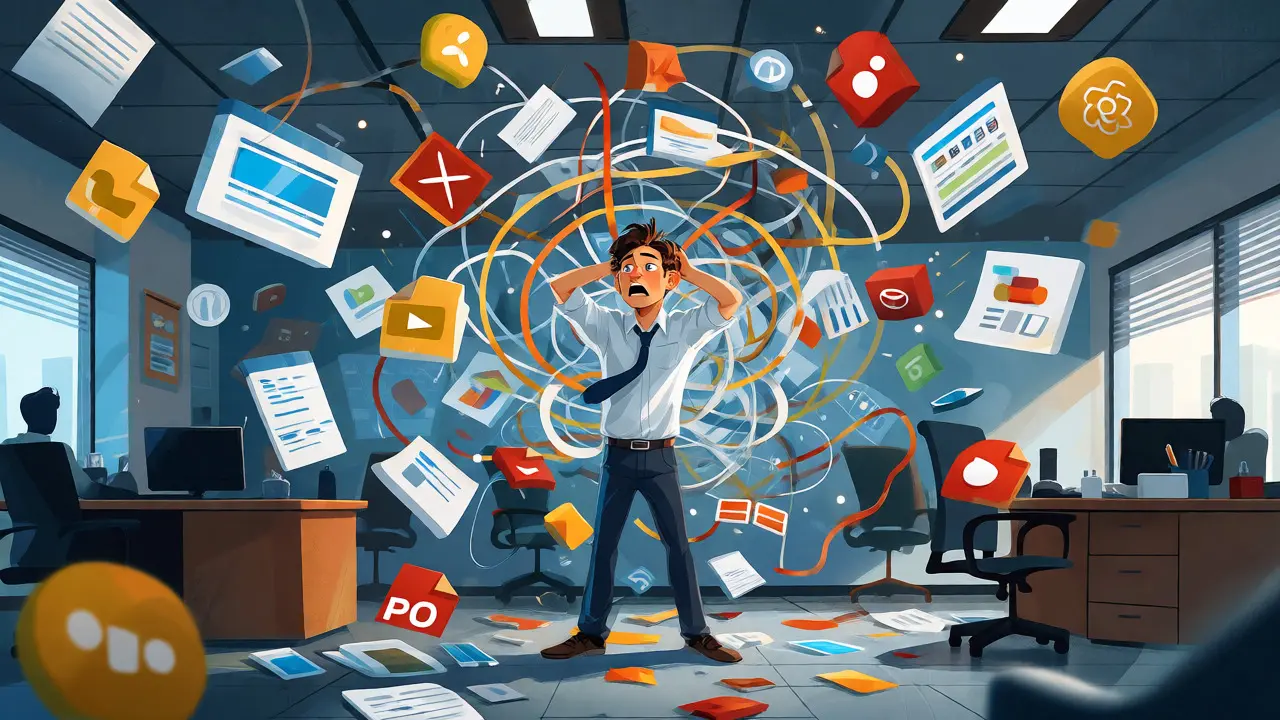
You’ve probably seen it happen. A company buys a new Learning Management System (LMS) and dumps hundreds of courses into it. Then they hit "publish" and hope for the best. Six months later, completion rates are abysmal, employees are confused about what to take next, and the training budget looks like money down the drain. The problem isn’t usually the content. It’s the lack of structure. This is where Learning Journeys come in. They aren’t just playlists; they are strategic pathways that orchestrate blended training programs by sequencing diverse learning assets into a cohesive narrative.
If you’re managing corporate training, you know that modern learners don’t want a buffet where they have to figure out their own meal. They want a guided experience. A well-designed learning journey connects the dots between self-paced e-learning, live virtual sessions, on-the-job practice, and social learning. It turns scattered resources into a career roadmap. Let’s break down how to build these journeys so your blended training actually sticks.
Why Traditional Course Catalogs Fail Modern Learners
Think about the last time you tried to learn something complex online. Did you start with a random tutorial, then jump to a webinar, then read a PDF? That fragmentation kills momentum. In a traditional LMS setup, courses sit in silos. An employee looking to upskill in data analysis might find ten different Excel courses but no clear indication of which one comes first or how it relates to Python basics. This approach ignores how humans actually learn. We need context. We need progression. When you treat training as a collection of isolated items rather than a connected journey, you increase cognitive load. Learners spend more energy deciding what to do next than actually doing the work. Blended training exacerbates this issue because it involves multiple delivery modes. Without an orchestrating layer-like a learning journey-the mix of videos, quizzes, and live coaching becomes chaotic rather than comprehensive.
The Anatomy of a High-Impact Learning Journey
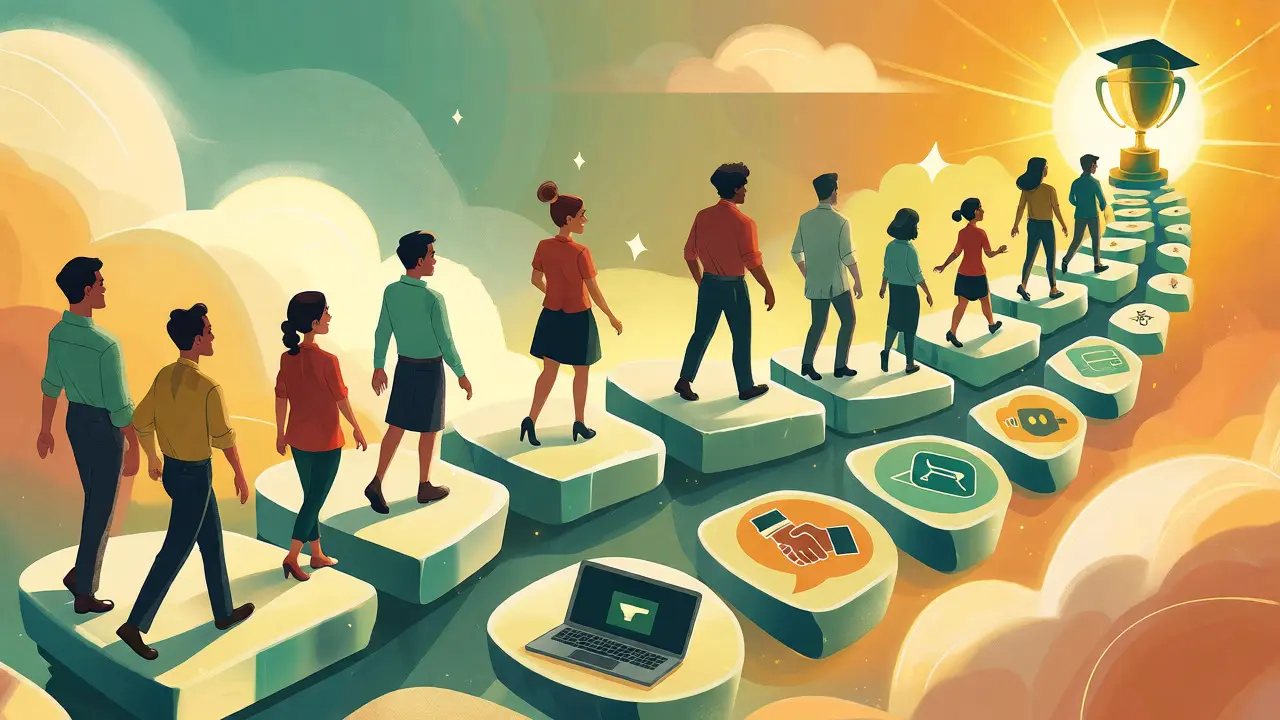
A learning journey is a structured path that guides a learner from point A (current skill level) to point B (competency). Unlike a simple course list, it includes conditional logic, assessments, and real-world application steps. Here is what makes them different:
- Sequenced Content: Assets are ordered logically. You don’t teach advanced negotiation before basic communication skills.
- Mixed Modalities: It blends asynchronous digital content with synchronous human interaction.
- Actionable Steps: It includes offline tasks, such as "shadow a senior manager" or "submit a project plan."
- Feedback Loops: Quizzes and peer reviews provide checkpoints before moving forward.
Consider a leadership development program. Instead of assigning five unrelated modules, a learning journey might start with a pre-assessment, move to a micro-learning video series on emotional intelligence, schedule a live workshop with a facilitator, assign a mentorship task, and conclude with a capstone presentation. Each step builds on the previous one. This structure mirrors the 70-20-10 Model, which suggests that 70% of learning happens through experience, 20% through social interaction, and 10% through formal education. By orchestrating these elements, you ensure all three percentages are covered systematically.
Designing Your Blended Path: A Step-by-Step Framework
Building a journey requires planning before you touch the LMS. Start by identifying the specific job role or skill gap you want to address. Don’t try to boil the ocean. Pick one high-priority role, say, Customer Success Managers, and map out their critical competencies.
- Define the Destination: What does success look like? Is it faster onboarding? Higher customer retention? Be specific.
- Audit Existing Assets: List every relevant piece of content you already have. Videos, PDFs, webinars, external certifications, internal wikis.
- Identify Gaps: Where are the holes? If you have great technical docs but no soft-skills training, that’s a gap.
- Sequence the Experience: Arrange the assets chronologically. Use a "Before, During, After" framework. Before: Preparation materials. During: Core instruction. After: Application and reinforcement.
- Add Human Touchpoints: Decide where live interaction fits. Maybe a monthly Q&A session or a weekly check-in with a manager.
One common pitfall is overloading the journey. Keep it lean. If a step doesn’t directly contribute to the final competency, cut it. Brevity drives completion.
Choosing the Right Technology Stack
Your LMS is the engine, but not all engines are built for journeys. Some platforms treat courses as static containers. Others allow for dynamic branching paths. When evaluating tools, look for features that support orchestration specifically.
| Feature | Basic LMS | Journey-Capable LMS |
|---|---|---|
| Content Sequencing | Manual assignment | Automated, rule-based paths |
| Blended Support | Links to Zoom/Teams | Native integration with calendar sync |
| Progress Tracking | Course completion % | Journey milestone tracking |
| Personalization | Role-based access | Skill-gap based recommendations |
| Offline Tasks | Not supported | Checklist items with manager approval |
Platforms like Docebo, Cornerstone OnDemand, and Lessonly have made significant strides in this area. Docebo, for instance, uses AI to suggest learning paths based on user behavior. Cornerstone excels at enterprise-scale compliance tracking within journeys. Lessonly focuses on rapid creation for sales teams. Choose the tool that matches your complexity needs. If you’re a small team, a simpler tool with robust checklist features might beat a heavy enterprise suite.
Integrating Social and Experiential Learning
Blended training fails if it stays purely digital. The "blended" part must include human connection. Learning journeys should explicitly prompt social interaction. For example, after completing a module on conflict resolution, the journey could require the learner to post a reflection in a community forum or discuss a scenario with a peer. Experiential learning is even more critical. Include assignments that happen outside the LMS. Ask learners to apply a new skill in a real meeting and report back. Use the LMS to track these offline activities. A simple checklist item saying "Complete client call using new script" with a manager sign-off field transforms passive consumption into active practice. This aligns with adult learning principles, which emphasize relevance and immediate application.
Measuring Success Beyond Completion Rates
Stop looking only at completion percentages. They tell you someone clicked through slides, not that they learned anything. With orchestrated journeys, you can measure deeper metrics: * **Time-to-Competency:** How long does it take a new hire to reach proficiency? * **Skill Retention:** Test learners 30 days after the journey ends. Do they still remember? * **Behavior Change:** Survey managers. Are employees applying the skills? * **Engagement Depth:** Are learners interacting with social prompts and submitting offline tasks? Use this data to refine your journeys. If everyone drops off at Module 4, maybe that module is too long or irrelevant. Iteration is key. Treat your learning journeys as products that need continuous improvement based on user feedback and performance data.
Pitfalls to Avoid When Building Journeys
Even with good intentions, you can stumble. Here are three traps to watch for:
- Rigidity: Not every learner starts at the same place. Allow skipping modules if someone passes a pre-test. Personalization increases engagement.
- Lack of Communication: Employees won’t follow a journey if they don’t understand why. Market the journey internally. Explain the career benefits, not just the requirements.
- Ignoring Mobile Access: Most learning happens in short bursts. Ensure your journey works seamlessly on mobile devices. Long desktop-only videos will kill adoption.
Remember, the goal isn’t to control every minute of a learner’s day. It’s to remove friction and provide clarity. When you orchestrate blended training effectively, you empower employees to take ownership of their growth while ensuring they cover essential ground.
What is the difference between a learning path and a learning journey?
A learning path is typically a linear sequence of courses focused on a specific topic. A learning journey is broader and more holistic. It often includes multiple paths, social interactions, offline tasks, and career development goals. Journeys are designed to transform a learner's capability over time, whereas paths are often just content collections.
How long should a blended learning journey be?
There is no fixed rule, but most effective journeys range from two weeks to three months. Anything shorter may not allow for deep skill acquisition, while anything longer risks losing learner motivation. Break long journeys into smaller milestones to maintain momentum.
Can I use existing courses in a new learning journey?
Absolutely. In fact, you should. Orchestrating existing assets is more cost-effective than creating everything from scratch. Just ensure the sequence makes sense and fill any gaps with new micro-content or external resources.
How do I handle learners who fall behind?
Use automated nudges and manager alerts. Many LMS platforms can send reminders when a learner hasn't progressed in a set number of days. Additionally, consider allowing flexible deadlines or offering catch-up sessions to help them re-enter the flow without feeling penalized.
Is AI necessary for building learning journeys?
No, AI is helpful but not mandatory. You can manually curate excellent journeys based on subject matter expert input. AI can speed up the process by recommending content and personalizing paths at scale, but human curation ensures quality and relevance.