Yoga and Mindfulness Teacher Training: What to Expect in a Course Structure
 Dec, 19 2025
When you sign up for a yoga and mindfulness teacher training, you’re not just learning poses and breathing techniques. You’re stepping into a structured, often intense, journey that transforms how you move, think, and show up for others. The best programs don’t just teach you how to lead a class-they prepare you to hold space, adapt to different bodies, and live the principles you’re teaching. If you’ve ever wondered what actually happens in a 200-hour or 500-hour training, here’s what you’ll really experience.
Core Components of a Standard Yoga and Mindfulness Teacher Training
Most accredited programs follow guidelines set by Yoga Alliance or similar bodies. Even if a program isn’t registered, the best ones mirror this structure because it works. A typical training breaks down into five core areas: asana practice, anatomy and physiology, teaching methodology, philosophy and ethics, and mindfulness meditation.
Asana practice isn’t just about mastering handstands or deep backbends. It’s about learning how to break down each pose-what muscles engage, where the weight should shift, how to modify for injuries. Instructors spend hours demonstrating variations, using props, and observing students’ alignment. You’ll do the same poses every day, but each time, you’ll notice something new. That’s the point.
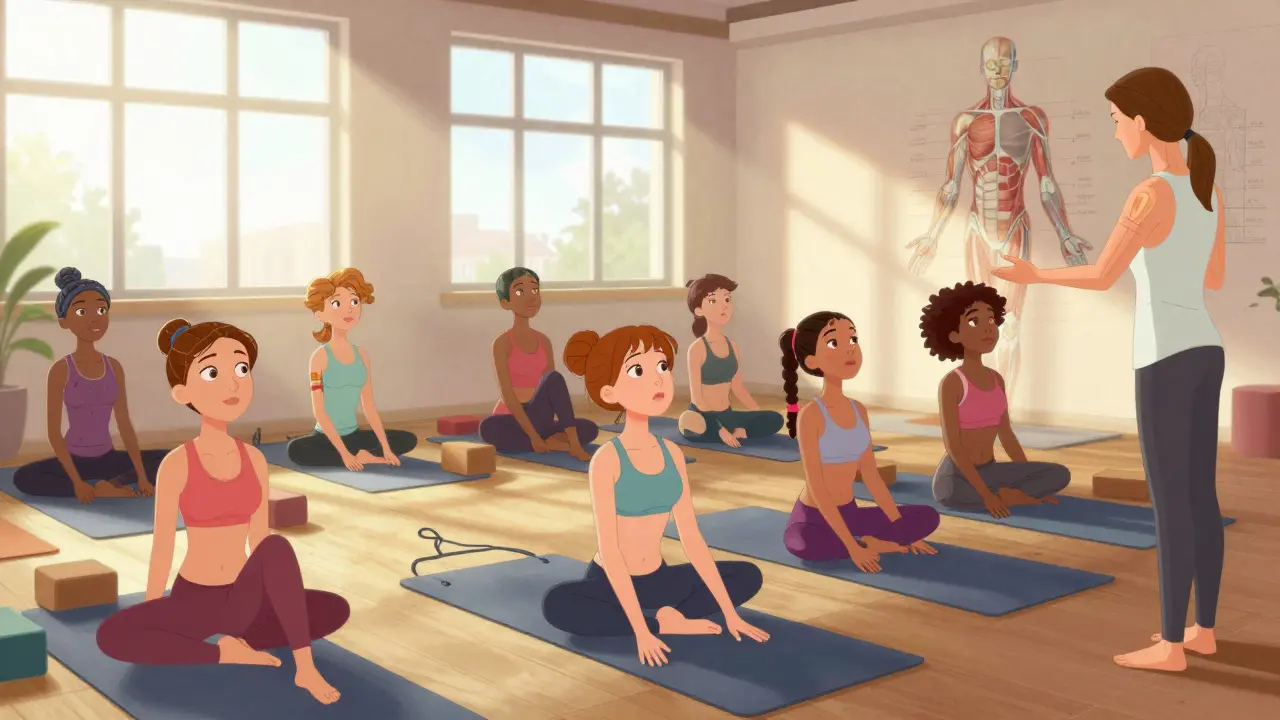
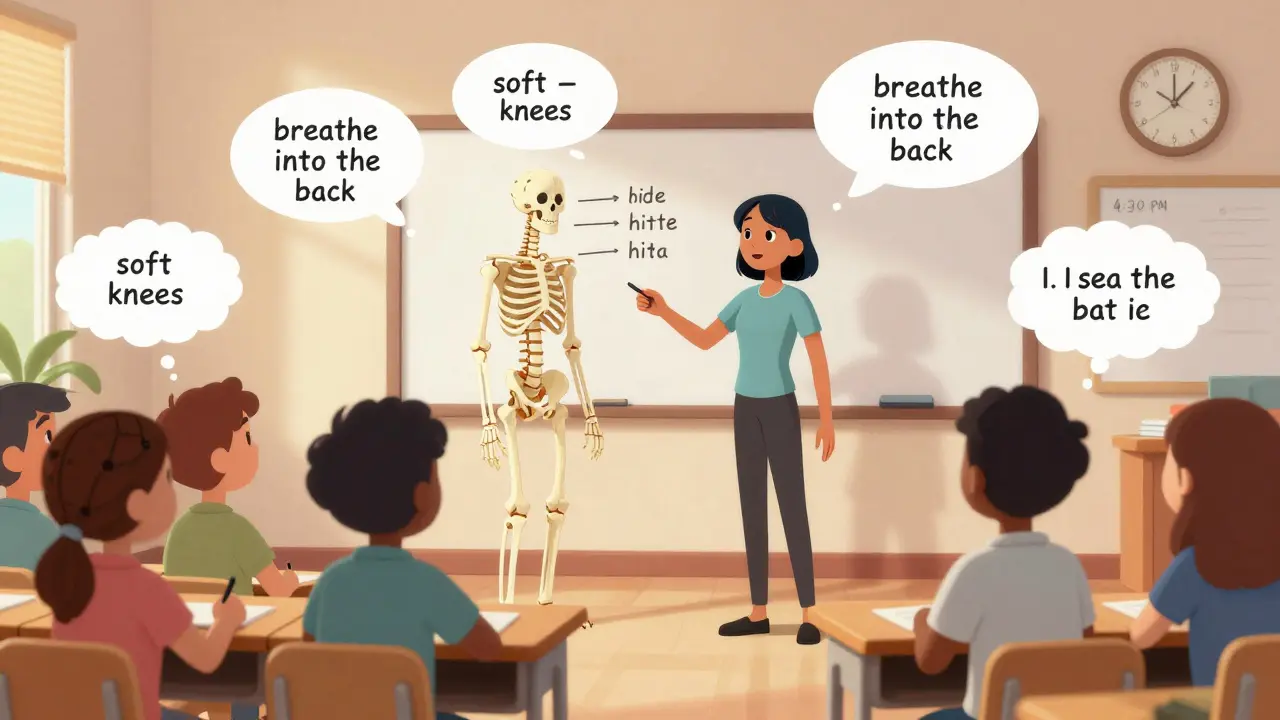
Anatomy and physiology is where many beginners get nervous. You don’t need to be a medical student, but you do need to understand the basics: how the spine moves, what the pelvis does in forward folds, why certain people can’t touch their toes. Good programs use real human models, not just diagrams. You’ll learn how to spot imbalances and avoid pushing students into dangerous positions. One trainer I know uses a skeleton model during class to show how sacral torsion affects hip flexibility. It sticks.
Teaching methodology covers the nuts and bolts: how to sequence a class, how to cue clearly without over-talking, how to manage a room of 20 people with wildly different abilities. You’ll practice teaching in small groups, often three to five times over the course of the training. Feedback isn’t sugar-coated. You’ll hear things like, “You talked too fast,” or “You didn’t give an option for beginners.” It’s hard, but it’s the only way to grow.
Philosophy and ethics is where many trainees find their deepest shift. You’ll read from the Yoga Sutras, the Bhagavad Gita, and modern mindfulness texts. But it’s not about memorizing Sanskrit terms. It’s about asking: What does non-harming really mean when someone pushes too hard in class? What does truthfulness look like when a student asks if they’re doing it right? These aren’t abstract ideas-they shape how you speak, how you listen, and when you stay silent.
Mindfulness meditation is woven into every day. Not just as a 10-minute sit at the end. You’ll practice walking meditation, body scans, loving-kindness, and silent observation during meals. Some programs require journaling after each session. You’ll start noticing how your mind jumps to judgment, how you rush to fix things, how you avoid discomfort. That’s the real curriculum.
How the Training Is Structured Over Time
Most trainings run over 4 to 12 weeks, depending on whether they’re full-time or part-time. A 200-hour program is the baseline for certification. Here’s how the time usually breaks down:
- 70 hours: Asana practice and alignment
- 30 hours: Anatomy and physiology
- 40 hours: Teaching methodology and practicum
- 30 hours: Philosophy and ethics
- 20 hours: Meditation and pranayama
- 10 hours: Business of teaching and ethics in practice
Full-time intensives often run 6 to 8 hours a day, six days a week. Part-time programs stretch over months, meeting weekends or evenings. Neither is better-just different. Intensives are immersive; you live the practice. Part-time lets you integrate learning into daily life. But both require the same commitment: showing up, even when you’re tired, emotional, or doubting yourself.
Practicum is where the rubber meets the road. You’ll teach real people-sometimes classmates, sometimes volunteers from the community. You’ll be observed. You’ll get feedback. You’ll record your teaching and watch it back. Most trainees hate this part at first. Then they realize it’s the most valuable. One student told me she cried after watching her first teaching video because she realized she was saying “don’t” 17 times in five minutes. That’s the moment you start becoming a teacher, not just a practitioner.
What’s Missing From Most Programs
Many trainings focus heavily on the physical and spiritual side but skip the practical. You’ll learn how to lead a sun salutation, but not how to set your rates. You’ll study the Eight Limbs of Yoga, but not how to handle a student who shows up drunk. You’ll meditate daily, but not how to deal with burnout after teaching six classes in a week.
The best programs include modules on:
- Creating a teaching schedule that doesn’t drain you
- Using social media without feeling like a fraud
- Working with trauma-informed language
- Understanding insurance and liability
- Building a waiting list instead of begging for students
One program in Portland requires trainees to interview three local studio owners before graduation. Another has a guest speaker who’s a former yoga teacher turned therapist to talk about boundaries. These aren’t nice-to-haves-they’re survival skills.

What to Look for in a Program
Not all trainings are created equal. Here’s what separates a good program from a great one:
- Small class sizes: No more than 15 students per trainer. If it’s bigger, you won’t get personalized feedback.
- Trainers with real teaching experience: Look for instructors who’ve taught for five+ years, not just people who finished their own training last year.
- Post-training support: Do they offer mentorship? Alumni groups? Continuing education? A good program doesn’t disappear after you pay.
- Transparency about costs: Are materials, exams, and certification fees included? Or will you be hit with hidden charges?
- Focus on inclusivity: Do they teach modifications for all body types, ages, and abilities? Or is it all about advanced poses?
Ask to speak with past students. Not the ones on the website’s testimonials. Find someone on Instagram or Facebook who completed the program six months ago. Ask: “Did you feel ready to teach? Did the training prepare you for the real world?” Their answer matters more than any brochure.
What Happens After You Finish
Finishing the training isn’t the end-it’s the beginning. Most new teachers don’t land a studio gig right away. The first few months are about building confidence, not income. You’ll teach free classes at community centers. You’ll offer private sessions for $20. You’ll feel unsure. That’s normal.
The ones who stick with it do three things:
- They keep learning-attending workshops, studying anatomy, reading new research.
- They find their niche-yoga for athletes, trauma-sensitive yoga, yoga for seniors.
- They stop comparing themselves to others on Instagram.
One graduate I know started teaching yoga to hospice patients. Another built a small online course for busy moms. Neither followed the traditional path. But both found meaning-and sustainability-because they focused on what they cared about, not what looked impressive.
The real measure of a good training isn’t how many poses you can do. It’s whether you leave feeling more grounded, more honest, and more ready to serve-not perform.
How long does yoga teacher training usually take?
Most 200-hour programs take between 4 and 12 weeks to complete, depending on whether they’re full-time or part-time. Full-time intensives run daily for 2 to 4 weeks, while part-time programs meet on weekends or evenings over several months. A 500-hour training typically takes 6 to 18 months to finish.
Do I need to be an advanced yogi to join a teacher training?
No. Many successful teachers started with limited flexibility or strength. What matters more is consistency, curiosity, and willingness to learn. Programs are designed to meet you where you are. You’ll be challenged, but not expected to perform advanced poses perfectly. The focus is on teaching, not acrobatics.
Is certification required to teach yoga?
Legally, no-you don’t need certification to teach yoga in the U.S. But most studios, gyms, and online platforms require it. Certification from Yoga Alliance or similar bodies gives you credibility and access to insurance, job listings, and teaching opportunities. It’s the industry standard, even if it’s not a law.
How much does yoga teacher training cost?
Prices range from $1,500 to $4,000 for a 200-hour program, depending on location, instructor experience, and inclusions. Programs in major cities or with renowned teachers tend to be on the higher end. Some include materials, exams, and certification fees; others charge extra. Always ask for a full cost breakdown before enrolling.
Can I teach mindfulness without a yoga background?
Yes. Many mindfulness teacher trainings are standalone and don’t require yoga experience. These programs focus on meditation techniques, breath awareness, emotional regulation, and guiding clients through present-moment practices. Some combine yoga and mindfulness, but you can choose either path based on your interests and goals.
poonam upadhyay
December 21, 2025 AT 02:42Okay but let’s be real-half these trainings are just expensive retreats with yoga pants and mantras thrown in. I did one in Rishikesh and the ‘anatomy’ module was a guy reading from a 2005 PDF while we all napped. And don’t get me started on the ‘philosophy’-they made us chant ‘Om’ for 45 minutes while someone cried because her cat died. I left with a certificate and a panic disorder. Worth it? Nope. But I got free turmeric lattes.
Anand Pandit
December 21, 2025 AT 13:40Hey, I totally get where you're coming from-but I’ve seen people transform through these trainings. I started as someone who couldn’t touch their toes and now I teach trauma-informed classes to veterans. It’s not about the poses, it’s about showing up. The structure is intense, yeah-but if you let it, it changes how you show up in every part of life. Don’t write it off before you try.
Reshma Jose
December 23, 2025 AT 01:13Same!! I did a 200-hour in Goa and honestly? The teaching practicum was brutal. I messed up my first class so bad I thought I’d never teach again. But then someone came up to me after and said, ‘I’ve never felt seen in a yoga class before.’ That’s when it clicked. It’s not about perfect alignment-it’s about presence. Also, the guy who taught anatomy had a skeleton named Barry. We all loved Barry.
rahul shrimali
December 24, 2025 AT 23:46Just do it. No excuses. Training is hard but you grow. You learn. You become. That’s it. No drama. Just show up. Teach. Keep going.
Rakesh Dorwal
December 25, 2025 AT 22:48Yoga teacher training? More like Western brainwashing disguised as spirituality. They teach you Sanskrit but not how to think. They make you meditate but not question authority. Who funds these programs? Big pharma? Corporations? I saw one trainer selling $300 crystals after class. This isn’t enlightenment-it’s a cult with stretchy pants.
Vishal Gaur
December 27, 2025 AT 08:18So i did this 200hr thing last year and honestly the anatomy part was a mess like i still dont know what a sacrum is and the teacher kept saying ‘feel it in your hips’ like that helps?? and the philosophy was just a bunch of old books with no context like why are we reading this again? and the teaching practicum was so cringe i said ‘bend your knees’ 20 times in 3 minutes and everyone looked at me like i was a robot. also the lunch was always the same dal and rice and i swear the rice had a personality. i cried twice. but now i teach 3 classes a week and i love it? idk how that happened. maybe the rice was magic.
Nikhil Gavhane
December 29, 2025 AT 07:31I remember watching my first teaching video and feeling like I was speaking to a wall. My voice was flat, I rushed everything, and I didn’t give a single modification. But then I noticed something-when I paused, when I just let silence sit, people relaxed. That was the turning point. The training didn’t teach me how to speak. It taught me how to listen. And that’s the real skill.
Rajat Patil
December 31, 2025 AT 06:53It is important to recognize that the process of becoming a yoga and mindfulness teacher requires patience, humility, and consistent effort. The structure provided by accredited programs offers a foundation upon which one may build a meaningful and ethical practice. One should approach such training not as a means to an end, but as an opportunity for personal and professional growth.
deepak srinivasa
January 1, 2026 AT 16:05Interesting. But what about the emotional labor? I’ve seen trainees break down after being told they ‘don’t hold space well.’ Is there any training on how to process that kind of feedback? Or is it just assumed you’ll ‘grow through the pain’ without support?
pk Pk
January 1, 2026 AT 17:48You don’t need to be flexible to teach yoga-you need to be human. I’ve trained people who used wheelchairs, people with PTSD, people who couldn’t do a downward dog without crying. And guess what? They became the most compassionate teachers. The best programs don’t just teach poses-they teach how to see people. If your training doesn’t do that, it’s not a training. It’s a performance.
NIKHIL TRIPATHI
January 2, 2026 AT 12:07Just finished my 500-hour and honestly the biggest surprise was how little they taught about burnout. I was told to ‘breathe through it’ but no one mentioned that teaching 8 classes a week while managing your own anxiety isn’t sustainable. I wish they’d had a module on setting boundaries-like, how to say no without feeling guilty. Also, I now have a spreadsheet for my student feedback. It’s weirdly satisfying.