How to Design a Communication Skills Course for Professionals
 Nov, 27 2025
Most companies invest in communication skills training because poor communication costs them money-missed deadlines, angry clients, team conflicts, and high turnover. But too many communication courses feel like filler: generic advice, endless videos, and role-plays that don’t connect to real work. If you’re designing a course for professionals, you need something sharper. Something that sticks.
Start with the real problems professionals face
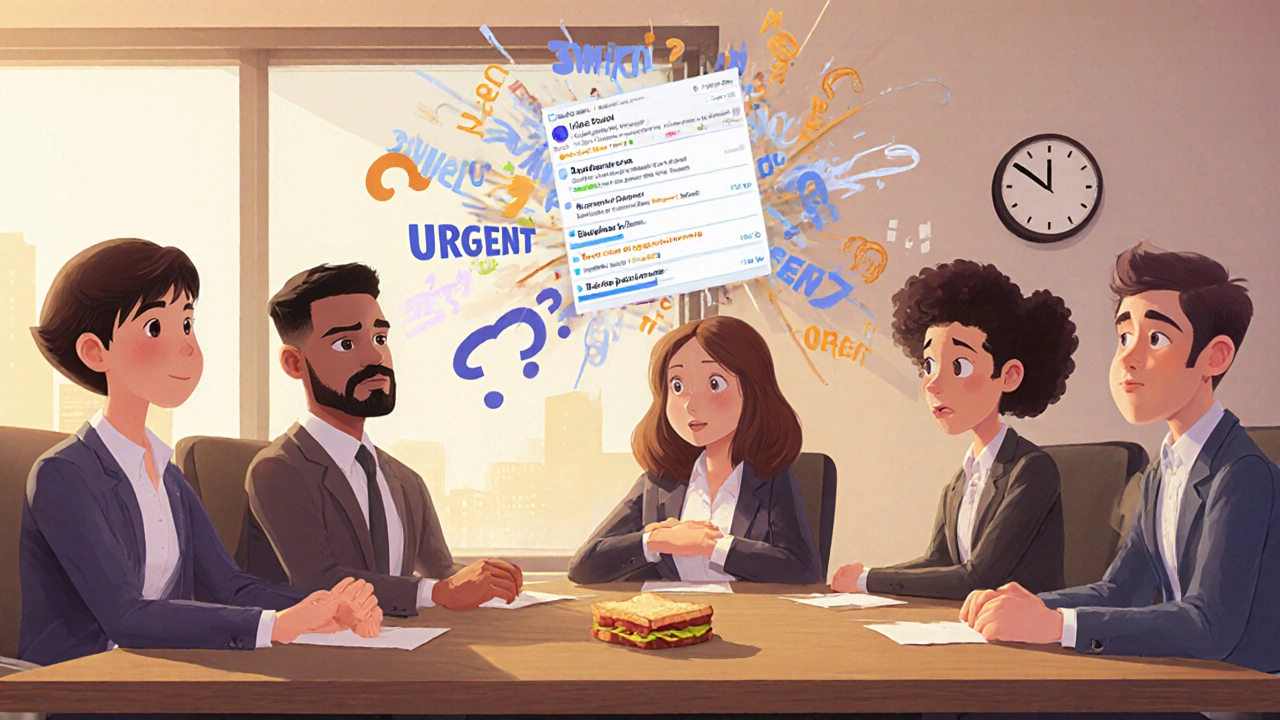
Stop assuming what professionals need. Go talk to them. Ask managers: What’s the one communication breakdown that slows your team down? Ask employees: When did a conversation go wrong and cost you time or trust? You’ll hear the same things over and over.- Leading a meeting where no one speaks up
- Delivering bad news without triggering defensiveness
- Writing emails that get ignored or misinterpreted
- Navigating conflict with a senior colleague
- Explaining a technical idea to a non-technical stakeholder
Structure the course around scenarios, not topics
Don’t organize your course by types of communication: verbal, written, nonverbal. That’s textbook thinking. Professionals don’t think that way. They think: What do I do right now? Instead, build modules around high-stakes situations:- Handling a tense one-on-one with an underperforming employee
- Presenting a project update to executives who don’t care about details
- De-escalating a client who’s furious about a delayed delivery
- Asking for a raise without sounding arrogant
- Leading a hybrid team meeting where half the people are on mute
- Problem: A real, relatable scenario
- What not to do: Show a bad version-awkward silence, defensive replies, vague emails
- What to do: Demonstrate the right approach with actual scripts and phrases
- Why it works: Explain the psychology behind it-why this phrasing reduces resistance, why this tone builds trust
- Practice: Role-play with feedback, not just a quiz
Use real scripts, not vague advice
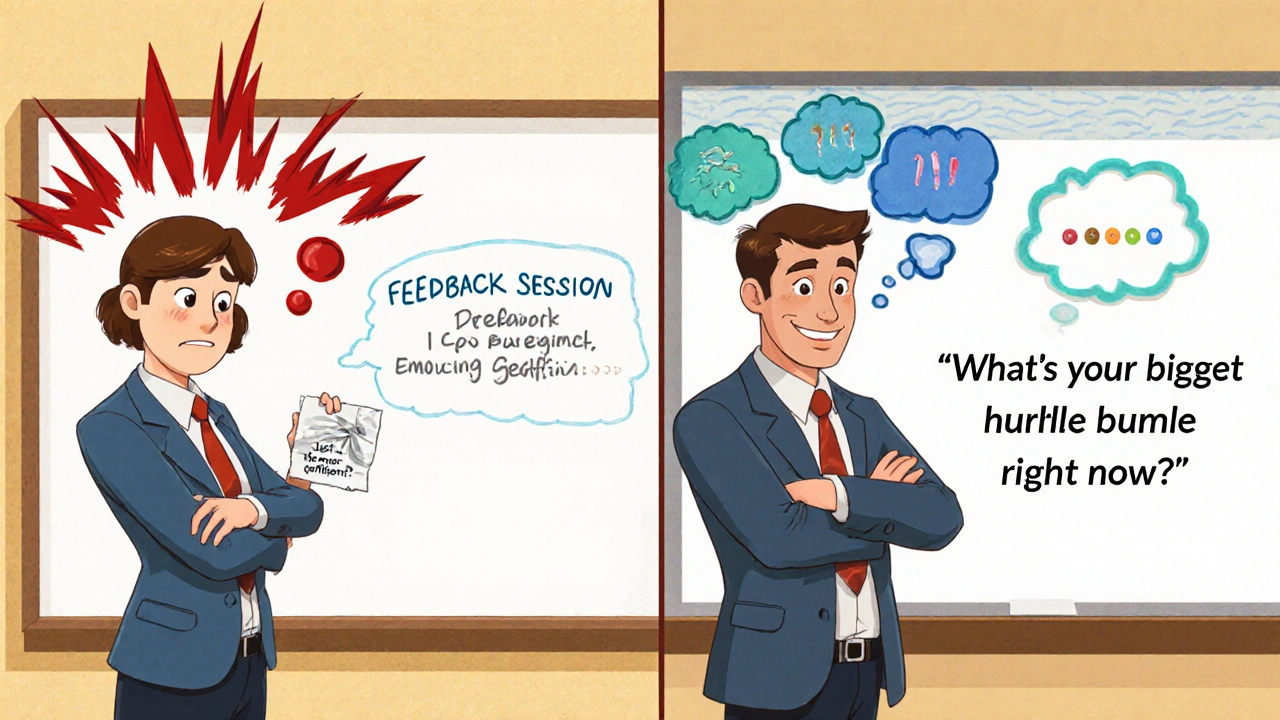
"Be clear and concise" is useless. "Use I-statements" is better-but still vague. What does that look like in a real email? In a 30-second conversation? Give professionals exact phrases they can copy and adapt:Bad: "I think we need to talk about the deadline."
Good: "I noticed the Q3 report is behind schedule. I’d like to understand what’s causing the delay so we can adjust the plan together. What’s your biggest hurdle right now?"
The difference isn’t just wording-it’s intent. The first version sounds like blame. The second invites collaboration. Your course should give people dozens of these scripts, grouped by context: feedback, negotiation, conflict, persuasion.
Also, show the non-verbal part. Not just "maintain eye contact." Show how to lean slightly forward when listening. How to pause before responding to avoid sounding reactive. How to lower your voice when you want to de-escalate. These aren’t tricks-they’re signals people read unconsciously.
Make it bite-sized and just-in-time
Professionals don’t have hours to sit through a 2-hour webinar. They need help in the moment. Design your course so each module takes 10-15 minutes. Break it into micro-learning chunks.- Video: 3 minutes (real example)
- Script: 1 minute (copy-paste version)
- Quick tip: 30 seconds (one psychological principle)
- Practice: 5 minutes (role-play with AI feedback or peer review)
When delivering bad news: - Start with context, not the problem - Say what you’re doing to fix it - Ask for their input before closing - Follow up in writing within 24 hours
These aren’t rules. They’re memory triggers. People remember what’s simple and actionable.
Measure what matters-not participation
Most courses track completion rates. That’s meaningless. Did they change how they talk to their team? Did fewer emails get ignored? Did conflicts drop? Set up three simple metrics:- Behavior change: Survey participants 30 days after the course: "Have you used any of the scripts from the course in a real conversation?" (Yes/No + example)
- Feedback quality: Ask managers: "Has communication from this person improved in the last month?" (Scale: 1-5)
- Time saved: Track how many meetings were shortened or avoided because communication was clearer
Include peer learning-don’t just lecture
People learn more from each other than from trainers. Build in structured peer feedback. For example:- After learning how to give feedback, each participant records a 60-second video of themselves delivering feedback to a colleague (real or imagined)
- They share it with two peers using a simple rubric: "Was it clear? Did it feel supportive? Did it invite action?"
- Peers give one specific suggestion-no fluff
Don’t ignore the digital layer
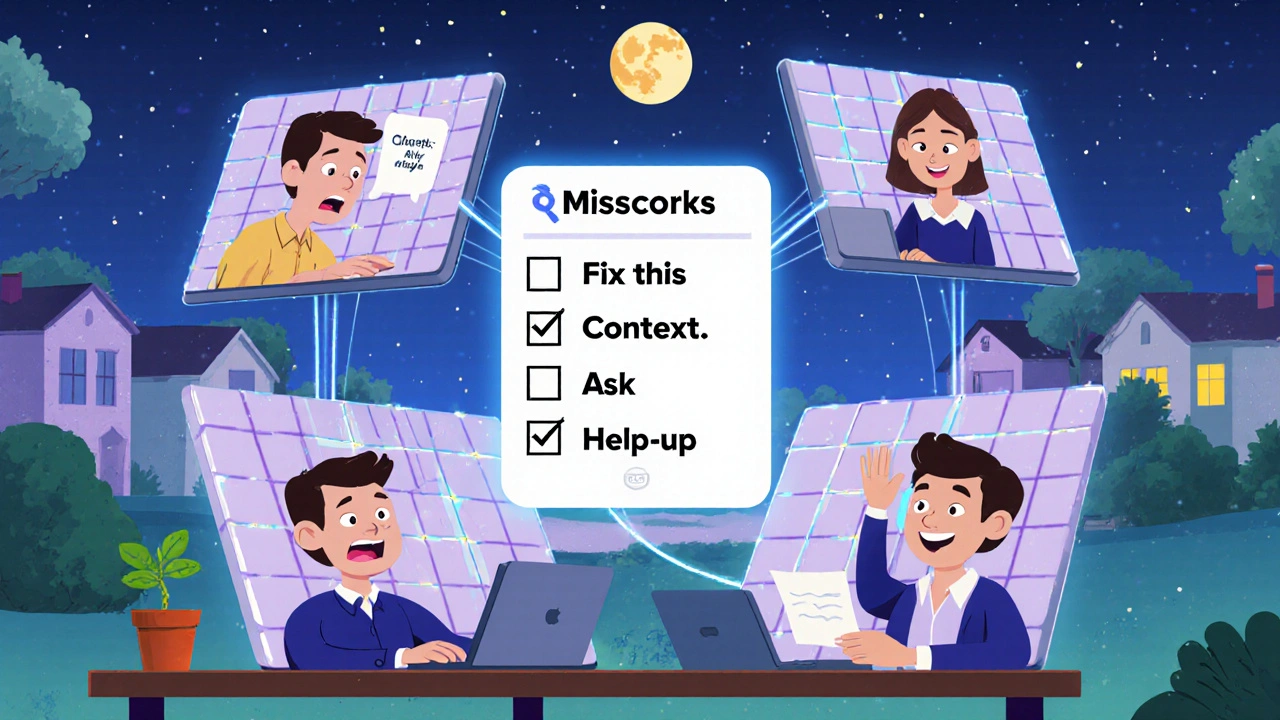
Most communication happens over email, Slack, Teams. Your course must address digital communication. Teach people how to write emails that get opened and acted on:- Subject lines that signal urgency without being pushy
- How to structure a message so the main point is visible in 3 seconds
- When to use bullet points vs. paragraphs
- How to read tone in text-and avoid misreading it
Make it ongoing, not one-and-done
A 2-hour workshop won’t change behavior. Communication is a muscle. It needs regular exercise. Build a 90-day reinforcement plan:- Week 1-4: Focus on one skill (e.g., giving feedback)
- Week 5: Short video recap + peer challenge
- Week 6-8: Introduce a new skill (e.g., managing up)
- Week 9: Live Q&A with a communication coach
- Week 10-12: Participants share one win and one struggle
What to avoid
Don’t:- Use generic personality tests (DISC, MBTI)-they don’t predict communication behavior
- Reliance on theory-heavy slides with no examples
- One-size-fits-all content for all roles
- Ignoring power dynamics (e.g., how junior staff communicate with executives)
- Assuming everyone speaks English the same way
Final thought: Communication isn’t about speaking well. It’s about being understood.
The goal isn’t to make people eloquent. It’s to make sure their message lands. Every script, every scenario, every feedback loop should answer one question: Will this help them get their point across without fighting? If yes, you’re building something that changes how people work.How long should a professional communication course be?
A successful course isn’t measured in hours-it’s measured in impact. Break it into 10-15 minute modules focused on real scenarios. Aim for 4-6 core modules, with optional deep dives. Total time: 2-3 hours of active learning. But spread it over 6-8 weeks with weekly reinforcement. People retain more when they practice in small doses.
Should I include role-playing in the course?
Yes-but not in the way you think. Don’t have people act out scripted scenes with strangers. Instead, ask them to record themselves using a real work situation: a tough email they sent, a meeting that went poorly, a conversation they avoided. Then have peers give feedback using a simple checklist. This makes it personal, safe, and practical.
Can this course work for remote teams?
Absolutely-and it’s even more critical. Remote teams rely on written communication, which is prone to misinterpretation. Your course should include modules on writing clear async messages, reading tone in text, and using video calls effectively. Record examples of bad vs. good Slack threads. Show how a 3-word reply can escalate tension. Remote work doesn’t change the goal-it just changes the tools.
What’s the biggest mistake in communication training?
Teaching communication as a soft skill instead of a performance skill. You wouldn’t train someone to use Excel by giving them a lecture on formulas-you’d have them build a real spreadsheet. Same here. Don’t talk about active listening-have them practice it in a real conflict scenario. Measure whether their next conversation went better. That’s the only metric that matters.
How do I get leadership buy-in for this course?
Don’t sell it as "training." Sell it as a productivity fix. Show data: Teams with strong communication have 25% fewer miscommunication-related delays (Harvard Business Review, 2024). Highlight that 68% of employees say unclear communication is their top stressor at work (Gallup, 2025). Frame it as reducing wasted time, not improving "soft skills." Leaders care about outcomes, not intentions.
Zach Beggs
November 28, 2025 AT 15:05This is actually one of the few communication courses I’ve seen that doesn’t feel like corporate fluff. The scripts? Gold. I’ve already used the "Q3 report is behind schedule" line in a meeting yesterday and my boss didn’t glare at me once. Small wins.
Kenny Stockman
November 30, 2025 AT 11:53Yessss. I’ve been saying this for years. No one cares about active listening theory. They care about not getting roasted in a Zoom call because their email sounded like a passive-aggressive Yelp review. Give ‘em the phrases. Let ‘em copy-paste. Done.
Antonio Hunter
December 1, 2025 AT 21:36While I appreciate the practical focus on real-world scenarios, I think we need to be cautious about oversimplifying communication into a set of scripts. Human interaction is inherently dynamic and context-sensitive. Relying too heavily on pre-scripted responses may inadvertently stifle authenticity and emotional intelligence. The goal should be to cultivate adaptability, not just memorization. That said, the inclusion of non-verbal cues-leaning forward, pausing before responding-is a nuanced and often overlooked element that deserves emphasis.
Paritosh Bhagat
December 3, 2025 AT 17:51Wow, this is sooo much better than the usual ‘be more confident’ nonsense. But wait-why no mention of cultural differences in communication styles? Like, in India, we don’t say ‘I noticed the report is late’-we say ‘Maybe we could look at the timeline again?’ It’s not just phrasing, it’s hierarchy, respect, indirectness. You can’t just drop American scripts into global teams. 😅
Ben De Keersmaecker
December 4, 2025 AT 03:43Minor grammatical note: ‘What’s the one communication breakdown that slows your team down?’ should be ‘What’s the one communication breakdown that slows down your team?’ Preposition at the end is colloquial, but technically incorrect in formal writing. Also, ‘non-verbal’ should be hyphenated consistently. Just saying. 🤓
Aaron Elliott
December 4, 2025 AT 08:46While the premise is commendable, this approach reeks of managerial reductionism. Communication is not a set of tactical maneuvers to be optimized like a sales funnel. It is a fundamental expression of human subjectivity, embedded in power structures, historical context, and existential vulnerability. To reduce it to ‘scripts’ and ‘cheat sheets’ is to commodify empathy. One might as well teach grief counseling via a PowerPoint titled ‘How to Say ‘I’m Sorry’ Without Crying.’
Chris Heffron
December 4, 2025 AT 22:29Love the scripts!! 😊 But can we add a note about emoji use in Slack? Like, when to use 👍 vs 🙏 vs 🤝? I’ve seen so many emails go sideways because someone used a thumbs-up instead of ‘Thanks!’ and it felt cold. Just a thought!
Adrienne Temple
December 5, 2025 AT 07:32This is exactly what my team needed! I used the ‘bad news’ checklist after our last product delay and my boss actually said ‘That was way better than last time.’ I cried a little. Not because I was upset-because someone finally said what to do, not just ‘be nicer.’ 🤗
Sandy Dog
December 5, 2025 AT 21:17OMG I’ve been waiting for someone to say this for YEARS. Like, I had a meeting last week where my manager sent a Slack that just said ‘Update?’ and I felt like I was being interrogated by a robot. Then I used the ‘I noticed the login page is loading slowly...’ script and he replied with ‘Thanks for flagging this-I’ll fix it by EOD!’ and even added a 🙏 emoji. I felt seen. I felt human. I’m telling my whole department about this. This is life-changing. 🥹
Nick Rios
December 7, 2025 AT 04:45I’ve seen too many courses that try to fix communication by telling people how to talk. But what about the people who are just too tired, too overwhelmed, too burned out to care? The scripts help, but we need to talk about energy too. If someone’s running on fumes, no phrase will make them sound warm. Maybe the real skill is knowing when to say ‘I need a minute’ instead of forcing a conversation.
Amanda Harkins
December 7, 2025 AT 08:03It’s funny how we treat communication like a hack. Like if we just say the right words, everything will be fine. But what if the problem isn’t the words-it’s the culture? The fear? The lack of psychological safety? Scripts are nice, but if people are scared to speak up because their last honest comment got them passed over for promotion, no ‘I-statements’ are gonna fix that.
Jeanie Watson
December 8, 2025 AT 15:02Okay but… how many people actually *do* the 5-minute role-play? I’ve done 3 of these courses. The ‘practice’ part always gets skipped. People just watch the video, copy the script, and go back to their old habits. This feels like another shiny thing companies buy so they can say they ‘did something.’
Tom Mikota
December 10, 2025 AT 03:42Love the scripts… but why are you using double spaces after periods? 😑 Also, ‘non-verbal’ is hyphenated, not ‘non verbal.’ And ‘cheat sheet’ should be singular if you’re referring to one per module. I’m not being a jerk-I just care about this stuff. And also… did you really just say ‘3-word reply can escalate tension’? That’s a whole thesis right there. 🤔
Mark Tipton
December 11, 2025 AT 00:30Let’s be real-this entire framework is a distraction. Companies don’t want better communication. They want compliance. They want employees to sound polite while internal resentment builds. The ‘scripts’ are just a veneer. The real problem? Toxic leadership. Burnout. Lack of autonomy. No amount of ‘I noticed the report is late’ will fix a culture that punishes honesty. This is just corporate gaslighting with a PowerPoint.
Adithya M
December 11, 2025 AT 10:32Great stuff! But in India, we often use ‘Could you please…?’ even when it’s not necessary-it’s about respect. The script ‘I noticed the Q3 report is behind’ might sound too blunt. Maybe add a version: ‘Hope you’re doing well-I was wondering if we could look at the Q3 timeline?’
Tina van Schelt
December 11, 2025 AT 22:59I’ve been in meetings where someone said ‘I’m not mad, I’m just disappointed’ and the whole room froze. That phrase is a landmine. Your scripts are brilliant-but we need a section on what NOT to say. The emotional landmines. The phrases that sound helpful but are actually poison. Like ‘You always…’ or ‘Why don’t you just…’
Mike Zhong
December 13, 2025 AT 22:00Communication isn’t about scripts. It’s about power. Who gets to speak? Who gets heard? Who gets punished for being direct? This course treats communication like a user manual for robots. But humans aren’t widgets. The real skill is knowing when to break the script. When to be raw. When to say ‘I’m scared to say this, but…’ That’s where real connection happens-not in the ‘what to say’ section.
Jamie Roman
December 15, 2025 AT 02:51I’ve used this exact approach with my remote team and it’s been a game-changer. We started with the ‘bad news’ script for client delays, then did a 10-minute peer video exchange. One guy recorded himself apologizing for missing a deadline-and he cried. Not because he was sad-he was just so relieved someone finally gave him a way to say it without sounding like a failure. That’s the magic. Not the theory. The humanity.