Project-Based Learning: Structuring Real-World Bootcamp Work
 Dec, 17 2025
Most coding bootcamps promise you’ll be job-ready in 12 weeks. But if you’ve ever worked on a real team project after graduation, you know that’s not enough. Classroom exercises don’t prepare you for the messy, unpredictable chaos of actual software development. The difference between a bootcamp graduate who lands a job and one who doesn’t often comes down to one thing: how well their projects mimic real work.
Why Bootcamp Projects Feel Fake
Too many bootcamps still use exercises like "build a to-do list app" or "create a weather widget." These tasks are clean, predictable, and have one right answer. Real software doesn’t work that way. In the wild, requirements change mid-sprint. Clients don’t know what they want until they see it. Bugs show up in places no one expected. Teammates miss deadlines. Documentation is outdated or missing.
When bootcamp students only ever solve isolated problems, they never learn how to navigate ambiguity. They can write code. But they can’t ship it.
What Real-World Bootcamp Work Actually Looks Like
Real-world projects in bootcamps follow the same rhythm as startups or mid-sized tech teams. Here’s what that means in practice:
- Projects last 3-6 weeks, not 3 days
- Teams of 3-5 people with assigned roles (frontend, backend, QA, product)
- Use of Git, GitHub, Jira, Slack, and daily standups
- Client feedback loops - real users test early versions
- Deployments to live environments (Heroku, Vercel, AWS)
- Post-launch retrospectives: what worked, what didn’t
At a bootcamp in Austin, students spent eight weeks building a local food delivery platform for small restaurants. The client was a real small business owner, not a fictional persona. Students had to handle payment processing, delivery scheduling, and mobile responsiveness - all while dealing with last-minute feature requests and a broken API from a third-party map service. That’s not a lab exercise. That’s work.
Structure Your Projects Like a Startup
Don’t just assign a project. Structure it like a startup sprint. Here’s a proven framework:
- Week 1: Discovery - Students meet with a real client (or simulated one) to define scope, goals, and success metrics. No spec sheet handed out. They ask questions. They challenge assumptions.
- Week 2: Planning - Teams break the project into user stories. They prioritize using MoSCoW (Must, Should, Could, Won’t). They estimate effort in story points, not hours.
- Weeks 3-5: Build & Iterate - Two-week sprints with daily check-ins. Code reviews are mandatory. Testing isn’t optional. Every feature must be deployed to staging before moving on.
- Week 6: Launch & Reflect - Product goes live. Students present to the client. They collect feedback. Then they write a post-mortem: what went well, what broke, what they’d do differently.
This isn’t theory. This is how companies like GitHub, Shopify, and even small agencies operate. Bootcamps that mimic this process produce graduates who don’t just code - they ship.
Tools That Make Projects Feel Real
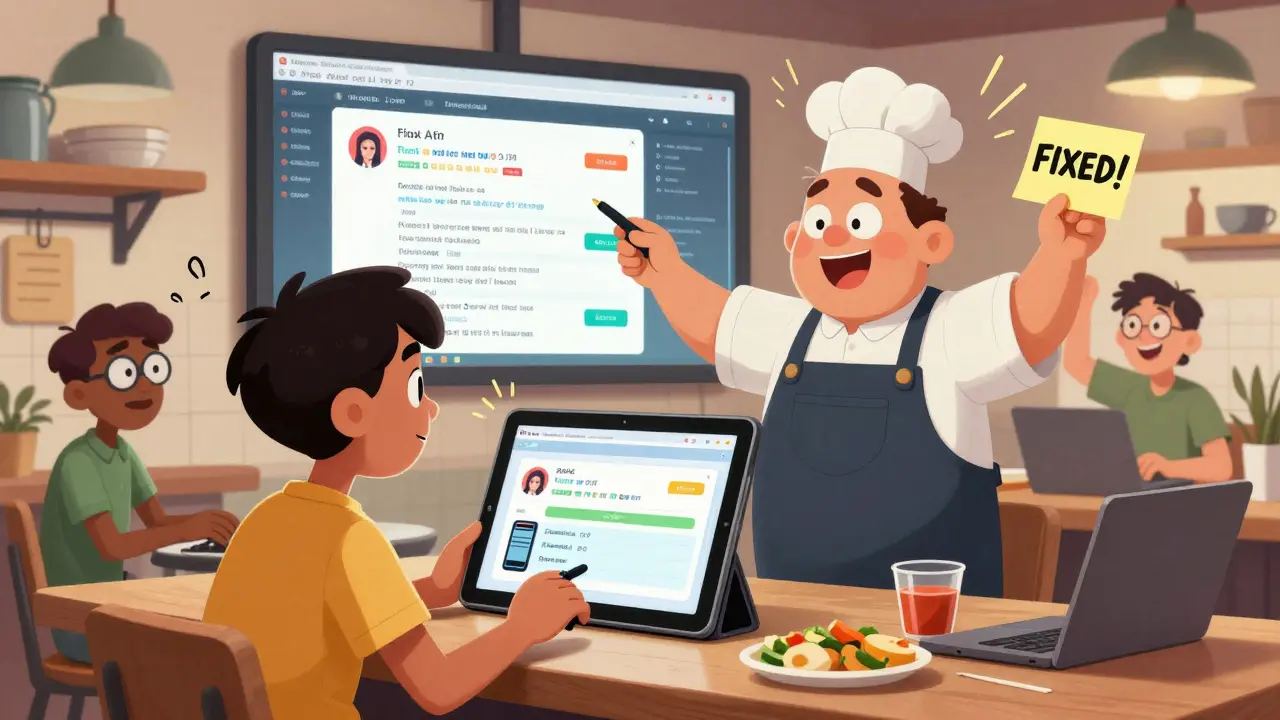
Using the right tools turns a classroom project into a professional experience.
| Tool | Purpose | Why It Matters |
|---|---|---|
| GitHub | Version control & collaboration | Teaches branching, pull requests, code reviews - skills used daily in tech jobs |
| Jira or Trello | Task tracking | Helps students learn to estimate, prioritize, and manage workflow under pressure |
| Postman | API testing | Real APIs don’t come with perfect documentation. Students learn to debug and explore endpoints |
| Netlify or Vercel | Frontend deployment | Students see their code live. They learn about caching, DNS, and deployment failures |
| Slack or Discord | Team communication | Real teams don’t wait for meetings. They chat, share screenshots, and solve problems in real time |
These aren’t "nice-to-haves." They’re the baseline tools of the trade. If your bootcamp doesn’t use them, you’re training students for a world that no longer exists.
How to Evaluate Project Success
Grading a project shouldn’t be about whether the app works. It should be about whether the team delivered value.
Here’s what real employers look for:
- Did the team solve a real problem for real users?
- Was the code clean, documented, and maintainable?
- Did they handle feedback gracefully?
- Did they ship something usable - even if it wasn’t perfect?
- Can they explain their decisions - and admit where they messed up?
One graduate from a bootcamp in Chicago landed a job because her project had a 4.2-star rating from 17 beta users. The hiring manager didn’t care that she used React instead of Vue. He cared that she listened to users, fixed bugs quickly, and shipped a working product on time.
Common Pitfalls to Avoid
Even well-intentioned bootcamps fall into traps:
- Over-guiding - Giving students step-by-step instructions kills problem-solving. Let them get stuck. That’s where learning happens.
- Ignoring soft skills - Conflict resolution, giving feedback, and managing deadlines matter as much as syntax.
- Skipping deployment - If the app never goes live, students never learn about hosting, SSL, or server errors.
- One-size-fits-all projects - Not everyone wants to build an e-commerce site. Let students choose domains they care about: healthcare, education, sustainability.
The most successful bootcamps treat projects like apprenticeships - not assignments.
What Comes After the Project?
The project isn’t the end. It’s the start of your portfolio.
Every student should leave with:
- A live demo link
- A GitHub repo with clean commits and a README that explains the problem, solution, and tech stack
- A 2-minute video walkthrough (recorded on their phone)
- A one-page case study: challenge, action, result
When applying for jobs, these artifacts speak louder than any certificate. Recruiters don’t care if you finished a 10-week course. They care if you’ve shipped something people used.
Final Thought: It’s Not About the Code
Bootcamps that focus only on syntax, algorithms, and frameworks are training typists. The market doesn’t need more typists. It needs problem-solvers who can work in teams, adapt to change, and deliver value under pressure.
Project-based learning isn’t just a teaching method. It’s the only way to prepare someone for the real world of software development. If your bootcamp’s projects feel like homework, they’re failing.
What’s the difference between a classroom project and a real-world bootcamp project?
Classroom projects are isolated, well-defined tasks with one correct solution. Real-world bootcamp projects are open-ended, team-based, and involve messy variables like changing requirements, client feedback, deployment issues, and communication breakdowns. Real projects simulate the chaos of actual tech jobs - not the safety of a lab.
How long should a real-world bootcamp project last?
A meaningful real-world project should last between 3 and 6 weeks. Shorter than that, and teams don’t experience the full cycle of planning, iteration, and feedback. Longer than 6 weeks, and momentum fades without proper structure. The sweet spot is enough time to build something substantial, but not so long that it becomes overwhelming.
Do students need to use version control in bootcamp projects?
Yes. Git and GitHub aren’t optional extras - they’re the standard tools used in every tech job. If students don’t learn how to branch, merge, review code, and resolve conflicts during bootcamp, they’ll be unprepared for their first team environment. Version control teaches accountability, collaboration, and how to recover from mistakes.
Should bootcamp projects be graded?
They should be evaluated, not graded like a test. Focus on outcomes: Did they ship? Did they solve a real problem? Did they collaborate? Did they reflect on what went wrong? A rubric based on process and impact is more valuable than a letter grade. Employers care about what you built, not whether you got an A.
Can bootcamp projects be too ambitious?
Yes - if they’re unrealistic in scope without proper scaffolding. A project that tries to build a full e-commerce platform with payment processing, inventory, and user roles in three weeks is likely to fail. The goal isn’t to build everything. It’s to build something usable, learn how to scope work, and deliver value incrementally. Better to build a small, polished feature than a half-finished giant.
What if a student’s project doesn’t work?
It’s okay - as long as they learned from it. Real software often breaks. What matters is how the team responded. Did they debug? Did they ask for help? Did they document what went wrong? A project that failed but was thoroughly reflected on teaches more than a perfect one that was handed to them. Failure is part of the process.
Bootcamps that treat projects like real work don’t just produce coders. They produce developers who can walk into a job and start contributing on day one.
Chris Heffron
December 18, 2025 AT 12:55Adrienne Temple
December 20, 2025 AT 07:10Sandy Dog
December 20, 2025 AT 23:24Nick Rios
December 21, 2025 AT 22:47Amanda Harkins
December 22, 2025 AT 17:54Jeanie Watson
December 23, 2025 AT 20:15Tom Mikota
December 25, 2025 AT 18:25Mark Tipton
December 26, 2025 AT 08:50Adithya M
December 27, 2025 AT 12:29Jessica McGirt
December 28, 2025 AT 22:25Donald Sullivan
December 30, 2025 AT 12:02Tina van Schelt
December 31, 2025 AT 23:09Ronak Khandelwal
January 2, 2026 AT 16:30Jeff Napier
January 3, 2026 AT 02:40Sibusiso Ernest Masilela
January 3, 2026 AT 04:45Aaron Elliott
January 4, 2026 AT 00:54