Python and Backend Development Bootcamp: Your Step-by-Step Learning Path
 Feb, 13 2026
Most people think learning Python for backend development means memorizing frameworks like Django or Flask. That’s not true. The real challenge is building something that works - something real - and knowing why it works. A good bootcamp doesn’t just teach you syntax. It gives you a path. A clear, no-fluff path from zero to deployable backend systems. Here’s how it actually works.
Start with Python Basics - But Not Too Long
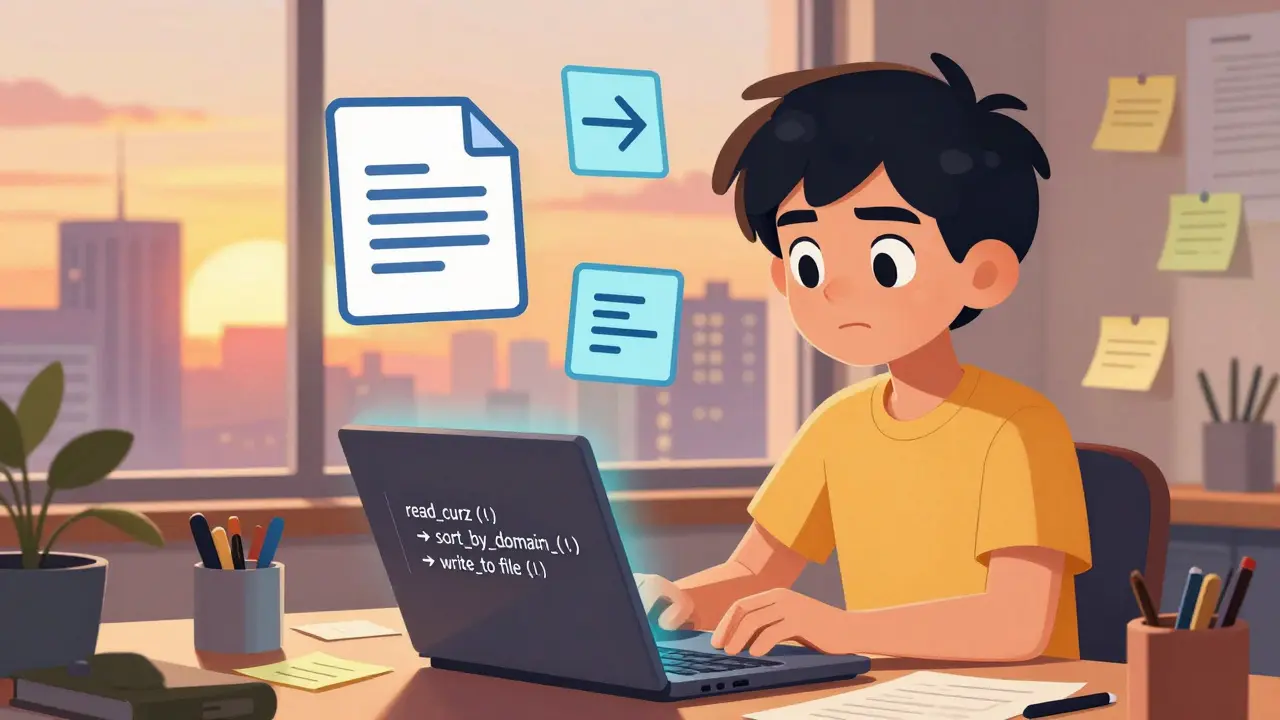
You don’t need to spend three months learning every Python function. That’s a trap. Focus on what backend devs actually use: variables, functions, loops, conditionals, lists, dictionaries, and file handling. Skip the GUI stuff. Skip the advanced math libraries. You won’t need them. If you can write a function that reads a CSV file and returns a list of user emails, you’re ahead of 80% of beginners.
Practice this: Build a script that takes a list of names and emails, sorts them by domain, and writes the results to a new file. Do it without Google. Do it three times. That’s your baseline. This isn’t theory. This is the daily work of a junior backend developer.
Learn How the Web Actually Works
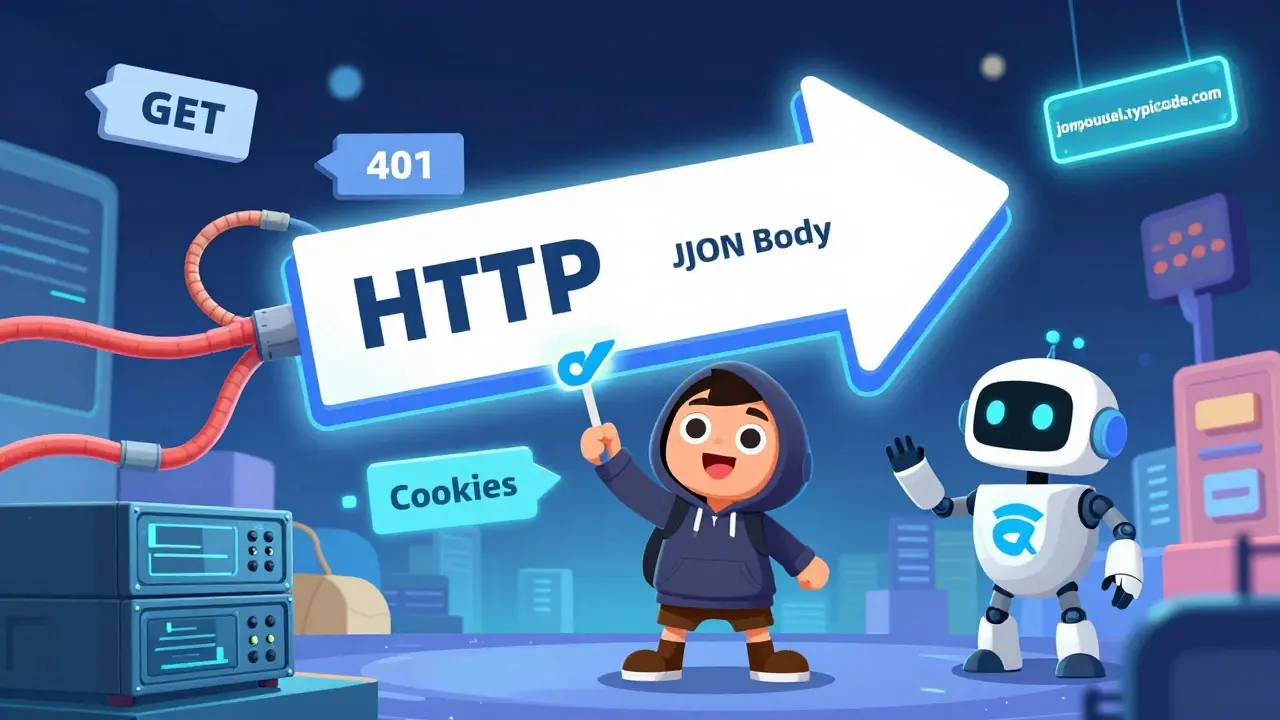
Before you touch a framework, understand HTTP. Not just "GET and POST." Understand headers, status codes, cookies, and sessions. If you don’t know what a 401 vs 403 means, you’ll be lost in every API doc you open.
Try this: Use curl or Postman to hit a public API like https://jsonplaceholder.typicode.com/users. Look at the response headers. Change the Accept header. Send a POST request with JSON body. Do this until you can explain what each part does without looking it up. That’s your next milestone.
Most bootcamps skip this. They jump straight into Flask. Big mistake. You’ll build apps that work - but you won’t know why they work.
Choose One Framework - and Stick With It
Django or Flask? Pick one. Don’t switch. Don’t compare. Just pick.
If you want structure, batteries-included, and built-in admin panels - go Django. It’s what companies like Instagram and Pinterest use. It handles authentication, database migrations, and form validation out of the box. You’ll spend less time wiring things together.
If you want to understand every layer - the raw HTTP requests, how middleware flows, how routing really works - go Flask. It’s minimal. You’ll build your own auth system. You’ll write your own database layer. It’s harder, but you’ll learn more.
Here’s the rule: If you’ve never built a backend before, start with Django. It reduces noise. Once you’ve shipped one real app with Django, switch to Flask. You’ll see everything you took for granted.
Build a Real Database - Not Just Tutorials
PostgreSQL is the standard for production backend systems. SQLite is fine for learning. But you need to work with PostgreSQL before your bootcamp ends.
Create a database. Add a users table. Add an orders table. Link them with a foreign key. Write a query that finds all users who placed more than 3 orders in the last 30 days. Do it in SQL. Not in an ORM. Write the raw query. Then use SQLAlchemy or Django’s ORM to do the same thing. Compare the two.
Learn these concepts: indexing, transactions, connection pooling, and schema migrations. These aren’t "advanced" topics. They’re daily tools. If you don’t understand them, you’ll break production.
APIs Are Your New Language
Backend development today means building APIs. Not websites. Not HTML pages. JSON endpoints.
Build a simple API with your framework. Three endpoints: GET /users, POST /users, DELETE /users/{id}. Add validation. Add error handling. Add authentication (even if it’s just a token in the header). Then build a frontend - even a simple HTML page with JavaScript - that calls your API. Make it work.
Now do it again with a different data model. Maybe products and categories. Or blog posts and comments. Repeat until you can do it in under an hour. That’s the goal. Speed and accuracy. Not perfection.
Deploy Something - Anything
Code that runs on your laptop isn’t a project. Code that runs on the internet is.
Use Render, Railway, or PythonAnywhere. Free tiers exist. Deploy your API. Connect it to a real domain (even a subdomain). Set up a simple health check endpoint. Add logging. Watch the logs when you make a request. See the request time. See the memory usage.
Break it on purpose. Send a malformed JSON payload. See how your app responds. Fix it. Do this until your app doesn’t crash. Then deploy it again. This is where most learners quit. Push through. This step separates students from developers.
Build a Project - Not a Todo List
Forget "build a todo app." That’s a warm-up. Build something that solves a real problem.
Here are three realistic project ideas:
- A job board where users post openings and companies apply with resumes (PDF uploads, email notifications).
- A small e-commerce backend with inventory tracking, order status updates, and Stripe payments (use test mode).
- A weather data aggregator that pulls from 3 public APIs, stores daily averages, and serves trends via a simple dashboard.
Don’t build all three. Pick one. Make it ugly. Make it slow. But make it work end-to-end. Deploy it. Share the link. Ask for feedback. This is your portfolio. Not GitHub stars. Not tutorial videos. A live, working system.
Learn the Tools - Not the Buzzwords
You don’t need to know Docker, Kubernetes, or AWS to be a backend dev in your first job. But you do need to know:
- Git - commit often, write clear messages, use branches.
- Terminal - navigate, list files, run Python scripts, tail logs.
- VS Code or PyCharm - set up linting, debugging, and auto-formatting.
- Postman or curl - test every endpoint manually.
- Logging - understand INFO, WARNING, ERROR levels. Use them.
These are your daily tools. Not the shiny new framework. Master these first.
What Comes After the Bootcamp?
Bootcamps don’t end with a certificate. They end with a working system and a habit of shipping.
After you finish:
- Contribute to one open-source Python project. Fix a typo in docs. Add a test. That’s enough.
- Apply for junior roles. Don’t wait until you "know everything." You never will.
- Read the Django or Flask documentation cover to cover. Not for a test. Just to understand how it’s built.
- Join a local dev meetup or online Discord. Talk to people. Ask questions. Don’t be silent.
Backend development isn’t about knowing the most frameworks. It’s about solving problems, one API call at a time.
How long does a Python backend bootcamp actually take?
Most structured bootcamps last 12 to 16 weeks, with 15-20 hours per week. But the real timeline depends on your starting point. If you’ve never coded before, expect 4-6 months of consistent effort to build a deployable project. If you’ve done some web dev before, you can get there in 8-10 weeks. Speed matters less than consistency. Five hours a week for 6 months beats 40 hours one week and nothing for two months.
Do I need a computer science degree to land a backend job?
No. Most junior backend roles in 2026 don’t require degrees. Companies care about what you can build. A live API, clean Git history, and a working deployment matter more than a diploma. That said, understanding algorithms and data structures helps - not because you’ll be asked to whiteboard them, but because you’ll debug performance issues faster. Learn Big-O basics and how databases use indexes. Skip advanced graph theory.
Should I learn Django or Flask first?
Start with Django if you’re new. It handles authentication, admin panels, and database migrations automatically. This lets you focus on building features instead of wiring infrastructure. After you’ve built and deployed one full app with Django, switch to Flask. You’ll see exactly what Django hides - and that’s when your understanding deepens. Don’t learn both at once. You’ll confuse yourself.
Can I learn Python backend without knowing JavaScript?
Yes. Backend development is about servers, databases, and APIs - not frontends. You don’t need to know React or Vue to build a working backend. But you should understand how to return clean JSON and handle HTTP requests from any client. If you ever want to build a full-stack app, then yes, learn JavaScript. But for backend-only roles, focus on Python, PostgreSQL, and REST APIs.
What’s the most common mistake new backend learners make?
They build too many small projects instead of one deep one. Doing 10 todo apps teaches you nothing. Building one real app - with user auth, data validation, error logging, and deployment - teaches you everything. Depth beats breadth every time. Focus on shipping one project that works end-to-end. Then move on.
Morgan ODonnell
February 13, 2026 AT 08:31Liam Hesmondhalgh
February 13, 2026 AT 11:20Patrick Tiernan
February 15, 2026 AT 03:31Patrick Bass
February 15, 2026 AT 14:45Tyler Springall
February 15, 2026 AT 18:12Colby Havard
February 16, 2026 AT 15:05Mongezi Mkhwanazi
February 17, 2026 AT 07:16Alan Crierie
February 17, 2026 AT 15:01Nicholas Zeitler
February 18, 2026 AT 11:12Teja kumar Baliga
February 19, 2026 AT 04:27michael Melanson
February 19, 2026 AT 16:29lucia burton
February 19, 2026 AT 19:37Denise Young
February 21, 2026 AT 10:13Sam Rittenhouse
February 22, 2026 AT 08:05Peter Reynolds
February 22, 2026 AT 20:10Morgan ODonnell
February 23, 2026 AT 08:51